






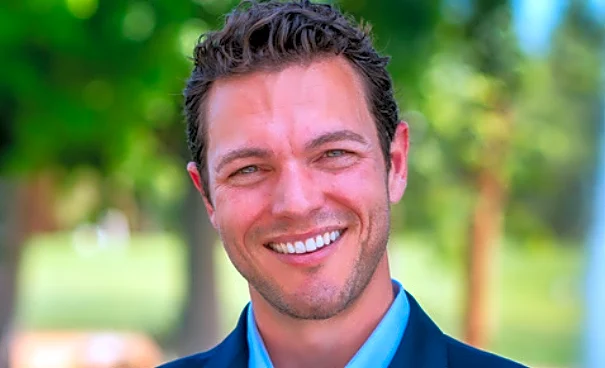

Sat Singh, founder of AI Coachella Valley, wants the region to be ready for the AI economy.
"AI is disrupting everything," Singh said. "We know that. And because we're a local initiative, we must balance and walk the fine line from journalism/reporting, teaching and connecting, and what the sentiment is for AI — good, bad or ugly.
"One thing is certain: AI is definitely impacting journalism," he said.

The Reuters Institute for the Study of Journalism, in fact, produced the 2025 "Generative AI and News Report," which found that the public's use of generative AI has increased substantially over the last few years. Meaning, readers today are faced with what could be perceived as an existential choice: read local reporting about the city council meeting,
for instance, or ask ChatGPT what transpired.
A recent grant from IE Journalism Innovation Hub+Fund via the Inland Empire Community Foundation is giving Singh an opportunity to soften some of these AI challenges, specifically through AICV's journalism arm.
In preparing the launch of The AI Beat, AICV's developing regional journalism beat geared to illuminating how AI is changing everyday life and institutions across the Inland Empire, Singh's efforts will filter information through the InformedIE app, which is now in beta.
The IECF grant was distributed to the Desert Community Foundation, the fiscal sponsor for the program.
Singh says he's continually studying, learning, ingesting AI information daily, then taking that information into gatherings and various trainings.

"I've done several workshops virtually to just keep people abreast and updated on what's happening and how this might affect local journalism," he said.
It's been a wildly fascinating and ever-evolving road for Singh and AICV.
Singh founded the organization in 2025, three years after ChatGPT stormed onto the scene as a kind of flashier Google-by-way-of-lightening-speed online creation partner. Chat's arrival didn't surprise Singh — he'd spent many years circulating around another version — however, at the onset of ChatGPT, he realized something was dramatically different.
"I've been in the AI world for almost a decade now, when it was called machine learning/natural language processing," he said. "Back then, we absolutely thought this natural language processing and machine learning was going to help journalism — period.
"I think now that it's been out in the wild — four years this November, with ChatGPT — the sentiment is that 70% of Americans don't like AI," he added.
His hope is to continue corralling independent local journalism and connecting people. At the same time, without being an information aggregator, he wants to "get the work that they're doing on the ground" seen.
But he's ever aware of the challenges.

"We know, just from the last four years, if you've been experimenting with AI at all in writing, whether it's personal or professional, it can't be trusted," he said. "And that is right where journalism lives.
"I think AI does help in research and synthesis and in taking on a lot more information than you were ever able to before," he said, "but it still requires humans in the loop."
Beyond these endeavors, AICV has been active on other fronts.
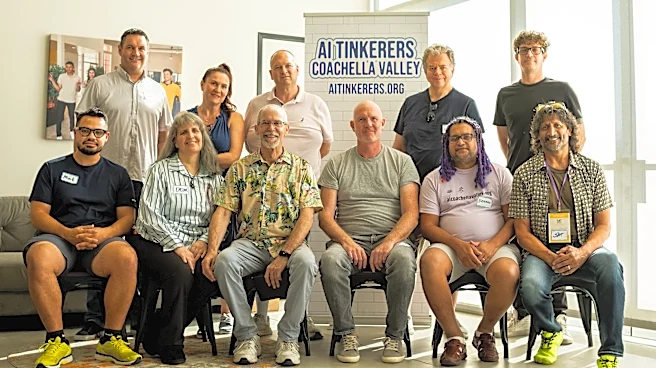
A spring workshop, for instance, called "Agent Meetup — CoWork, Claude Code & OpenClaw," was designed as a smaller builder meetup for individuals actively experimenting with AI agents. Forgoing the traditional workshop/lecture route, participants compared what was working and what was breaking across Claude CoWork, Claude Code, and OpenClaw, and touched on what the region's AI community should build and teach next.
Another event earlier this month dubbed "Agents, Everywhere: Bots, Channels & More" hoped to bring creators together to explore how to better streamline AI tools.
It's one of many efforts Singh has steered, noting that the desert "has often been late to adopting new technologies in meaningful ways." Not because various tools were unavailable. More so because he felt various institutions, businesses and communities took longer to understand how to use them.
"I just want us all in the Coachella Valley to understand the pros and cons of this new technology," Singh said. "Has a more powerful technology never existed? No, not really. And while we're in the early days here of even understanding what some of this stuff is going to do, we need to take this more seriously than what I'm seeing in a lot of our local organizations and entities."
Learn more at aicoachellavalley.org.
The Inland Empire Community Foundation works to strengthen Inland Southern California through philanthropy. Visit iegives.org.
This article originally appeared on Palm Springs Desert Sun: Journalism grant helps to offset AI challenges