






The much-publicized recent cyclosporiasis outbreak, which sickened thousands of people and killed two in 17 states, couldn’t have come at a worse time for Native Foods.
The Palm Springs plant-based restaurant's co-owner, Sean Reynolds, said the business was in the middle of an “awful summer,” with already small profit margins being squeezed by both sagging sales and higher costs, when news broke of a recall of iceberg lettuce grown in Mexico that was identified as the source of the outbreak.
While Native Foods doesn’t serve iceberg lettuce and California was not among the states identified by the CDC as part of the outbreak, Reynolds says the restaurant has recently seen a further downturn in sales. He suspects, though he can't be sure, that it
stems from people avoiding lettuce — or greens more broadly — amid widespread reporting on the outbreak, which was concentreated in the central and eastern US.
What Reynolds does know is that Native Foods is now amid the slowest summer it has ever seen, with sales down about 20% compared to last summer, which was also relatively slow.
“It's really hard to say how much I can attribute that to this outbreak,” he said. “But I know for certain that the outbreak is not helping one bit. I mean, it's definitely just another thing that we're having to contend with here.”
Reynolds said he sees people’s hesitancy around eating lettuce and greens was reflected not only in lower sales but also customer behavior at the restaurant, with people ordering fewer salads and sometimes asking for raw vegetables to be removed from plant-based burgers and sandwiches.
He said the drop off in salad ordering has been particularly noticeable given that people often are looking for “a nice cool salad” on the hottest Palm Springs summer days.

Other restaurants say cyclospora hasn't been a problem
But two other restaurants with lettuce-heavy menus say the situation isn’t impacting their sales or seemingly even people’s desire to order dishes with lettuce.
Marty Webster is the owner of Aspen Mills Bakery, a trio of Coachella Valley cafes that he started 30 years ago. Webster said business has remained normal for the typically slower summer months and his staff tell him there have only been a few instances of customers asking staff to hold the lettuce from their sandwiches for precautionary reasons.
Tanya Petrovna, who owns the Chef Tanya’s Kitchen gourmet vegan restaurants in Palm Springs and Pam Desert, said the cyclosporiasis situation has had “no impact” on business at her restaurants.
“When they said what it was — iceberg lettuce — I think the people who come here know we don’t serve that,” she said.
Lesson of outbreak: Eat local

Petrovna said the outbreak is a high-profile example of the risks that come with an agricultural system that has become too industrialized and, in her mind, unnatural. The recalled lettuce came from Taylor Farms, a giant producer that supplies restaurants and makes bagged salads sold in stores around the country.
Petrovna said the cyclosporiasis situation should remind people to think about what they are eating and where it comes from.
“If you keep buying your food in plastic bags from huge companies, is it really food?" she said. "(That) is the bigger question. And what are we eating and why are we eating it? Can we do better? I think so.”
Petrovna said her restaurants do not serve any produce that comes to the restaurant pre-cut and washed, save occasional organic spinach when it is the only she can get. Petrovna said that spinach is only served to customers after being washed again and cooked.
She said she tries to buy as much lettuce as possible from the organic Temalpakh Farm in Coachella, which is run by the Augustine Band of Cahuilla Indians. Outside of Temalpakh’s growing season, she buys lettuce through a distributor.
She said she is able to track where each lettuce came from (mostly California) and always asks that the distributor source organic lettuce, which it's able to do about 95% of the time.

“We might get a ladybug in our (produce) because we have organic and it snuck under a leaf and it's alive,” she said. “So I run and I put it outside.”
Petrovna said running a restaurant comes with plenty of challenges, including the speed with which food goes bad and resulting difficulty in keeping ingredients in stock. So she can understand the temptation to resort to using lettuce out of a bag. That’s part of why she thinks consumers must demand “real food.”
“I can tell the difference when I have a head of non-organic,” she said, noting that mass-produced bagged veggies are often doused in pesticides. “It's just chemical fertilizer, it just grows fast. The leaves are light, there's no density. The energy feels different. I just, I can tell.”
Many other restaurant owners didn't respond to calls about the outbreak. But Petrovna and two others said they have high standards for handling produce in their restaurants and have been in close contact with their suppliers to confirm it is not coming from the farming operations tied to the outbreak.
Reynolds said Native Foods “does not deal with any gigantic commercial distributors” and sources most of its produce from Aziz Farms in Coachella.
“It goes from being in the ground to being on our guest’s plates sometimes within 48 hours,” he said. “It's not traveling for weeks at a time. It's not passing through all these different facilities and different hands on its way to us.”
He said the restaurant also “really strict handling procedures” that it has had in place long before cyclosporiasis was receiving national attention.
Petrovna said her restaurant keeps careful records of every ingredient and its source that is put into every batch of everything made and served at her restaurants.
“That’s a good thing to have in place but then when you get so big, how can you keep it clean?” she said, again referencing Taylor Farms, Taco Bell and their ilk. “You have to add additives, you have to add stuff.”
According to the CDC, there have been nearly 16,000 cases of cyclosporiasis reported in the US since May 1. Between May 1 and Aug. 31 of 2025, 1,180 cases were reported. The agency reported that about 9,500 cases have been reported in people who ate Taylor Farms lettuce, with the agency reporting in July that at least 1,644 of those illnesses were in people who ate the lettuce at Taco Bell.The agency has said the sell-by dates for recalled Taylor Farms lettuce associated with the outbreak has passed and that it should no longer be being used in stores and restaurants. The CDC has said that washing produce alone cannot guarantee the removal of cyclospora if it is present.
While the recalled Taylor Farms lettuce was not distributed in California and no cases related to the major outbreak have been identified there, the state's health department reported 313 cases of the disease in the state from May through July. California's public health department said this constituted an "increase in cases" in line with the normal seasonal pattern, with the vast majority of the cases associated with travel to other countries.
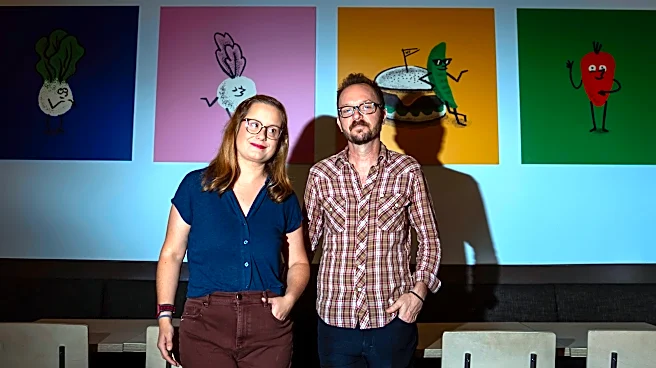
Reynolds said that since the outbreak began, he and his business partner, Misti Rausch, have been spending a lot of time reassuring customers about the safety of the restaurant's food.
“I see people coming in to order and they're worried about where our produce is coming from," Reynolds said. "They're hearing stories on the news about a different item every other week. And we're just doing our best to reassure everyone that our produce, if not sourced locally, is definitely sourced regionally. We source nothing from any of the big names that have been implicated in this outbreak.”

He added that he also wants customers to know that he and Rausch “are very hands on and involved in what we accept from our suppliers and what we turn away.” Despite those efforts, he said it can be difficult to assuage people about alarming information they have heard on the news and convince them that produce grown by smaller farmers in California is safe to eat, even if they might want to avoid fast food restaurants.
“The nuances get missed and people really remember the headlines,” Reynolds said. “And it's unfortunate. I mean, everybody gets lumped together and there seems to be this fear.”
While the restaurateurs that spoke to The Desert Sun were weathering the fallout from the cyclosporiasis outbreak to varying degrees, restaurants elsewhere have suffered swifter consequences. The Arizona-based drive-thru salad chain, Salad and Go, announced on Aug. 5 that it was filing for bankruptcy and closing all 70 of its restaurants, citing “weakened confidence” following the cyclosporiasis outbreak as among the factors in the chain’s fate. Salad and Go had previously announced plans to open its first California location in Indio.
Reuters also reported that Taco Bell sales dropped after hundreds of customers developed cyclosporiasis after eating at the fast food behemoth’s restaurants but have since started to recover.
Meanwhile, as Native Foods struggles to weather the summer, Reynolds is hoping any remaining hesitancy will subside and the community will turn out to support the restaurant, which Rausch and Reynolds bought together in 2023 after around a decade of working there.
“We are very, very determined to keep it alive, but this is as bleak as things have looked for us in the entire time of us being there,” he said. “So yeah, it's very scary. We really, really need the support … and we need people to think about their local businesses.”
Paul Albani-Burgio covers growth, development and business in the Coachella Valley. Email him at paul.albani-burgio@desertsun.com.

This article originally appeared on Palm Springs Desert Sun: How cyclosporiasis outbreak shows value of eating local