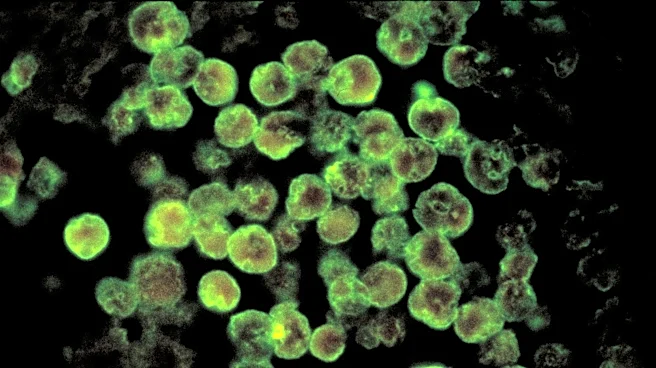









Naegleria fowleri, commonly known as the "brain-eating amoeba," has been in the spotlight after recent infections led to the deaths of a Louisiana child and a North Carolina teenager in the past months.
The amoeba is found naturally in warm freshwater and can cause a devastating brain infection called primary amebic meningoencephalitis, or PAM. While infections are extremely rare, they are almost always fatal.
The renewed concern is particularly relevant in California, which has recorded one of the highest totals of reported cases in the nation since health officials began tracking infections decades ago.
Here's what California residents should know before heading to lakes, rivers and other freshwater recreation spots.
California ranks among states with the most reported brain-eating amoeba cases
According to the Centers for
Disease Control and Prevention, 180 cases of Naegleria fowleri infection were reported in the United States between 1937 and 2025.
Texas has reported the most infections, followed by Florida. California ranks among the states with the highest number of documented cases, along with Virginia and Arizona.
The CDC says infections are most commonly reported in warmer-climate states because the amoeba thrives in warm freshwater environments. However, cases have also occurred in northern states.
Public health experts stress that infections remain extraordinarily rare, with fewer than 10 cases reported nationwide in a typical year.
Unable to view our graphics? Click here.
How many cases of Naegleria fowleri have been reported?
Naegleria fowleri is usually found in warm freshwater lakes, ponds and rivers. People can become infected when contaminated water enters the nose, most often while swimming or diving. Although the disease infects fewer than 10 people a year in the U.S., it continues to draw widespread attention because it progresses quickly and is almost always fatal.
Between 1937 and 2025, there were 180 reported cases of Naegleria fowleri infection in the United States, according to the CDC, with annual totals ranging from zero to eight cases. Cases that occurred between 1937 and 1961 were identified later through a review of past records.
How many cases of Naegleria fowleri have been reported in California?
There have been 10 cases of the brain-eating amoeba reported in California since 1935. Though this isn't nearly as high as Texas, Florida or Virginia, it still lands the Golden State at fourth-highest in the nation right ahead of Arizona.
Signs and symptoms of Naegleria fowleri
Symptoms typically develop within five days, though they can appear in as little as one day and as long as 12 days. The following are signs and symptoms of Naegleria fowleri, according to the Maricopa County Department of Public Health.
- Severe frontal Headache
- Fever
- Nausea
- Vomiting
- Stiff neck
- Seizures
- Altered mental status
- Hallucinations
- Coma
How can you protect yourself from brain-eating amoebas?
Though it may not be possible to totally avoid water activities during the summer, there are some ways to reduce your risk of contracting the deadly infection:
- Wear a nose clip or hold your nose before diving or jumping into freshwater.
- Avoid digging in shallow water, because that's where the amoeba is more likely to live.
- Always keep your head above water in hot springs.
This article originally appeared on Palm Springs Desert Sun: Brain-eating amoeba cases are rare, but California ranks high