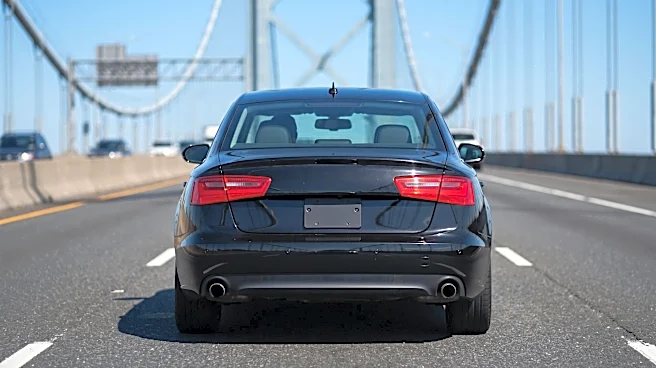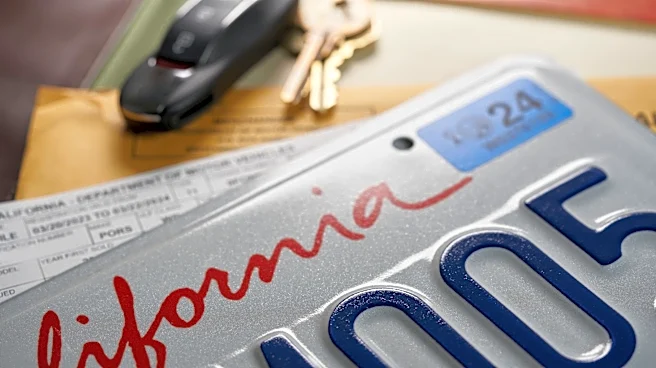



For the past nearly 50 years, California license plates have followed a familiar 9-series sequence.
Moving forward, though, that configuration may look different.
“The long-existing California license plate 9-series configuration, which began with 1AAA000 in 1980, ended with the production of the 9ZZZ999 plate this year,” Ronald Ongtoaboc, public information officer with the DMV, said in a Sept. 14 email.
That final plate in the configuration — 9ZZZ999 — has not been issued yet, as more than 110,000 plates in the 0AAA000 format remain unregistered and are stored at the DMV and auto clubs across the Golden State, Ongtoaboc said.
What does the new sequence look like?
The new sequence features the "reverse series configuration": 000AAA0, Ongtoaboc said. The first plate issued under the new configuration was
000AAA1, while the final plate of the sequence will be 999ZZZ9, according to Ongtoaboc.
The DMV began producing and issuing license plates under the new sequence earlier this year, Ongtoaboc said.
“Each configuration has over 100 million plate combinations,” Ongtoaboc said, adding that the DMV expects this new configuration to last about 40 years.
Where are California license plates made?
Inmates at Folsom State Prison have manufactured the state’s license plates for the DMV since 1947, according to the California Correctional Training and Rehabilitation Authority.
“The first license plates were made of steel. Today, license plates are manufactured from aluminum with reflective sheeting, CALCTRA said.
Over the decades, license plates have seen a number of changes, including the addition of personalized plates, CALCTRA said.
CALCTRA said its partnership with the DMV helps the program to provide work assignments for more than 100 inmates daily at their factory in Folsom Prison.
This article originally appeared on Palm Springs Desert Sun: California license plate sequence changes after 46 years. Here’s why