

A man who texted family after being bitten by a rattlesnake was rescued from a remote area of the Southern California mountains, officials say.
A family member called 911 and told dispatchers their father had been bitten by a rattlesnake in Bear Canyon Campground in Angeles National Forest the afternoon of Monday, Aug. 3, the Altadena Mountain Rescue Team said in a Facebook post.
Bear Canyon is a rugged natural area, nestled within San Gabriel Mountains near La Cañada Flintridge.
The Los Angeles County Sheriff’s Department’s Montrose Search and Rescue Team said they received a request from the Altadena Mountain Rescue Team to help search for the man at about 4 p.m.
As the man’s exact location was unknown, the two teams of rescuers and the sheriff’s
department helicopter crew began to scour the area. Deputies searched from the air, while Montrose Search and Rescue entered via Switzer Falls Trail and Altadena Mountain Rescue approached from the Tom Sloan Saddle area.
Thick tree cover made it difficult for the helicopter crew to spot the man, “adding another challenge” to the rescue effort.
Just as rescuers found and reached the man by foot, the helicopter crew spotted him from above.
Rescuers said they assessed the patient and prepped him for transport. The helicopter crew hoisted the man from the area and flew him to a nearby hospital.
Altadena Mountain Rescue Team said the rescue serves as a reminder to those exploring the backcountry in need of help to call 911 first, then notify family and friends.
“It takes time to mobilize rescue resources and every minute counts,” rescuers said.
The Montrose Search and Rescue Team urged hikers in remote areas to carry a satellite emergency communication device that can send an exact location, such as a Garmin inReach, ZOLEO, SPOT, or another GPS messenger.
“In an emergency, knowing where you are can be just as important as knowing what happened,” rescuers said. “Providing an accurate GPS location can significantly reduce search time and help rescuers reach you faster.”
Where you’re most likely to encounter rattlesnakes
Rattlesnakes live in a wide range of California habitats, according to the California Department of Fish and Wildlife, including:
- Grasslands and foothills
- Rocky areas and outcrops
- Near water sources
- The edges of suburban neighborhoods
They’re also commonly spotted in parks and preserves, including popular recreation areas and the lower elevations of Sequoia National Park.
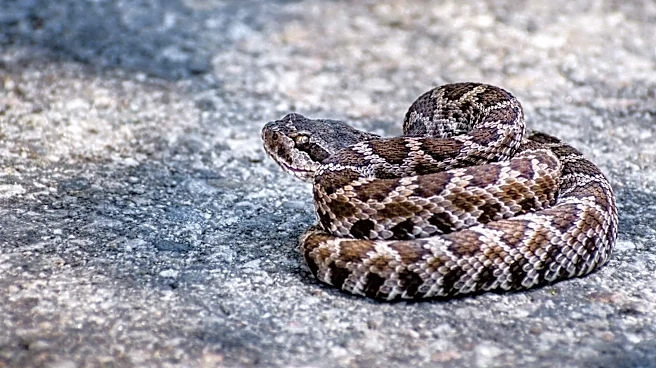
The most common rattlesnake species in much of the Central Valley and surrounding regions is the Northern Pacific rattlesnake, which has a triangular head, blotchy brown coloring, and a distinctive rattle at the end of its tail. Wildlife experts say its coloring allows it to blend in with dry leaves and dirt, making it hard to spot.
Despite their reputation, rattlesnakes are not aggressive by nature and usually bite only when they feel threatened or trapped.
“Snakes are actually a really important part of our environment,” a California Department of Fish and Wildlife spokesperson said. “They help keep rodent populations in check, so we want to protect them — and give them space.”
How to safely cohabitate with rattlesnakes
Experts say the goal isn’t to avoid rattlesnakes entirely — that’s not realistic in much of California — but to reduce surprise encounters.
Tips to lower your risk on trails and in parks:
- Stick to marked trails and avoid walking through tall grass
- Scan the ground ahead as you walk or ride
- Check logs and rocks before sitting or stepping over them
- Keep dogs on a leash
- Hike with a partner when possible
If you hear a rattling sound, stop, stay calm, and slowly back away.
One common myth, experts told the Los Angeles Times, is that rattlesnakes will always warn you by rattling. Some do. Others rely on camouflage and may stay silent until someone is very close.
What to do if you see a rattlesnake
If you encounter a rattlesnake, the best thing to do is leave it alone.
Rattlesnakes generally want nothing to do with people and will move away if given space, wildlife experts say. Do not try to pick it up, scare it off, or get a closer look.
Rattlesnakes are a protected species in California, and it’s illegal to harm or remove them from public land.
If you’re unsure whether you’re within striking distance, experts say you’re too close. Give the snake at least three to four feet of space, and more for larger snakes.
What to do if you’re bitten
Rattlesnake bites are uncommon, but they do happen — most often between April and October, when both snakes and people are most active outdoors.
The California Poison Control System has reported 77 rattlesnake bite calls in the first three months of 2026, compared with an annual average of 200 to 300, according to data cited by the Los Angeles Times.
If you are bitten:
- Call 911 immediately
- Stay as calm as possible
- Sit or lie down and keep the bitten area lower than your heart
- Do not use a tourniquet or attempt to suck out venom
- If alone, walk calmly to find help — don’t run
Most victims recover fully after receiving antivenom, according to wildlife and health officials.
Will a snake follow you?
Snakes do not naturally “follow” people the way other animals might. They aren’t out to get you, and they don’t chase out of aggression. What can feel like following usually comes down to the snake heading in the same direction, moving from one hiding place to another, and, in some rare cases, moving more boldly during mating season.
How do I protect my dog from snakes?
The best way to keep your dog away from snakes is to keep it on a leash. The smaller the area they roam, the less likely a snake encounter will be.
Some dog owners seek an aversion training program that can teach dogs to avoid snakes, available through specialized trainers.
This article originally appeared on Palm Springs Desert Sun: Text for help leads to rescue of man bitten by rattlesnake in SoCal