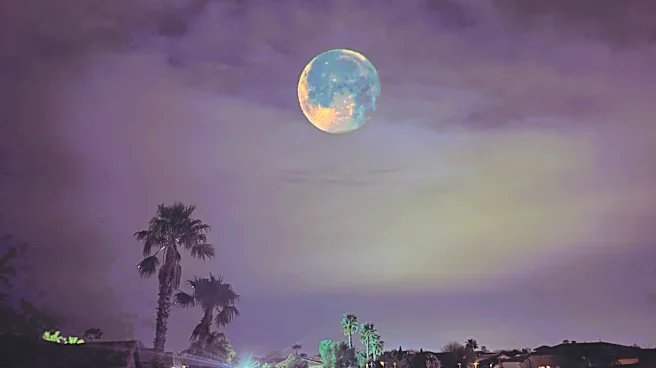





As summer gives way to fall, California skywatchers will soon see a lunar spectacle: the Harvest Moon rising above the horizon.
For generations, the Harvest Moon served as more than a beautiful celestial event, according to the Farmer's Almanac. Almanacs and farm journals in the 18th and 19th centuries viewed it as a practical calendar marker, helping farmers time harvests, plant root crops, and prepare food stores before winter.
Here's what to know about this year's Harvest Moon, including when and where Californians can catch a glimpse.

When will the Harvest Moon peak?
The Harvest Moon will peak on Saturday, Sept. 26, at 9:49 a.m. PDT, according to the Farmer's Almanac.
Even though the moon's peak will occur in the morning, "it will appear full for three days so start looking
early if the weather is clear," the Farmer's Almanac says.
Why is it called the Harvest Moon?
"Harvest Moon" is a nod to the full, bright moon that happens closest to the start of autumn, according to NASA.
"The name dates from the time before electricity, when farmers depended on the Moon's light to harvest their crops late into the night," NASA says. "The Moon's light was particularly important during fall, when harvests are the largest."
The Harvest Moon is not always in September, as it is the full moon closest to the autumnal equinox, which can on occasion happen in October, the Farmer's Almanac says.
"The Harvest Moon typically occurs in September, replacing the Full Corn Moon. However, it occasionally lands in October, replacing the Full Hunter’s Moon," according to the publication.
According to the Farmer's Almanac, alternative names for September's full moon include:
- Autumn Moon (Cree)
- Falling Leaves Moon (Ojibwe)
- Leaves Turning Moon (Anishinaabe)
- Moon of Brown Leaves (Lakota)
- Yellow Leaf Moon (Assiniboine)
Where are California dark sky communities?
To have the best chance of viewing the Harvest Moon, find a spot free of light pollution and a view of the horizon without obstructions like trees or tall buildings.
Want to find a dark area near you to view the Harvest Moon? DarkSky International is a U.S. nonprofit that maintains a list of designated dark sky communities worldwide, including 176 in the United States.
That includes these five locations in California:
- Julian is a rustic mountain town located in the Cuyamaca Mountains of east San Diego County.
- Anza-Borrego Desert State Park / Borrego Springs are located in San Diego County within the Colorado Desert of Southern California.
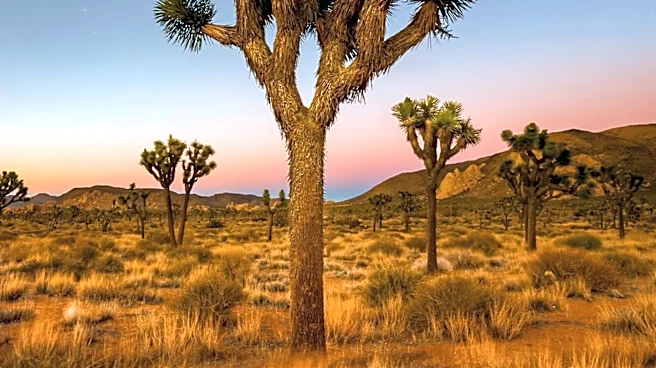
- Joshua Tree National Park is in Southern California, about two hours east of Los Angeles and one hour north of Palm Springs.
- Death Valley National Park straddles the California–Nevada border.
- Yosemite National Park spans nearly 1,200 square miles across the Sierra Nevada in California.
In Central California, Sequoia and Kings Canyon National Parks are good bets for seeing celestial light shows.
Shasta, Siskiyou, and other North State counties offer excellent places to view the night sky. On the North State coast, Prairie Creek Redwoods State Park is also a prime night sky-watching location.
Remaining full moons for 2026
After the Harvest Moon, there are three full moons remaining in 2026, according to the Farmer's Almanac. Here is the full list:
- Hunter's Moon: Peaks Oct. 26
- Beaver Moon (supermoon): Peaks Nov. 24
- Cold Moon (supermoon): Peaks Dec. 23
This article originally appeared on Palm Springs Desert Sun: Harvest Moon arrives this week. Here's when to look up in California