



Jaime Castro started the day working with his father, then hung out with his friends later in downtown Palm Springs. It was about 7 p.m. when he got back home.
But he wasn’t there the next morning.
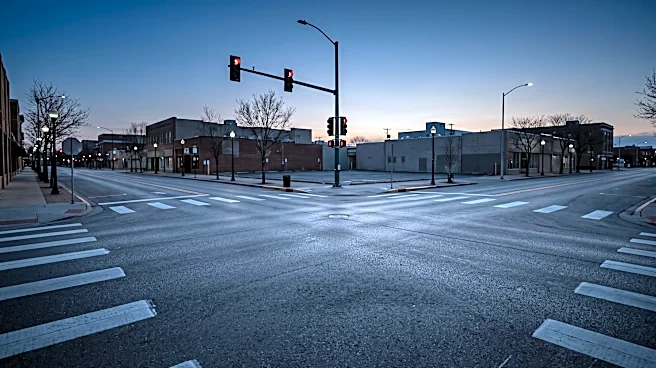
His father, also named Jaime Castro, wasn’t too concerned yet since his son sometimes visited his girlfriend nearby. The elder Castro gathered his two younger sons in his car to take them to school, then went down Pierson Drive in Desert Hot Springs, braking at the stop sign on North Indian Canyon Drive. The intersection was filled with police officers.

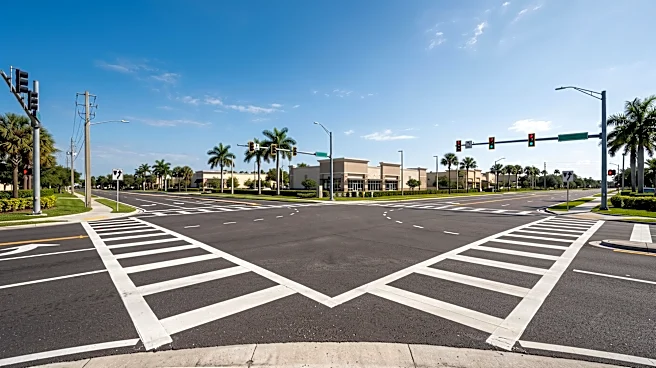
Police would give the family devastating news later that day: Several cars had struck and killed the 18-year-old around 4 a.m. by North Indian Canyon and Scenic drives.
On that night in 2025, Castro joined
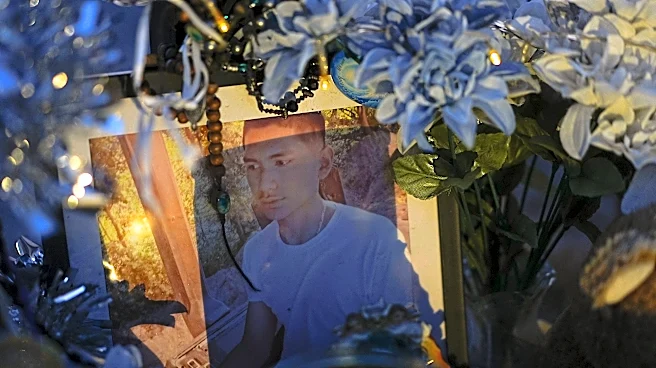
a tragic roster that keeps growing: people who were struck and killed while walking in the Coachella Valley. Today, a small roadside memorial sits near the spot where he died.
Pedestrian fatalities in the United States have risen by roughly 50% over the past decade, according to the U.S. Centers for Disease Control and Prevention. This trend is attributed to a number of factors — lighting, roadway design, larger cars, pedestrian error and speeding are just a few. Over the past decade, more than 10,000 pedestrians died in crashes on California roads, according to data collected by UC Berkeley. More than one in four fatal crashes involved a pedestrian.
In the Coachella Valley, Palm Springs had by far the highest number of pedestrians killed in recent years among the cities that provided data to The Desert Sun.
Pedestrian fatalities and serious injuries made up 13% of Riverside County’s traffic collisions over the past decade. They made up at least 19% of the Coachella Valley’s traffic collisions in that same time period.
‘Not an act of God’

Julia Griswold, director of UC Berkeley’s Safe Transportation Research and Education Center, said there’s no one reason pedestrian deaths have increased.
A lot of the collisions, including the one that killed Castro, happen at night when there’s low visibility. The Coachella Valley, with its roads surrounded by large swaths of desert and few lampposts, can be particularly dark at night. Across the United States in 2023, 75% of pedestrian deaths happened between 6 p.m. and 6 a.m.
Some pedestrians are more at risk of getting hurt than others. A Governors Highway Safety Association report said that a disproportionate number of pedestrians who die on roadways are people of color. The death rate at night was 236% higher for non-Hispanic Black pedestrians and 84% higher for Hispanic or Latino pedestrians compared to non-Hispanic white pedestrians, according to the report.
Pedestrians are also more likely to cross streets unsafely when there aren’t enough crosswalks. Even when crosswalks are there, they can be located at inconvenient distances from where a pedestrian wants to go. This makes people more likely to jaywalk and risk getting hit by a car.
Then there’s advances in technology. Griswold said the advent of smartphones coincided with the increase in pedestrian deaths and injuries. Vehicle technology itself has gotten more sophisticated — drivers can receive text messages and answer calls from their car’s built-in displays.
“There's a number of potential distractions there,” Griswold said.
Another contributor is that cars on the road are bigger and therefore deadlier than they used to be. The New York Times reported that the increasing prevalence of SUVs and pickup trucks, and decline of sedans' popularity, has coincided with the rise in pedestrian deaths over the past two decades. These larger vehicles can have hoods that are more than 50 inches tall compared to sedans with hoods 30 inches tall or less. So, if they hit a pedestrian, it strikes them in more critical areas of the body before dragging them beneath.
This has been the case in California, too. Pedestrian deaths in crashes doubled between 2010 and 2022, and the share of such crashes involving SUVs rose, according to a study this year from the University of California's Institute of Transportation Studies. Other statistics found a drop in pedestrian deaths from 2024 to 2025, but over a longer period, they have increased.
Roads are often not built with pedestrians in mind. Griswold said wide and straight roads can encourage speeding. That, of course, makes collisions more lethal with the force of impact. Narrow roads with sidewalks, though sometimes frustrating to drivers, help in getting cars to go slower.
With these contributors in mind, Griswold said she intentionally uses the word “crash” and not “accident” when she talks about traffic collisions.
“It's not an act of God,” she said. “There are things that went into that happening.”
Pedestrian fatalities in the Coachella Valley

The Desert Sun gathered data on pedestrian fatalities over the past five years in all nine Coachella Valley cities from law enforcement and records from UC Berkeley’s Transportation Injury Mapping System. (The UC Berkeley data for 2024 to 2025 is provisional.)
- Palm Springs: 20 (2021 to 2026)
- Indio: 14 (2021 to 2025)
- Desert Hot Springs: 10 (2021 to 2026)
- Cathedral City: 7 (2022 to 2025)
- Coachella: 4 (2021 to 2026)
- Palm Desert: 4 (2021 to 2025)
- La Quinta: 3 (2021 to 2026)
- Rancho Mirage: 2 (2021 to 2025)
- Indian Wells: 1 (2021 to 2025)
In several cities, a majority of the deaths were along one busy road, including Date Palm Drive in Cathedral City and Palm Drive in Desert Hot Springs. Similarly, deaths were clustered along Palm Canyon Drive in Palm Springs, with nearly half the city's pedestrian deaths occurring there.
Several roads to a solution
The complex mix of causes behind the rise in pedestrian deaths means there are a number of potential solutions. One way California has taken action has been to give cities and counties the power to lower speed limits in 2026.
Local governments can lower school zone speed limits from 25 to 20 mph until 2031, after which the speed limit will automatically become 20 mph. A pilot program in work zones issues citations to speeding drivers by using radar or laser systems that capture photos of license plates.
The state now requires cars to slow down and move over for all highway maintenance cars and stationary cars that are using hazard lights or other warning methods like road flares. The Department of Transportation can also reduce highway speed limits by 5 mph.
But a UC Berkeley Safe Transportation Research and Education Center study concluded lower speed limits alone are not enough to lower crash severity, and are more effective paired with solutions like infrastructure design and enforcement strategies.
The center works with the California Office of Traffic Safety on pedestrian and bicycle safety workshops and other state agencies on safety initiatives, in addition to conducting critical research that helps inform policies on safe transportation.
California also increased its penalty for DUIs in 2026. People convicted of killing someone while driving under the influence and given probation previously had a maximum probation period of one year for a misdemeanor and two years for a felony. This law was updated to increase the probation period to three to five years.
Beyond changes to speed limits and other traffic laws, Griswold said, California and its cities need to rethink how they design roads, where houses are built and how cities are planned and built.
“We're devoting space for parking that could be used for housing and decreasing pedestrian safety issues,” she said. “We want to make our homes and our daily destinations closer to each other, and we want to make it safer to get to those destinations.”
One way, Griswold said, is to keep pedestrians in mind when it comes to zoning and road design. — for example, putting in more crosswalks to connect amenities such as grocery stores to housing built on major roadways.
“That's an issue with the suburban style of development, is that you can end up with these huge blocks and a lack of safe crossings for pedestrians that make it so that, to reach your destination in a reasonable amount of time, you may need to cross at a midblock location that is not really safe,” she said.
But infrastructure improvements can take a lot of time and a lot of money to implement. Riverside County has been helping cities get funding on their pedestrian and bicycle safety projects. Measure A is a half-cent sales tax used to fund transportation improvements in the county through 2039. The Coachella Valley received $292.8 million in Measure A funds from 1990 to 2020.
Safety efforts in Coachella Valley
Pedestrian safety initiatives in valley cities include Indio's "Drive Smart Campaign," which encourages safer driving through community outreach. Indio also plans sidewalk improvements to Indio Boulevard between Palm and Jackson streets and will develop a "Comprehensive Road Safety Action Plan" to help improve safety on roads and identify high-risk areas.
Another initiative is Palm Desert's "Vision Zero Strategy" that aims to end traffic deaths and serious injuries in the city by 2040.
Among the projects meant to help accomplish this goal are pedestrian and bicycle safety improvements by schools and other busy areas, such as Palm Desert High School and the intersection of Fred Waring Drive and Town Center Way. It will cost $5.68 million in federal funds and $1.42 million in local funds, according to the city. Construction for these improvements, which include high-visibility crosswalks and lighting, is expected to be complete in 2029. Palm Desert also has a "Very Important Pedestrian" campaign to educate residents about pedestrian safety.
Loss that lingers
Ricardo Marano was better known as the “Walking Man” in Palm Springs, famous for walking several miles in Palm Springs at all hours of the day.

His friend and neighbor Gina Garcia said he was a funny, kind and beautiful person.
“That was his job — just to walk around and meet people, (get them to) smile or wonder or be curious who he was,” Garcia said.
Marano was a daily person in her and her partner Jayson Nieuwendorp’s life, she added. Their nickname for him was "Pumpkin" because of a large, bright orange jacket he’d wear when it was cold outside.
“He’d just always creep up on me if I was sitting out on the street having a cigarette,” Nieuwendorp said, laughing. “All of a sudden, he’s standing right in front of me.”
Marano, 56, died after being struck by a hit-and-run driver in a pickup truck while on one of his walks in the early hours of Jan. 18, 2026. Police found him unresponsive on East Vista Chino, near its intersection with North Avenida Caballeros.
The Palm Springs Police Department has not announced any arrests related to Marano’s death. This has been a source of frustration for Garcia, who feels like Marano isn’t at rest.
Castro’s family is similarly frustrated with the circumstances surrounding his death, which happened Sept. 30, 2025.

His father, Castro Sr., has been begging police for answers about that night, claiming that it took officers too long to respond to the scene when people reported his son was on the street. He filed a lawsuit against Desert Hot Springs, Riverside County, the State of California and someone named Desmond Dominic Walker on Dec. 30, 2025.
According to his father, Castro had been drinking the night he died, upset about a personal matter.
Desert Hot Springs Police Chief Steven Shaw said police initially believed the crash that killed Castro was a hit-and-run but later determined that it was not. No arrests were made related to the collision, he added. He declined to comment further due to the pending litigation.
Castro’s family continues to grieve for him.
They set up a memorial in his memory at the intersection where he died. Castro Sr. said he makes sure that it looks beautiful. He said he misses a lot about his son. They used to spend every morning together on the way to work.
“Everybody love him because he’s a good boy,” Castro Sr. said.
Reach Ani Gasparyan at ani.gasparyan@desertsun.com.
This article originally appeared on Palm Springs Desert Sun: Why do pedestrians keep getting killed in the Coachella Valley?