






Not long ago, I eavesdropped on one of those great conversations that guys have after they've had a few too many beers.
This one included an animated debate about the three things most men have too many of. The finalists were bags, hats, knives and T-shirts. Can't say I disagree. If I took a discerning look around my house, I'd likely find too many of each … so, I'm not going to do that. However, there's one knife brand I don't have that stands above just about all the others, and that's Randall. It's a good yarn, and here it is.
The Randall story begins in 1937 when W.D. "Bo" Randall was taking a stroll along a lake in Michigan. At one point, he stopped to watch with admiration as a fellow scraped paint from his boat. The knife he was using appeared
distinctively well made, and upon inquiring Randall discovered it was hand-fabricated by a guy named Bill Scagel, a local knifemaking legend. Randall decided to try and make something just as good. And after considerable practice, he did.

What started as a personal challenge soon became a business. His first outlet was a family clothing store, and word began to spread that there were quality knives to be had at that location. It was mostly an avocation for Randall until the advent of World War I when he sold a knife to a young sailor who turned out to be quite the influencer. More sailors began buying his knives, and then more — and finally a reporter ran a story about the knives that sent demand into complete overdrive. Not least among his satisfied wartime customers was Army Air Force Captain Ronald Reagan, who in a letter appointed himself as Randall's personal representative.
After the war, the reputation of Randall Knives continued to grow. General William Westmoreland wore a Randall during his time as commander of U.S. forces in Vietnam, and even some of the early American astronauts carried Randall knives into space.
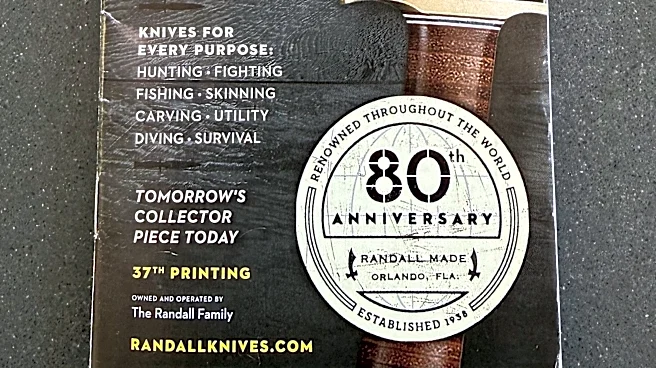
Randall himself died in 1989, but the business continues to thrive under the tutelage of his son and grandsons. Today, all Randall knives are custom made and if you are to inquire about buying one from the factory you receive a copy of the Randall catalogue (37th printing) that shows the earliest possible delivery date as January of 2033. Not many knifemakers I know of can boast of a seven-year waiting list. Quality always begets demand.
And hefty prices too. Of their several dozen models, few start at less than $500, and extensive customization can bring costs upwards of four figures. There are a handful of dealers such as A.G. Russell and Nordic Knives that can sometimes reduce the wait time, but most people order direct or buy at auctions. For knife lovers, the catalogue itself is a treat with lots of definitions, recommendations for usage and tips for care. The Randall factory is in Orlando, Florida, and it welcomes visitors. Most people linger in the attached museum that features more than 7,000 examples of edged weapons through the years. If you're a knife enthusiast — and lots of folks are — Randall is a name to remember.
Mike Rivkin is the former proprietor of Antique Galleries of Palm Springs. His new venture will open later this fall. Contact him at scmcorp@sbcglobal.net.
This article originally appeared on Palm Springs Desert Sun: What makes Randall the king of knives?