


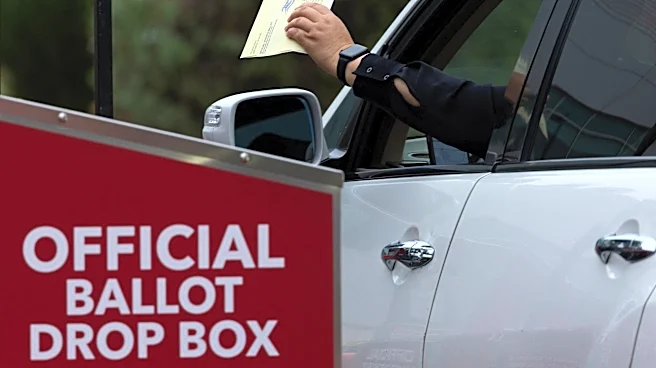
California voters will soon start to see general election ballots arrive in their mailboxes, marking the start of voting in a closely watched election.
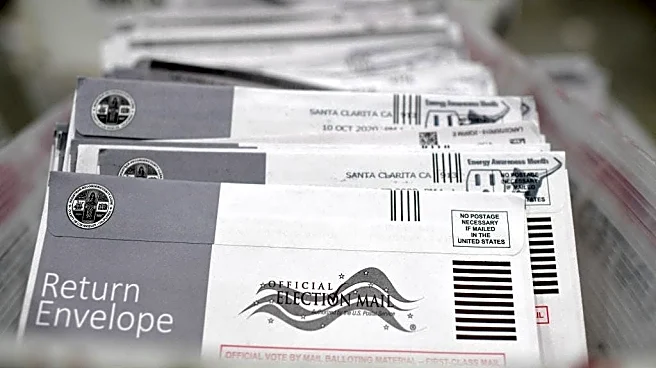
County election offices have until Monday, Oct. 5, to begin mailing ballots to registered voters.
From the governor's race to a slate of high-profile ballot measures, the November election will help define the Golden State's future.
Here's what voters can expect to see on their general election ballots.
Voters will decide who will helm the governor's seat
Voters will soon decide who will succeed Gov. Gavin Newsom, who is term-limited.
Democrat Xavier Becerra and Republican Steve Hilton advanced to the general election through California's top-two primary system, in which all candidates compete on the same ballot regardless of party, and the two highest
vote-getters move on to November.
Becerra finished first in the June primary with 28% of the vote, while Hilton placed second with 24.6%.
Other races that will appear on the November ballot
In addition to the governor's race, other statewide races that will appear on the November ballot include:
- Lieutenant Governor: Democrat Fiona Ma and Republican Gloria Romero are running for California Lieutenant Governor.
- Secretary of State: Democratic incumbent Shirley Weber is facing Republican Donald P. Wagner in the general election for California Secretary of State.
- Controller: Democratic incumbent Malia Cohen is running for re-election against Republican Herb Morgan for State Controller.
- Treasurer: Democrat Eleni Kounalakis and Republican Jennifer Hawks are running for California Treasurer.
- Attorney General: Democratic incumbent Rob Bonta is running against Republican Michael Gates for California Attorney General.
- Insurance Commissioner: Democrats Ben Allen and Jane Kim are vying for the office of California Insurance Commissioner.
- Superintendent of Public Instruction: Richard Barrera and Sonja Shaw are running for California Superintendent of Public Instruction.
Additional races voters will see on their ballots depending on their district include:
- Board of Equalization Districts 1 to 4
- 80 State Assembly seats
- 20 State Senate seats
- 52 U.S. House seats
California voters to weigh in on 14 measures
Voters will decide on 14 ballot measures, including contentious propositions on a billionaire tax and voter ID requirements.
Here is a quick overview of the measures slated to appear on California's general election ballot.
- Proposition 1: would allow the state to borrow $11.25 billion to fund housing affordability programs, including multifamily rental housing, mortgages for veterans, supportive housing, preservation of existing affordable housing, and down payment assistance.
- Proposition 2: proposes doubling California's Rainy Day Fund, first approved by voters in 2014. The funds would support education, health care, public safety, and other essential services during economic downturns.
- Proposition 3: would make tax rates approved by voters in 2012 for residents earning more than $371,000 annually permanent, instead of letting them expire in 2031.
- Proposition 4: would repeal the ban on state and local governments using public money to help fund election campaigns. However, public funding for the campaigns could not come from money set aside for education, transportation, or public safety.
- Proposition 5: Current law allows voters to elect replacement candidates at the same time as a recall election. Proposition 5 would let recall vacancies be filled by special election or appointment.
- Proposition 37: would create a new homebuying assistance program and allow $25 billion in bonds to help eligible Californians buy newly built homes by offering fixed-rate mortgages covering up to 17% of the purchase price. The bonds would be repaid with mortgage payments and not state tax dollars.
- Proposition 38: would allow the state to borrow $8.4 billion for immunology and immunotherapy research. Half of the funds would go to a single University of California-affiliated nonprofit medical research institute and the other half to research grants.
- Proposition 39: would require voters to present additional identification to cast a ballot. If passed, the measure would require voters casting a ballot in person to present government-issued identification, and it would invalidate mail-in ballots without the last four digits of a designated government-issued ID written on the envelope.
- Proposition 40: would impose a one-time 5% tax on the wealth of California billionaires. The funds would largely go toward health care.
- Proposition 41: would nullify certain state taxes enacted after Jan. 1, 2026, if their revenues are exempt from California's voter-approved spending cap. It would also require audits before and after implementing new special tax-funded programs.
- Proposition 42: prohibits new state taxes on personal property and bans retroactive state taxes based on past actions. If passed, it would also invalidate taxes enacted after Jan. 1, 2026, that conflict with these rules.
- Proposition 43: would increase the percentage of votes needed to pass citizen-driven initiatives for local special taxes from a simple majority to a two-thirds supermajority starting Jan. 1, 2027.
- Proposition 44: would require Federally Qualified Health Centers (community clinics providing primary care to medically underserved areas and populations) to spend at least 90% of revenue annually on health care services.
- Proposition 45: would amend the California Environmental Quality Act (CEQA) to speed up environmental review for certain housing, transportation, water, and health projects by setting deadlines for reviews and for resolving lawsuits that challenge project approvals.
Key dates for November general election
Here are some key upcoming dates for California's general election in November:
- Between Sept. 24 and Oct. 13: Secretary of State will mail the Voter Information Guide
- Between Sept. 24 and Oct. 13: County elections officials will mail the County Voter Information Guide
- Oct. 5: No later than this date, county elections officials will begin mailing registered voters vote-by-mail ballots
- Oct. 5: Early voting sites open
- Oct. 6: Ballot drop-off locations open
- Oct. 19: Last day to register to vote in the general election
- Oct. 20: Same-day registration is available
- Oct. 20: Voter's Choice Act counties open vote centers
- Nov. 3: Election Day. Polls will be open from 7 a.m. to 8 p.m.
- Dec. 3: Last day for county election officials to certify election results
- Dec. 4: County elections officials will send the California Secretary of State a complete copy of the general election returns
- Dec. 11: Statement of Vote certified by the California Secretary of State
This article originally appeared on Palm Springs Desert Sun: California mail-in ballots will arrive soon. Here's what to expect