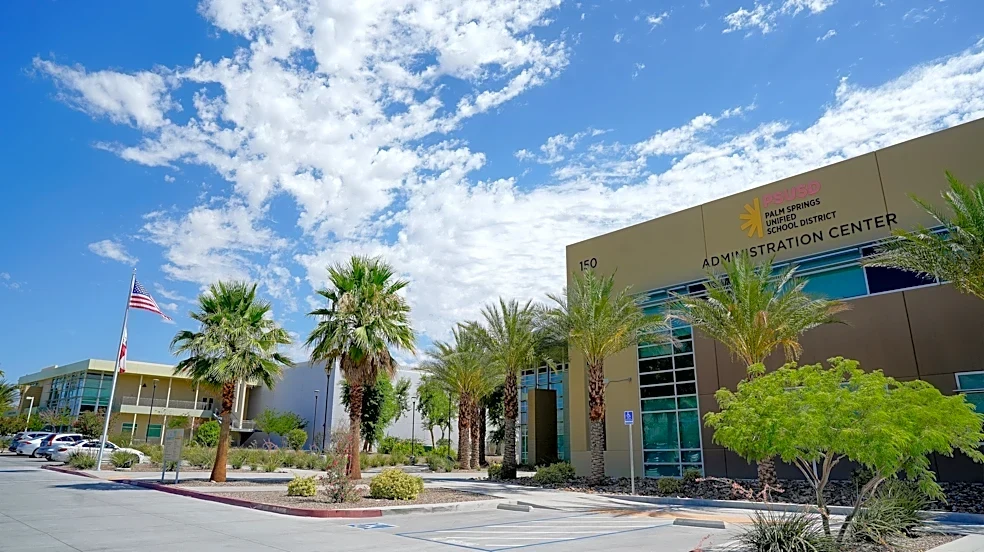




Palm Springs Unified has two school board races worth watching on Nov. 3 — one with an incumbent facing the district's former superintendent, the other with four candidates running to succeed a longtime trustee who is stepping down.
The district has five seats on its board of education, with three four-year terms currently up for election. One of those races, however, is uncontested. Karen Cornett, a retired educator seeking a fifth term in Trustee Area 3, has no challenger, so that race will not appear on the ballot.
Read on to see who's running and how the candidates responded to questions from The Desert Sun about issues facing the K-12 school district, which serves more than 19,000 students. Their responses may have been edited for brevity
and clarity.

Candidates for Palm Springs Unified school board
Who's running in Trustee Area 4?
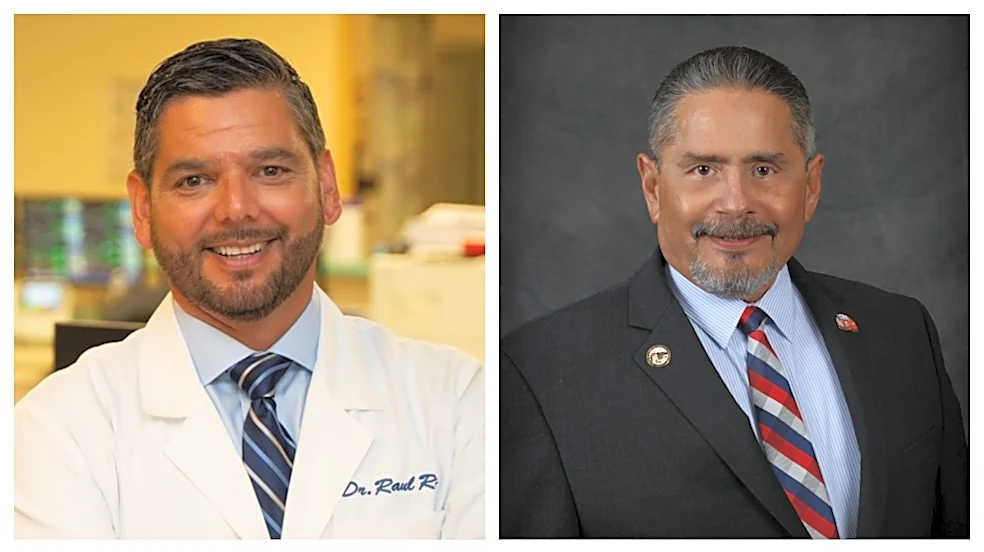
Charlie Ervin Jr. joined the school board unopposed in 2022 and became PSUSD's first Black board member. Now, in his first contested race for the Trustee Area 4 seat, he faces Tony Signoret, who became the district's first Latino superintendent. Signoret served as superintendent while Ervin was one of the school board members overseeing the district.
"I am seeking reelection because the work we started over the past four years is not finished," Ervin said.
His priorities, he said, include improving students' academic opportunities and well-being, better preparing them for college and careers and supporting school safety.
Before taking office, Ervin served as president of the district's African American Parent Advisory Council and as an ambassador on a school district budget committee. He is also a children's book author. A graduate of Palm Springs High, Ervin started his own tax, notary and fingerprinting business after working in the mortgage industry. He has two sons enrolled in the district.

Signoret dedicated most of his 35-year career in education at PSUSD, where he got his start as a bilingual teacher and later worked as a principal and district administrator before becoming superintendent. He retired in June 2025.
He and his wife raised their family in the district, fostered more than 30 children and adopted eight — part of the "deeply personal" reason he wants to give back to PSUSD by serving on the board.
"I'm not seeking another title or political career," Signoret said. "I'm running because PSUSD is family to me."
Trustee Area 4 encompasses much of central and north Palm Springs.
Who's running in Trustee Area 5?
The four-way race to succeed longtime board member John Gerardi in Trustee Area 5 — which covers much of Desert Hot Springs — has drawn four candidates: Yolanda C. Bouzas, Kaden Cross, Quana Hall-Beverly and Roger V. Nuñez.
Bouzas served on the school board for Coachella Valley Unified School District from 2016 to 2020, when she used the surname Corona, before losing her bid for a second term. She is a certified peer specialist and holds associate degrees in behavioral studies and early childhood education.
Her work on the school board, she said, would prioritize greater transparency and accountability in district decisions, easier access to information and more opportunities for families, educators and community members to weigh in.
Cross is making his second run for the seat after challenging Gerardi in 2022, the same year he graduated from Desert Hot Springs High School. He has served on the technology department at the Annenberg Foundation Trust at Sunnylands, which he believes "uniquely positions me to address the growing challenges AI poses for our schools."
From 2023 to 2025, he also served on Desert Hot Springs' public safety commission, where he said he advocated for pedestrian safety, local business and increased transparency. Cross is a night auditor for a local hotel group, where he handles general bookkeeping, and is finishing a bachelor's degree in accounting. If elected, he said his priorities would focus on financial stewardship, teacher retention, school safety and regular campus maintenance.

Hall-Beverly is a business executive and executive director of We Are One United, a local nonprofit that works with young people. She also has two sons enrolled at PSUSD. She has a bachelor's degree in sociology and urban planning from the University of California, Los Angeles.
Her years of involvement at her sons' schools and at the district level motivated her to run for the board, where she hopes to draw on her experience as a parent, community advocate and business leader.
"I'm running because I believe every student deserves the opportunity to thrive, parents should feel like true partners, and we should be able to see meaningful results from the programs and resources we invest in," Hall-Beverly said.
Nuñez is a social worker with Riverside County's Children's Services. He served on the Desert Hot Springs City Council from 2020 to 2024 before narrowly losing his bid for a second term. During his time on the council, he said he focused on issues and the needs of the city's youth and Latino residents.
He previously served on the planning commission for the city of Coachella when he lived there. A graduate of Palm Desert High School, he holds a bachelor's degree in human services from Southern New Hampshire University. He has two children enrolled at PSUSD, and would like to see Desert Hot Springs' needs better represented — with the city and district working together to improve education, school safety and support for students and families.
"I have seen improvement in our schools over the years," Nuñez said. "The district, teachers, and our scholars have worked hard to make those improvements; let's continue!"
What Palm Springs Unified candidates say about issues
The Desert Sun asked each candidate to answer questions, in their own words, about issues that would face them if they win the election. Here's what they had to say.
On student enrollment and budget priorities
Q: Like many school districts across California, PSUSD is experiencing declining student enrollment, which the district projects will continue through the 2028-29 school year. As the board approves budgets and sets district priorities over the next four years, how should it decide where spending should change as enrollment falls and where investments should be maintained or increased?
Trustee Area 4 school board candidates
Ervin: Declining enrollment means we have to be very intentional with every dollar we spend. It starts by having an amazing assistant superintendent of business services who understands the challenges ahead, and we have great faith in the plan for the future.
As enrollment changes, the board should regularly review staffing, programs, facilities and operations to determine where adjustments are necessary. But we also have to protect investments that directly support student success, including academics, school safety, student wellness, and our teachers and staff. I believe we should look for efficiencies before simply cutting programs. We need to measure results, listen to our families and educators, and make sure resources are going where they have the greatest impact for students.
Declining enrollment is a challenge, but also an opportunity to prepare for the future. The goal isn't simply to spend less. The goal is to spend smarter while putting students first.
Signoret: Declining enrollment means we will have to make difficult decisions and, in some areas, tighten our belts. But we should never lose sight of what makes PSUSD special. Budget decisions should begin with one question: How will this affect students?
We should carefully examine all costs and programs as enrollment changes, while protecting classroom instruction, staffing, student safety and the programs that enrich students' lives — including arts, athletics, college/career pathways and student support services.
We also need to strengthen community partnerships and build public support for continued investment in our schools. Businesses, nonprofits, cities, families and community organizations all have a role. Fiscal responsibility doesn’t simply mean spending less; it means using resources wisely while protecting the opportunities that help every PSUSD student thrive.
Trustee Area 5 school board candidates
Bouzas: As a board, we should decide on maintaining our budget. Any unforeseen or decrease of budget should be away from classrooms where our children are the most in need. The continued investments should be placed in our students as our priority.
Cross: Most of the district budget goes toward staffing. Nearby, CVUSD has continually laid off teachers en masse (due to a budget deficit) despite a nationwide teacher shortage and large class sizes. This is shortsighted and does not inspire public confidence.
PSUSD offers substantial hiring bonuses to new teachers (in high-need positions). When facing hard decisions, these programs are more sensible to cut. It ensures resources are maintained for experienced personnel who have dedicated their lives to our district. Teacher retention reduces training and onboarding costs while allowing students to build meaningful connections.
(Educational technology) spending has reached extreme heights. Leaders continually look to new gadgets to solve the very problems they cause. The district pays for a growing suite of rarely used, unproven software licenses, often when free alternatives exist. This must stop.
Hall-Beverly: Declining enrollment means we have to be thoughtful about how we use our resources, but I don't believe the answer is simply cutting across the board. We should start by looking at what is working, what students truly need and whether our spending is producing the outcomes we expect.
I would prioritize protecting investments that directly impact students, including strong teachers, academic support, safe schools, mental health services and programs that prepare students for college and careers. At the same time, we should be willing to examine programs, contracts and administrative costs that may no longer make sense at our current enrollment.
Every dollar should have a purpose. If something is working, we should protect it. If it isn’t, we should be willing to make a different choice.
Nuñez: Take data on the approved budget, review the results and make decisions based on outcomes and needs, which will assist in determining where to maintain or increase. The projects should be changed based on the needs of our scholars, parents and communities. For example, in our community, attendance has much to do with parents being engaged. Besides the resources we already offer, we must balance education, social services and parent engagement to bring up the numbers by implementing projects to assist (in raising) our enrollment numbers.
As a minority city, we must address multiple factors, (including) immigration, poverty, ICE and many more factors that impact our scholars' education and needs. On a positive note, we have our wellness centers in place to help provide support.
On academic achievement and chronic absenteeism
Student achievement and attendance offer two important measures of students' academic progress and how consistently they are in class. During the 2024-25 school year, about 36% of PSUSD students met or exceeded state standards in English language arts and about 22% did so in math. Chronic absenteeism improved significantly, but more than one-quarter of PSUSD students included in the state's chronic absenteeism indicator were still chronically absent, meaning they missed at least 10% of the school days they were expected to attend.
What should the school board prioritize to continue improving student achievement and attendance, and how would you determine whether those efforts are working?
Trustee Area 4 school board candidates
Ervin: Having served on the board for the last four years, I've seen the work that has brought us to where we are today. Last year, with a new superintendent, we rolled out Vision 2031, and we are still in the early stages of putting that vision into action.
Vision 2031 gives us a roadmap for student achievement, preparedness, belonging, and organizational excellence. That starts with getting students to school and making sure they are successful when they're there.
We will continue focusing on strong instruction, identifying students who need additional support, working with families around attendance, and supporting the whole child through our wellness centers and other resources. We will also continue regularly looking at academic growth, attendance, chronic absenteeism and student-group progress to determine what is working.
The vision is in place. Now we have to continue the work and measure the results.
Signoret: Student achievement must remain our highest priority, but meaningful progress does not happen overnight. As superintendent, I visited more than 1,000 classrooms, and I often spoke about continually "turning the dial" toward improvement. Strong instruction, early intervention and using data to measure academic growth are essential. But attendance and achievement are also about relationships.
Students come to school when they feel connected, know someone cares about them, and participate in activities like band, athletics and the arts. As a father and foster parent to more than 30 children, I have lived that belief: when children are motivated, supported, and know they are loved, they will succeed! Building connections is not separate from achievement — it is essential to improve both attendance and learning.
Trustee Area 5 school board candidates
Bouzas: Absenteeism should be addressed. As a board member, I would request our superintendent to bring forth a plan of action to address it, in combination with community input and families' support.
Cross: PSUSD students can graduate with a GPA as low as 1.51. That is failing upward, and it shows a grave lack of accountability. As a trustee, I will push for GPA standards to be gradually raised and for per-course failure rates to be a regular part of the reporting process to ensure subject-level gaps are identified early.
Transportation gaps are an under-addressed cause of absenteeism. The district offers minimal busing for grades 9-12. Many students walk long distances in extreme heat. I was one of them. This is also a student safety issue. The district must deepen its existing partnership with SunLine and expand contracted bus coverage. Success should be measured by changes in attendance trends and the cost per student helped.
Hall-Beverly: We have to start by understanding why students are struggling academically or not coming to school consistently. The board should prioritize strong classroom instruction, early academic intervention, student engagement and targeted support for students who are falling behind or chronically absent. We also need meaningful partnerships with families because attendance and achievement cannot be addressed by schools alone.
To determine what is working, I would look beyond a single measure. State assessments matter, but so do grade-level progress, attendance, course completion, graduation rates and student engagement. The board's role is to set clear expectations, regularly review the data and ask whether the programs we are investing in are actually improving outcomes. When something works, we should build on it. When it doesn't, we should be willing to adjust.
Nuñez: There is no need to reinvent the wheel. Let's examine what is working in other school districts and help implement those projects or systems, adjust if needed, within ours, because every community surrounding each individual school is different, and they all have different necessities to be accommodated to determine the improvement in attendance as well as academic achievement.
One way to see if efforts are working is to continue the surveys and workshops for parents as we continue tracking the data on projects and systems implemented already to see if others are needed to continue observing positive results or change as a whole.
Jennifer Cortez covers education and breaking news in the Coachella Valley. Reach her at jennifer.cortez@desertsun.com.
This article originally appeared on Palm Springs Desert Sun: Meet the 6 candidates for Palm Springs Unified school board