







As a tractor driver cultivated a California grape vineyard in June 1978, he made a bleak discovery: a shallow grave.
The human remains unearthed in the Arvin vineyard would become the center of a decadeslong mystery, leaving a family desperately waiting for answers.
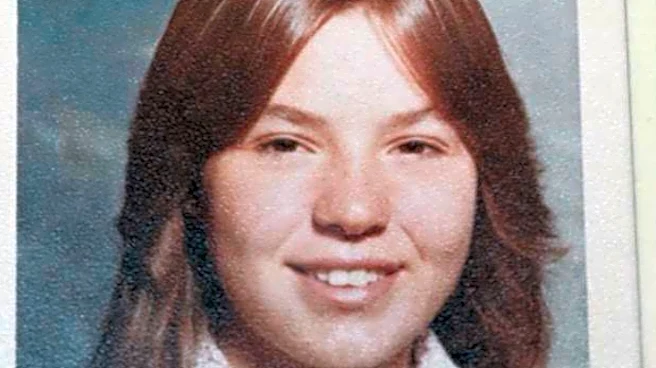
Despite an investigation by the Kern County Sheriff’s Office, the remains went unidentified for nearly 50 years. Now, thanks to advances in DNA technology, authorities have identified them as those of 15-year-old Michelle Louise Collier of Fresno, according to the Kern County Sheriff’s Office.
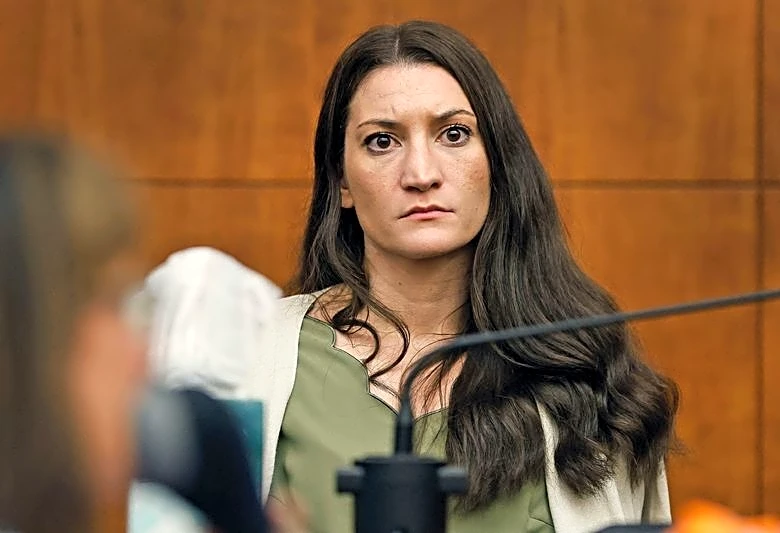
“(Michelle) disappeared 48 years ago, and it was only recently that we knew where she was. At least with this information, my family has some closure,” Michelle’s older sister, Cynthia Dunbar,
said at a Tuesday, July 28, news conference.

Kern County Sheriff's Office Detective Ashley Thompson said that while Michelle’s identification “marks a significant milestone, our work is not over.”
“Identifying Michelle is an important step, but the circumstances surrounding her death remain unknown,” Thompson said.
Investigation begins in June 1978
After stumbling upon the remains in the vineyard in June 1978, the tractor driver notified the Kern County Sheriff’s Office.
The female, who appeared to have been dead for several months, was “found wearing two white metal necklaces around her neck (one with a round religious medallion),” according to deputies.
Investigators removed the remains from the shallow grave and transported them to the county coroner’s office, where a forensic pathologist performed an autopsy.
The pathologist could not determine the cause of death for Jane Doe but did rule her death a homicide. Investigators obtained dental radiographs and fingerprints.
When investigators could not identify Jane Doe, she was buried at Arvin Cemetery in November 1978, according to deputies.
Case reopened decades later
Nearly 30 years later, investigators reopened the case and had Jane Doe exhumed from the cemetery in August 2007 to try to obtain DNA for testing. Another forensic pathologist examined the remains.
In February 2008, a California State University, Bakersfield, anthropologist performed an in-depth examination and determined Jane Doe was between the ages of 15 and 24 years old at the time of her death.
Two months later, the coroner’s office sent some of the remains to the California Department of Justice, where samples were compared to those of missing females who had similar characteristics, deputies said. However, no matches were found.
Despite additional efforts to identify Jane Doe — including obtaining dental radiographs, fingerprints, and entering her information into the National Missing Person System, a centralized database for missing, unidentified, and unclaimed person cases — her name remained a mystery.
Jane Doe was reinterred.
Project ALERT furthers investigation
In March 2015, Project ALERT — a National Center for Missing & Exploited Children (NCMEC) program that utilizes retired law enforcement officers to review unresolved missing children cold cases — reached out to the sheriff's office about looking into Jane Doe’s case.
As part of a “comprehensive review,” investigators reviewed “numerous missing person cases” to try to identify Jane Doe.
Additionally, a forensic artist with the NCMEC created a facial reconstruction for Jane Doe, which was included on a poster and uploaded to NCMEC’s website and the Help ID Me Facebook page, according to the sheriff's office.
Project ALERT also arranged to have Jane Doe’s dental records examined by forensic odontologists, who managed to rule out one missing person as Jane Doe but could not identify any additional leads.
Deputies continued to try to identify Jane Doe, distributing her flyer on social media to promote a missing persons day event in November 2019.
Even still, no leads surfaced.
Genetic genealogy provides breakthrough
In March 2025, investigators set their sights on a new technology in hopes of identifying Jane Doe: forensic investigative genetic genealogy.
“(Forensic investigative genetic genealogy) is a powerful investigative tool that combines advanced DNA analysis with traditional genealogical research,” Thompson said. “It has helped generate new leads in cases that had long-reached investigative dead ends and opened doors that were not available decades ago.”
The sheriff’s office partnered with Othram Inc., a company that specializes in advanced forensic DNA testing and genetic genealogy, and had the California Department of Justice send a bone sample for testing.
At Othram, scientists created a DNA extract from the bone, then used Forensic-Grade Genome Sequencing to build a comprehensive DNA profile for the female, according to the company.
Then, Othram’s forensic genetic genealogy team used that profile in a genetic genealogy search to create new leads. In August 2025, Othram notified investigators that genetic genealogy had identified potential relatives of Jane Doe.
Detectives reached out to Jane Doe’s potential family members, including a possible mother who submitted a DNA sample for testing.
In October 2025, DNA testing confirmed that the 1978 Jane Doe was the woman's daughter, identifying the remains as those of Michelle, who Thompson said went missing in February 1978. Deputies said they notified Michelle’s family of the identification in April.
According to Dunbar, the genetic genealogy match came from her half-brother and cousin, who submitted their DNA to a genealogy database.
“(Forensic investigative genetic genealogy) has given us the ability to identify individuals in ways that were unimaginable nearly 50 years ago,” Supervising Deputy Coroner Regina Rosso said. “Michelle Collier's identification is a testament to those advancements.”
Thompson urged that while not every case can be solved with genetic genealogy, the technology remains an “invaluable resource in our commitment to seek truth for victims and their families.”
“Taking a consumer DNA test is no longer about exploring family trees; it is a profound act of love and vital lifeline. By choosing to opt into law enforcement matching comparisons, your genetic profile becomes a beacon in the dark. ... Doing this can potentially allow us to identify additional Jane and John Does, piece together broken stories and finally bring them home,” Thompson said.
Following the positive identification, Michelle’s remains were disinterred from the cemetery, transported to the coroner’s office, and returned to her siblings in July.
“To our sister, Michelle, you didn't deserve to die this way, Shelley,” Dunbar said. “Barely 15 years old, still a child, with your whole life ahead of you. I'm sorry that we didn't protect you, but you're with Daddy now in heaven, just as you always wanted. We love you, Shelley.”
'Law enforcement will find you and hold you accountable'
Even though Michelle has been identified, her case remains open, as no suspects have been identified in her case, according to the sheriff’s office.
“To the person who killed our sister: The shock of finding out we lost our sister to a homicide is overwhelming to our entire family, especially our 85-year-old mother Maria. Your cowardice act affected our entire family,” Dunbar said. “But make no mistake; law enforcement will find you and hold you accountable. Whether you are already incarcerated or dead, you will be found. May God bless your soul, because you are going to hell if you're not there already.”
Anyone who knew Michelle Collier or has information about her is asked to contact Thompson, “no matter how minor,” at 661-861-3110 or via the secret witness line at 661-322-4040.
This article originally appeared on Palm Springs Desert Sun: DNA helps identify Fresno teen found in California vineyard in 1978