

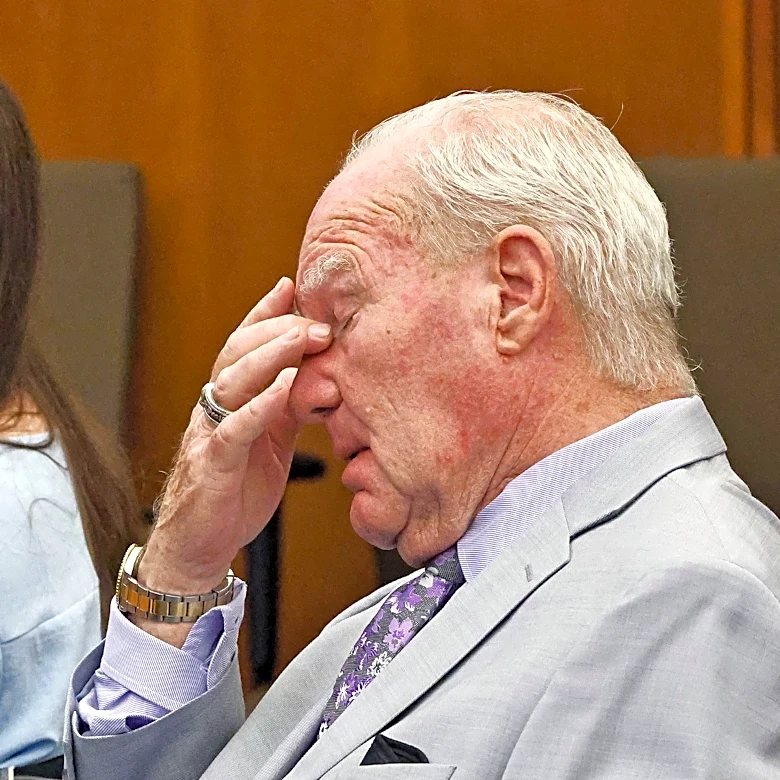



It was 8:30 p.m. on a Tuesday night and 22-year-old Fraser Bohm had just accidentally killed four sorority sisters.
Bohm was speeding in his BMW on Dead Man's Curve, a notorious stretch of Southern California’s Pacific Coast Highway. Prosecutors say Bohm was driving 104 mph in a 45 mph zone when he lost control and slammed into parked cars, which then barreled into the sorority sisters as they stood on a sidewalk on Oct. 17, 2023.
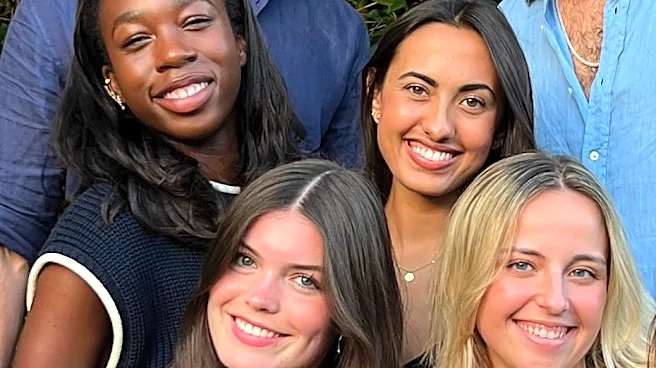
The crash killed Niamh Rolston, Peyton Stewart, Asha Weir and Deslyn Williams, all seniors at Pepperdine University in Malibu and members of the Alpha Phi sorority.
"I feel awful," Bohm told investigating officers, according to a transcript obtained by USA TODAY. "Trust me, I'm so (expletive) up."
Bohm did not set out
to kill the young women that terrible night, but he's being tried on four counts of second-degree murder and four counts of vehicular manslaughter. His trial begins Dec. 1. Prosecutors argue Bohm understood that driving so fast could have deadly consequences and did it anyway, showing "a reckless disregard for life."
Bohm's attorneys say a road rage driver clipped him just before the accident and point to his lack of criminal record or traffic violations.
“It was an accident, period,” Bohm’s high-profile attorney, Alan Jackson, told USA TODAY. “There was no malice in Fraser’s heart. He meant no harm to anybody. He was reacting to circumstances that were outside his control and an accident occurred.”
He added: “The DA's office has wildly overcharged this case."
If convicted of the murder charges, Bohm, now 24, could spend the rest of his life in prison. If a jury finds him guilty of only the vehicular manslaughter charges, he could face as little as two years behind bars.
Bohm’s trial is being closely watched for the questions it raises about what justice means for someone who doesn't intend to kill but whose actions have deadly consequences. The verdict also could have implications for similar cases in the future.
Though historically rare, murder or homicide charges in high-speed crashes that don’t involve drugs or alcohol are becoming increasingly common, according to experts interviewed by USA TODAY.
From Minnesota and Indiana to California and Florida, people across the nation who killed others while speeding are facing charges that carry life sentences.
“Everything seems like a murder,” said Jonathan Cherney, a former detective who investigated fatal crashes for Southern California's Irvine Police Department. He now does accident reconstruction for prosecutors and defense attorneys nationwide as an independent consultant.
“I have so many cases,” Cherney said, “I can’t even accept new ones.”
As Bohm's trial approaches, USA TODAY is looking closer at the crash, what led up to it, and the central question facing jurors: Did Fraser Bohm make a terrible mistake, or did he commit murder?

How did the PCH crash happen?
At about 8:30 p.m. on Oct. 17, 2023, Fraser Bohm had just picked up an order of tacos and was heading to meet friends, according to court records obtained by USA TODAY. Bohm, a college baseball prosect who lived in a $2.5 million Malibu home with his mother at the time, was driving the 2016 BMW his parents gave him shortly before they filed for divorce in 2017, court records show.
Accounts vary wildly about what led up to the crash. Prosecutors have said Bohm acted out of "complete and reckless disregard" for the lives of others, his attorneys have always asserted Bohm crashed while fleeing from a road rage driver. The man Bohm identified as the other driver, Victor Calandra, has testified he saw Bohm driving erratically and thought the 22-year-old was texting when he caught up to him at a stoplight.
"Hey, you need to be careful, you're going to hurt yourself," Calandra testified he told Bohm just before the young man floored the gas pedal and crashed seconds later, according to the Pepperdine Graphic, the university newspaper that has been following the case.
Bohm's previous and current attorneys have given varied accounts about whether he was texting just before the crash. Bohm, described as dazed after the crash, told police he "must have been texting" but didn't remember. Bohm's attorney at the time, Michael Kraut, told reporters Bohm was texting a friend at the stoplight "and the guy next to him began to become irate."
"That person then gave chase to my client," Kraut said in 2023, according to CBS News. "My client continued at a regular speed … and then the other person came in his lane and started pushing him. That person then made contact with my client's car."

Kraut said Bohm wasn't going any faster than 70 mph and had accelerated only because he was "being chased." Bohm's current attorneys deny he was texting, citing an independent cellphone analysis.
Seconds after the crash, Bohm told police Calandra pulled him out of his BMW by the neck and "pretty much threatened to kill me," according to court records obtained by USA TODAY.
"He was like, 'You don't understand what you just did. Like, you crashed into all these people,'" Bohm told police.
Bohm told police Calandra drove into his lane, causing him to swerve. He didn't mention road rage or being afraid during the interview but said he also didn't remember exactly what happened.
"I had to swerve ... And then I was already — I was going fast and then I slammed in front of ... it was two other cars," he said. "I believe it was also just a blur because my airbags had went off. So I didn't see anything ... I really wish I could hone down and understand what had happened."
Whether Bohm was going 70 or 104 mph — or somewhere in between — Rolston, Stewart, Weir and Williams never stood a chance. The young women, who were all 20 and 21, were killed instantly. Their deaths shattered their loved ones and the close-knit community at Pepperdine, a Christian school with about 9,000 students whose picturesque campus overlooks the Pacific Ocean.
Police initially booked Bohm on manslaughter charges but arrested him a week later on the murder counts. Bohm has been out awaiting trial after his family posted $4 million bail.

Issue at heart of case: Implied malice
For the prosecutors in Bohm's trial to get a murder conviction, they don't have to prove he intended to kill anyone. They have to show he had "implied malice," meaning that even though he knew driving so fast could kill people, he did it anyway, according to California law.
Prosecutors could draw on Bohm's own words to sway jurors. At the scene of the crash, police asked Bohm whether he was familiar with the phrase "speed kills." Bohm replied that he was and that the phrase meant a lot to him because two of his friends died in a high-speed crash, according to a transcript of the interview obtained by USA TODAY.
Bohm cited a crash in 2020 that killed 20-year-old driver Ezekial Bishop and his passenger, 18-year-old Ryan Breaux, recording artist Frank Ocean's younger brother. Bishop was driving drunk at speeds of 138 mph in his Tesla when he lost control of the car and hit a tree in the suburban Los Angeles city of Thousand Oaks, according to a police report obtained by USA TODAY.
"They were going way, way, way too fast," Bohm told police after his own crash. "Those are my two best friends. I know all about that stuff. ... I never got closure for what happened with them."
Prosecutors also argue that because Bohm lived in the area and drove there all the time, he knew just how dangerous it was to drive so fast. Along many stretches of the Pacific Coast Highway in Malibu, the roadway is lined with homes and businesses. Speed limits are 45 mph.
"The defendant knew it is not the Autobahn," prosecutors argue in court records. "Specifically, that stretch of PCH is where people live, drive, walk to restaurants, turn in and out of their driveways, parallel park. ... That area is teeming with human life. The defendant knew that."
Bohm's new, high-profile defense team, which replaced Kraut last year, will have to prove to jurors that Bohm did not know his behavior was likely to result in death.
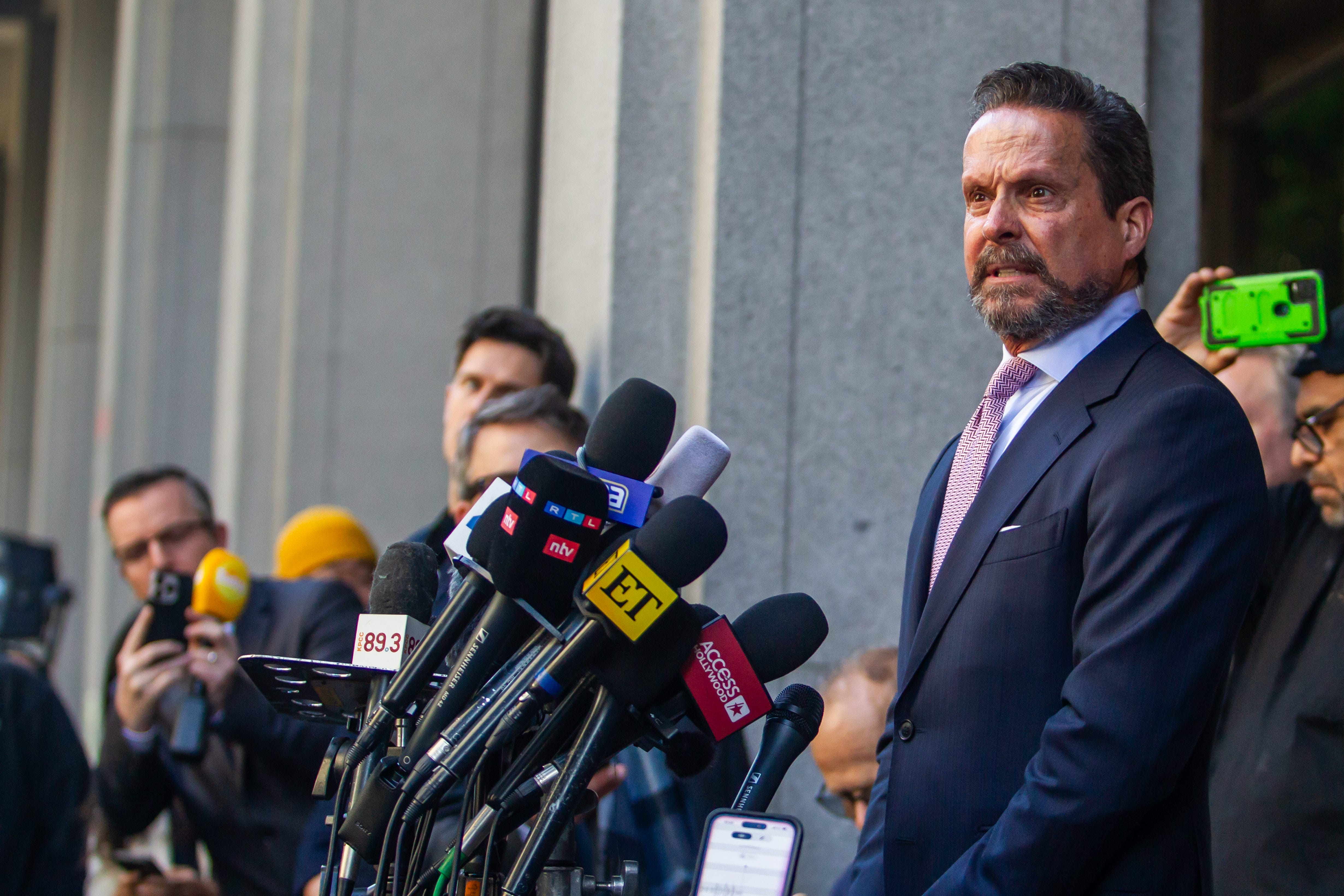
The team is led by attorney Alan Jackson, who represented Nick Reiner in the murder case involving his parents, Rob Reiner and Michele Singer Reiner. He also has represented actor Kevin Spacey and producer Harvey Weinstein, and he spent about two years in Massachusetts representing the since-acquitted Karen Read in a murder case that gripped the nation.
Jackson told USA TODAY everyone should be troubled by Bohm's case if the prosecution's strongest piece of evidence is that his client acknowledged being familiar with the phrase "speed kills."
"That phrase is a desperate attempt to hang something around Fraser's neck that doesn't exist," Jackson said. "There is no person in the last 30 years who has a driver's license in this country who hasn't heard the phrase 'speed kills.'"
If that's the predicate for a murder charge these days, he said, then every crash involving speed and a fatality could be charged as murder.
"Be careful what you wish for," he said. "What they've got to prove is that at that moment Fraser was in that car in the seconds before this tragic accident was that he had a murderous mind. If they can't prove that, they can't prove murder."
Jackson has twice asked the judge in Bohm's case to throw out the murder charges, arguing in court that "implied malice murder requires more than just tragedy and danger."
"Speed is not malice," Jackson said last year, arguing that Bohm has no criminal record and no history of speeding, and that he wasn't impaired, racing or texting.
Both times, the judge denied Jackson's request to throw out the murder charges.
Jackson also has argued in court documents that Bohm couldn't have expected the crash to happen.
Though speeding is a well-documented problem along the Pacific Coast Highway, Bohm's was the only fatal crash of 179 collisions that occurred on the same .8-mile stretch of road over the course of more than 10 years, Jackson argued, citing California Highway Patrol data.
Even if Bohm reached 104 mph, that alone wasn't "highly probable to result in death," Jackson's team argued in court records last month. "It was instead a regular occurrence on this roadway that had never before produced a fatal outcome."
Bohm's trial had been set to start Sept. 8, but the judge in the case agreed to postpone it until Dec. 1. The delay came after Jackson said at a court hearing Sept. 2 that his team would need more time to prepare for the prosecution's plan to introduce evidence that a nitrous oxide can was found in Bohm's car at the crash scene.
Jackson said he expressed concern that the case was turning into DUI accusations, but prosecutors assured the court they were not trying to prove that Bohm was high, just that he was distracted.
Experts: Murder charges in high-speed crashes are on the rise
Murder charges involving vehicle crashes are a relatively recent phenomenon that is becoming more common among prosecutors in California and beyond, according to experts who spoke to USA TODAY.
In California, they're known as Watson murders, named for a 1981 state Supreme Court case finding that second-degree murder charges were appropriate for a man named Robert Watson, who was drunk and driving at speeds of 84 mph in a 35 mph zone when he hit another car, killing a woman and her 6-year-old daughter in Redding.
Though the case set a precedent that implied malice could be applied to unintentional car crashes, it wasn't until 2008 that prosecutors began filing a significant number of such cases, said Cherney, the former police detective who now specializes in accident reconstruction.
That year, the Orange County District Attorney's Office in Southern California created the first vehicular homicide unit in the state and one of the first in the nation. In the beginning, the team largely focused on fatal drunken-driving cases, Cherney said. Over time, other prosecutors' offices created their own units and began cracking down on fatal crashes involving egregious circumstances like excessive speed, he said.
Cut to today, and more prosecutors than ever are pursuing murder charges in such cases, according to Cherney and Dan McLain, a former detective who investigates car crashes for the Orange County Sheriff's Office and now is an accident reconstructionist for defense and prosecution teams in California.
Driving the increase are a few factors, Cherney and McClain agree. Among them: better technology that can prove someone was driving dangerously, and sometimes, politics.
"The DA's office is obviously very political," Cherney said. "A lot of times, prosecutors are pressured by what the family thinks, and more than one DA has said to me, 'I would rather take this trial and lose then tell the family I'm not going to file it.'"
Other crashes that led to murder charges
A number of murder cases involving dangerous driving have made national headlines in recent months and years.
In Florida in July, prosecutors announced second-degree murder charges against Marquavious Wheaton, who they say was driving up to 115 mph in his BMW just north of Orlando before he broadsided an SUV and killed the two brothers inside, 42-year-old Christopher Marier and 40-year-old Tyler Marier.
In a news release about the case, prosecutors said that they are seeking life in prison for Wheaton and that his actions "revealed a depraved mind and a corrupt disregard for the lives and safety of others." Wheaton has pleaded not guilty.
In Minneapolis last year, a jury found then-25-year-old Derrick Thompson guilty of five counts of third-degree murder and 10 counts of criminal vehicular homicide for speeding at about 100 mph, running a red light and causing a crash that killed five women ages 17 to 20 who were preparing for a wedding. Thompson, the son of a former state lawmaker, was sentenced to 58 years in prison.
In Arizona last year, Robb Hintzsche, 35, pleaded no contest to two counts of second-degree murder in a crash that killed a Lyft driver, her passenger and the passenger’s dog in the Phoenix suburb of Gilbert. Authorities say he was driving drunk and going up to 96 mph in a 45 mph zone, ran a red light and crashed into the Lyft car. A judge sentenced him to 24 years in prison.
In a notorious case in the Los Angeles area, a jury found then-60-year-old Rebecca Grossman guilty in 2024 of two counts of second-degree murder and other charges in a hit-and-run crash that killed two brothers who were 8 and 11 years old. Authorities say Grossman was driving drunk and going 81 mph in a 45 mph zone in her Mercedes-Benz SUV when she slammed into the brothers, who were in a crosswalk with their parents and other family in the suburb of Westlake Village. Grossman was sentenced to 15 years to life in prison.
But not all cases are leading to convictions. On Aug. 2, a Southern California jury found 38-year-old Jim Rosado not guilty of second-degree murder in a high-speed crash in 2021 that killed his 18-year-old niece in Irvine, about 50 miles southeast of Los Angeles.
Though Rosado tested positive for a small amount of methamphetamine and had been going up to 90 mph, the evidence indicated that Rosado had fallen asleep and that his car drifted off the freeway before hitting a guardrail, Cherney said. The jury did convict Rosado of driving under the influence, and he was sentenced to five years in prison, but Rosado has been behind bars on $2 million bail since 2021 so won't have to serve any additional time.
At Bohm's murder trial, McLain said prosecutors will have a strong case if they can convince jurors he was driving 104 mph and if they are swayed by his comments about knowing that speed kills.
"I think that all played a factor in prosecutors saying, 'We want to throw the book at this guy to teach him and everybody a lesson,'" McClain said. "'Lets get the word out. If you're doing 104 in a 45 and kill four people, you're going to spend at least 60 years in prison, if not your entire life.'"
Defense attorney slams 'clickbait' stories playing up Bohm's wealth
Jackson told USA TODAY he has been troubled by his client's portrayal in some news media outlets as "some spoiled rich Malibu kid" and said Bohm is just "a normal young man."
"He's quiet, he's circumspect, he's focused on athletics and academics, and he was heading toward college to play baseball," he said. "He had nothing but the brightest stars in his future, as did the young ladies who lost their lives that night."
He said some have grasped onto the idea of Bohm's "upper-middle class" upbringing "as if that's some indicator that there was some intention here, or that he just didn't care about human life."
"None of that is true," Jackson said. "He is deeply, deeply affected by this, as you can imagine. He will live in the prison of his own memory of what happened that night for the rest of his life."
Jackson said he is in no way diminishing the loss of life in the case, but that "in world of 8 billion people, sometimes accidents happen."
"This is not a murder case," he said. "This has never been a murder case."
Contributing: Melina Khan
This article originally appeared on Palm Springs Desert Sun: 4 sorority sisters died in a 104-mph California crash. Was it murder?