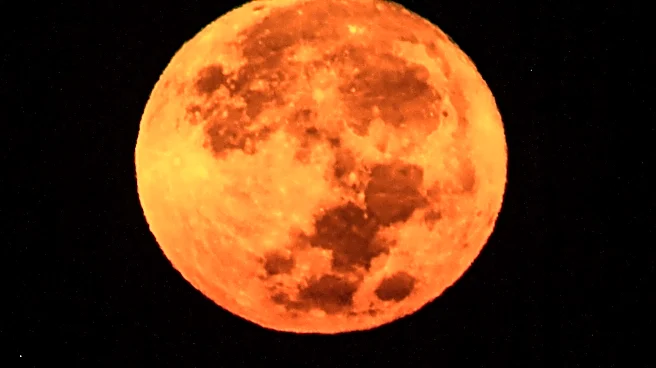




There are several specially named moons such as blood moons, supermoons or wolf moons throughout the years, and one of the most well-known is just around the corner.
The harvest moon
has inspired festivals, folklore and skywatching traditions for generations, and every September millions of people ask the same question: When is the harvest moon, and what makes it different from every other full moon of the year?The answer is that the harvest moon isn't just September's full moon. It's the full moon that occurs closest to the autumnal equinox, giving it a unique place on the calendar and in the night sky. In 2026, the harvest moon arrives later this month and will be visible for several nights.
Where and when can Californians best view the new
full moon?
When is the next full moon 2026?
The next full moon of 2026 is the harvest moon, which reaches peak illumination on Sept. 26 at 9:49 a.m. PDT. Because it occurs closest to the autumnal equinox, September's full moon earns the harvest moon designation this year.
While the exact moment of the full moon occurs during the daytime across much of the United States, skywatchers will still see a nearly full moon before and after the peak. In fact, astronomers say Sept. 25, Sept. 26 and Sept. 27 should all offer excellent viewing opportunities.
The full moon will rise around sunset and set around sunrise, making it easy to spot for anyone with a clear view of the horizon.
When is the harvest moon 2026?
The 2026 harvest moon reaches its full phase on Saturday, Sept. 26.
Peak illumination occurs at 9:49 p.m. PDT, though skywatchers won't need to be outside at that exact moment to enjoy it. The moon will appear full and bright for several nights around the peak.
According to astronomy experts, the best nights to view the harvest moon this year will be Sept. 25, 26 and 27.
Why is it called the harvest moon?
The harvest moon gets its name from farming traditions that existed long before electric lights.
Historically, farmers used the moon's bright light to continue harvesting crops after sunset during one of the busiest times of the agricultural year. Corn, pumpkins, squash and other crops were often gathered under the glow of the harvest moon as autumn approached.
While modern farming relies on technology rather than moonlight, the name has endured and remains one of the most recognized full moon names in North America.
What makes the harvest moon different?
One of the harvest moon's most unusual features is how it rises.
Most of the year, the moon rises about 50 minutes later each day. Around the harvest moon, however, that gap shrinks significantly, allowing the moon to rise at nearly the same time on successive evenings.
At mid-northern latitudes, the difference can be as little as 25 to 30 minutes from one night to the next. The result is several evenings of bright moonlight arriving shortly after sunset.
That's part of the reason the harvest moon became so important to farmers and why it continues to stand out among other full moons today.
When is the best time to see the harvest moon?
The best viewing opportunity is typically around moonrise near sunset.
Astronomers say the moon often appears larger and more colorful when it is low on the horizon. Depending on local atmospheric conditions, viewers may notice orange, yellow or even reddish hues shortly after moonrise.
To get the best view, find an area with a clear eastern horizon and check local moonrise times as Sept. 26 approaches.
Where are the best places to stargaze in California?
While it is still too early to tell what kind of cloud cover California will experience on the nights of the harvest moon, there are some areas to best watch the stars.
To find the best places to stargaze in California, locate the darkest sky possible away from city lights to make the most of the shooting star show and the wolf moon.
The National Parks Conservation Association has designated Death Valley andJoshua Tree National Parks in Southern California as Certified Dark-Sky Parks.
Dark Sky International also recommends Anza-Borrego Desert State Park, Borrego Springs,and Julian as places to see the meteor light shows.
In Central California,Sequoia and Kings Canyon National Parks andYosemite National Parkare good places to see celestial light shows.
Shasta, Siskiyou, and other North State counties offer excellent places to view the night sky. Prairie Creek Redwoods StatePark is also a prime night sky-watching location on the North Coast.
Is the harvest moon always in September?
No. The harvest moon is defined as the full moon closest to the autumnal equinox, meaning it can occur in either September or October depending on the year. In 2026, the designation belongs to the Sept. 26 full moon because it falls closest to the Sept. 22 autumnal equinox.
For skywatchers, the harvest moon remains one of the most anticipated lunar events of the year. And with clear autumn nights arriving across much of the Northeast later this month, it could provide one of the season's most memorable views.
What are the current moon phases?
- 🌗 Last quarter: Sept. 4
- 🌑 New moon: Sept. 10
- 🌓 First quarter: Sept. 18
- 🌕 Full moon: Sept. 26
When is the October 2026 full moon?
The next full moon after the harvest moon will be October's hunter's moon on Oct. 25, 2026, at 9:15 p.m. ET.
When does daylight saving time end in 2026?
Clocks will fall back one hour in early on Sunday, November 1 as daylight saving time comes to an end across most of the United States.
Maria Francis is a Pennsylvania-based journalist covering trending and breaking topics across the Mid-Atlantic and Northeast regions for USA Today Network. Reach her at mfrancis@usatodayco.com.
Ernesto Centeno Araujo covers breaking news for the Ventura County Star. He can be reached at ecentenoaraujo@vcstar.com, 805-437-0224 or @ecentenoaraujo on Instagram and X.
This article originally appeared on Palm Springs Desert Sun: When is the harvest moon 2026? How can Californians best see it?