







California skygazers, get ready: A celestial show will soon light up the night sky.
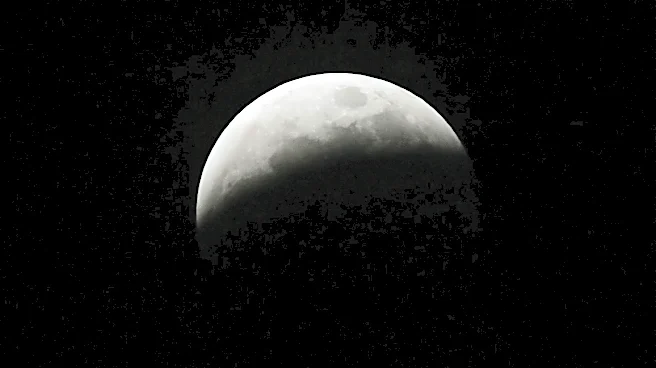
A deep partial lunar eclipse will take place from Thursday evening, Aug. 27, into the early hours of Friday, Aug. 28, according to NASA.
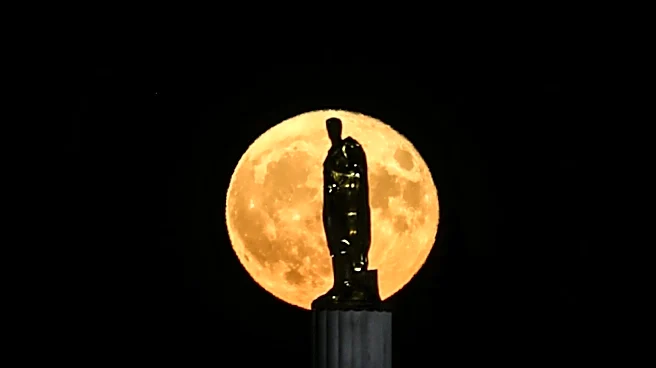
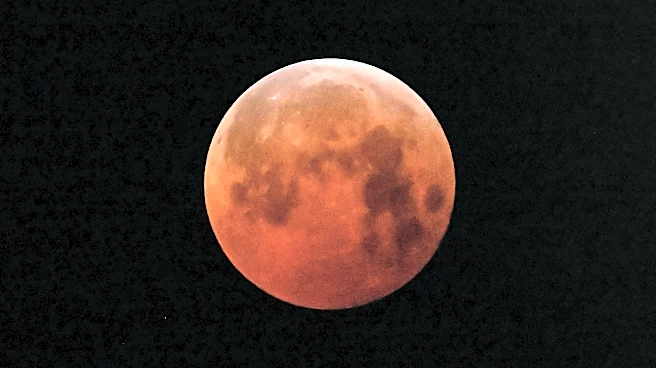
As the eclipse is only partial — meaning only some of the moon will be covered by Earth's shadow — it's often called an "almost blood moon," according to Space.com. About 96% of the lunar surface will be eclipsed.
"So there will be a little part of the moon that will still glow, and the rest of it will be dark," Nico Cappelluti, an associate professor in astrophysics and cosmology at the University of Miami, told USA TODAY.
Here's what to know about the "almost blood moon," including how to catch a glimpse from California.

When will the partial lunar eclipse take place in California?
In California,
the partial eclipse will begin at 7:33 p.m. on Thursday, Aug. 27, according to Time and Date. It will reach maximum eclipse when the moon is most covered at 9:12 p.m. The partial eclipse will end at 10:51 p.m., while the eclipse event will end at 12:01 a.m. Friday, Aug. 28.
Last eclipse of the year
In 2026, there have been four solar and lunar eclipses, according to NASA. August's partial lunar eclipse is the last one this year.
The most recent eclipse was a total solar eclipse on Aug. 12, visible only from Greenland, Iceland, northern Russia, parts of the Atlantic Ocean, Spain and a small portion of Portugal. While parts of the United States were able to see a partial solar eclipse, Californians missed out.
Earlier this year, an annular solar eclipse occurred on Feb. 17, followed two weeks later by the final total lunar eclipse of 2026 on March 3.
Is this partial lunar eclipse a blood moon?
No, which is why it's sometimes called an "almost blood moon." A blood moon happens during a total lunar eclipse, when the moon takes on a reddish-orange hue.
This unique color is caused by the way sunlight passes through Earth's atmosphere, according to NASA. The sunlight that Earth doesn't block from reaching the moon will appear red because the light is filtered through Earth's thick atmosphere as it travels to the moon's surface, and filters out light of different colors.
Tips for seeing the partial lunar eclipse
The lunar eclipse is visible to the naked eye, and observers will not require any visual aids, such as telescopes or binoculars, to view it, according to Cappelluti. Your phone can also be used to capture pictures of the eclipse.
"Even the zoom of your iPhone can give you very nice pictures," Cappelluti said.
Those who plan to stay up at night to watch the eclipse and want the optimal experience should do the following:
- Check the weather and cloud cover in your area to ensure conditions are optimal for viewing the celestial events.
- Find a dark location away from light pollution.
- Give your eyes 20 to 30 minutes to adjust to the dark.
- Avoid looking at phones or bright lights.
While heeding the steps above might give you a better view of the night sky, it isn't required to move away from light pollution to get a better view of the eclipse like you would for other celestial events, such as meteor showers. As long as you have a clear view of the sky, where buildings and clouds won't block your sight of the moon, you should be able to watch the eclipse from anywhere in the Golden State.
This article originally appeared on Palm Springs Desert Sun: 'Almost blood moon' to grace California skies. How to catch a glimpse