




Palm Springs philanthropist Brad Prescott was set to pay $3 million to purchase half of the former Tommy Jacobs Bel Air Greens golf course and preserve it as open space, blocking future development.
But earlier this year, the Agua Caliente Band of Cahuilla Indians stepped in, casting the future of the land into doubt.
The tribe's intervention has also impacted another proposal to turn the entire 35-acre former golf course into a housing development. On Tuesday, Sept. 22, the Palm Springs Planning Commission was forced to drop a discussion of that proposal from its meeting agenda after learning the Agua Caliente tribe had purchased part of the land.
The meeting highlighted the complex legal mechanisms tied to tribal land in Palm Springs. For the Bel
Air Greens golf course, new development may be tied up for the foreseeable future. Any attempts to build out the site will likely be subjected to pushback from Prescott's foundation.

Last week, representatives for the philanthropist told The Desert Sun they plan to continue to advocate for preservation even if it requires litigation.
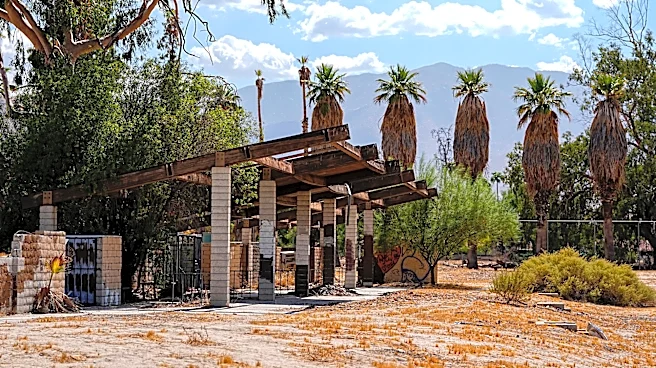
The Prescott Foundation signed a purchase agreement in December 2025 to buy around 15.5 acres, which is roughly half of the Bel Air Greens, from its tribal trustees, Diana and Lucille Bow, for $3 million. Prescott had previously purchased the nearby Mesquite Golf Course and donated it to the Oswit Land Trust, which dubbed it the Prescott Preserve. And now Prescott intended to preserve the newly-acquired Bel Air Greens land in a similar fashion.
However, a provision in U.S. law allows Native American tribes to match purchase offers on property controlled by tribal trustees. The Agua Caliente tribe decided to capitalize on this provision in April of this year to buy the property itself.
That blocked The Prescott Foundation from preserving the land. It also removed the property from the city's review process, creating a difficult situation for city planners to assess.
"Given that a portion of the proposed Bel Air Greens project is now Tribal Trust Land that is not subject to City approval, additional coordination with the Tribe and leaseholders is required to determine how to advance the proposed project," the city of Palm Springs said in a statement to The Desert Sun about a proposal to build single-family houses on the property. "It is unclear how long those conversations will take or when the item might return to Planning Commission."
The spokesperson for the Agua Caliente tribe did not respond to multiple requests for comment.
Housing development paused
Since 2021, a business entity known as Tommy Jacobs Bel Air Greens, LP has sought toconvert the former golf course into a community of 74 single family homes. But control of the limited partnership, which already leased the land from five Agua Caliente trustees, has changed significantly in the ensuing years.
Its leading member, Albert Howell, sold his stake in the partnership in 2025 to Desert Springs Inc., a religious nonprofit headed by Fred Donaldson, who is a pastor at Desert Chapel.

Desert Chapel is a church and Christian school that sits on the west side of the Prescott Preserve. It has previously opposed the Prescott Foundation's efforts to conserve the former golf course, and its intentions for the property are unclear.
Donaldson said in a letter to a Palm Springs planner included in Tuesday agenda of the Planning Commission the church had once envisioned the property as a "pastor's retirement community" — an idea that no longer appears to be under consideration.
The plan to convert the property into a community of around 74 private homes remained mostly unchanged, according to documents submitted to the Planning Commission.
Donaldson did not respond to a request for comment.

In order to allow the housing development to move forward, the Planning Commission was set to consider changing the land-use designation for the site from "open space" to "very low density residential." However, at the meeting, Planning Director Chris Hadwin said the city had learned just earlier in the week the tribe had purchased part of the property.
The Agua Caliente tribe holds sovereignty over any land it owns as part of its reservation. That means development on around half the former golf course, the roughly 19.7 acres that remains owned by individual tribal trustees, still requires a city review. But the city has no say over what's done on the half the tribe itself now owns.
"They are able to do what they like on their property without going through the city's process," Hadwin said during the meeting. "We are now in a weird hybrid scenario with this project."
The city now hopes to coordinate with the tribe to determine what it intends to do with the land and whether those plans include proceeding with the 74-home development.
Prescott Foundation vows to fight development
Although it was blocked from buying part of the Bel Air Greens golf course for preservation, the Prescott Foundation has informed the city it intends to vigorously fight any attempt to build houses on the site.
"Somebody is trying to change the character of the property to be suitable for development, but that is not going to happen," said Michael Williams, an attorney for the Prescott Foundation. "We will fight tooth and nail to make that never happen."
The foundation contends the creation of the Prescott Preserve relied on the city's land-use laws remaining in place for the Bel Air Greens golf course. Both the Prescott Preserve and Bel Air Greens sit within a long stretch of open land within Palm Springs that environmentalists have hoped to use to create a substantial wildlife corridor.
"There is simply no tolerance or legal entitlement for residential development in this sacred corridor of open space," Williams wrote in a letter to the city.

Any future development may be wrapped up in disputes over the tribe's responsibility to maintain the property as open space, as the Prescott Foundation contends, as well as city laws which may inhibit development.
The property appears to be headed for a long term of disuse as the issues are adjudicated.
"There will be zero homes built on this property," Williams said. "We’re going to do everything we can to make sure nothing gets built."
Sam Morgen covers local government for The Desert Sun. Reach him at smorgen@gannett.com.
This article originally appeared on Palm Springs Desert Sun: Agua Caliente tribe halts plans for Palm Springs housing development