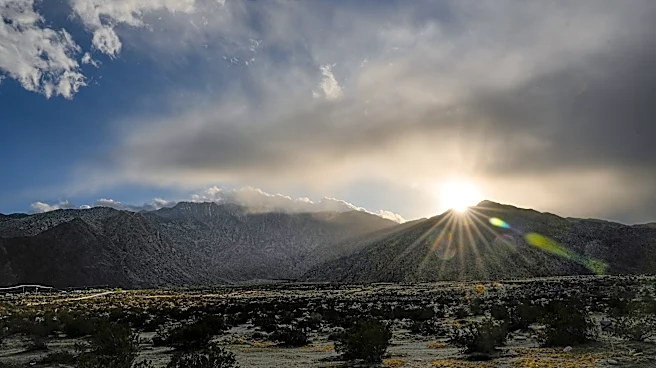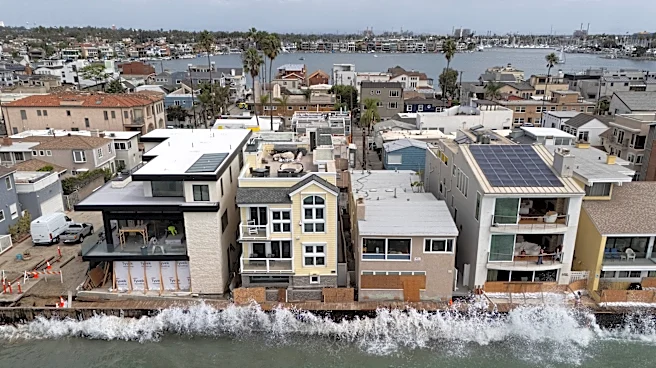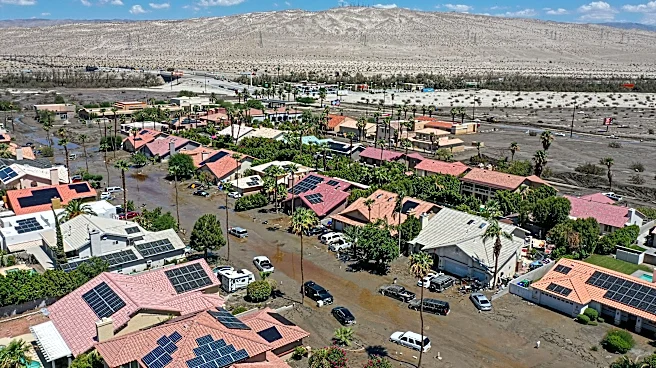


On Sunday, Aug. 20, 2023, the remnants of Hurricane Hilary hit the Coachella Valley hard
. As the rain rolled in, 911 service went down in Palm Springs, Indio and Cathedral City. Flooding forced Eisenhower Medical Center onto generator power. Neighborhoods flooded, sinkholes opened up, and 46 people had to be rescued from mudslides in their homes. Some could only make it out in the bucket of a front-end loader.This year's unusually strong El Niño should get everyone across the Coachella Valley now asking: What if Hilary had arrived on a busy Monday morning instead of a lazy Sunday?
And imagine a storm like Hilary hitting not in August, but in season, when the valley’s population explodes from 370,000 to 600,000, but our emergency services stay
the same size.
Water, mud and debris pouring across the freeway is more dangerous when Interstate 10 is packed with workweek commuters. Or retirees heading to hospitals and medical appointments.
On that Sunday, we didn’t have thousands of parents trying to get kids to school while the roads in Palm Springs, Cathedral City and Palm Desert were closing.
In season, the roads would also be full of tourists who’ve maybe never experienced flood-prone roads and don’t know alternate routes.
And a road closure in one city can absolutely strand people trying to reach another. A cell tower failure can affect multiple communities at once. Single disasters create this cascading problem across the valley.
Floodwater just doesn't care where one city starts or another ends. We’re all in this big basin together.

Which brings us to this year’s El Niño. A typical El Niño means a wetter-than-normal winter and more frequent storms in Southern California. But the federal government’s NOAA says there’s a greater than 90% chance of a very strong El Niño this fall and winter, and a 75% chance that the October-through-December event will rank among the strongest since 1950.
That means now is when we need to prepare for the high possibility of a freak storm. A disaster that doesn't care whether it arrives on a quiet Sunday afternoon, a bustling Monday morning or the middle of a long weekend. Hurricanes don’t care about our holiday parties.
So what can you or I do?
The Coachella Valley Disaster Preparedness Network, or CVDPN, is a great place to start. Its free personal-preparedness workshops teach residents how to prepare at home, in their cars and at work. For HOAs, businesses and houses of worship, CVDPN offers a six-hour course on developing a community disaster plan for instances just like Tropical Storm Hilary.
And we can all also:
- Learn our evacuation routes,
- Keep several days of food, water and medications on hand,
- Make a plan for pets,
- Place emergency supplies in our vehicles; and
- Establish a way to communicate with family if cell service goes down
Because we don’t know when the next flood will happen, when the next road gets washed away, or the next time emergency responders get stretched thin.
But whenever that next freak storm arrives, we need to be ready for it to happen on a Monday morning.
Eric Cunningham of Rancho Mirage is a writer and his neighborhood’s emergency preparedness lead. He can be reached at cunningham.eric@gmail.com. Mitch Brown of Rancho Mirage is president of the Coachella Valley Disaster Preparedness Network. He can be reached at info@cvdpn.org.
This article originally appeared on Palm Springs Desert Sun: El Niño-driven storm could hit Coachella Valley. Let's prepare now