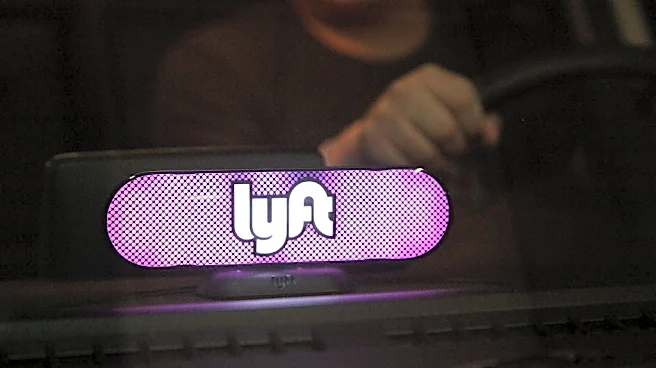









Lyft has reached a $272.5 million settlement after California officials accused the rideshare company of wage theft, marking the "largest wage-and-hour settlement in California history," according to state officials.
The company is accused of misclassifying drivers as independent contractors rather than employees and denying them wage and workplace protections required by law between 2016 and 2020, California Attorney General Rob Bonta’s office announced in an Oct. 1 news release.
“We are proud to announce this landmark win for workers, the largest misclassification settlement in California’s history. ... Hard-working employees deserve full compensation for their labor. We have not and will not stand by when companies attempt to shirk their legal
responsibilities and deprive employees of their wages and benefits as required under California law,” Bonta said in a statement.
The settlement is pending court approval.
Lyft's response to settlement
In an emailed statement, Lyft said if the settlement is approved, it “closes a chapter from a very different time, before Prop 22.”
“The vast majority of rideshare drivers in California have always wanted to be independent contractors, and voters affirmed that when they passed Prop 22 in 2020, giving drivers new benefits and protections while preserving their flexibility,” the company said.
California's Proposition 22 classified app-based rideshare and delivery drivers as independent contractors instead of employees, exempting companies from a state law, Assembly Bill 5, that would have required them to provide full employee status. The measure still requires certain benefits and worker protections.
"Lyft believes drivers have always been properly classified under the law, and we're glad to put this case behind us," the company said. "We remain laser-focused on helping create more earnings for drivers and more affordable rides for riders."
How did Lyft settlement come about?
In August 2020, the California Labor Commissioner's Office filed a lawsuit against Lyft in Alameda County Superior Court, the agency said in a news release. The LCO argued that drivers were denied certain workplace protections, including minimum wage, overtime pay and paid sick leave.
At the same time, the California attorney general, along with city attorneys from San Francisco, Los Angeles and San Diego, had already brought a separate lawsuit against Lyft, alleging the company misclassified drivers and “deprived workers of critical workplace protections such as the right to minimum wage and overtime and the right to be reimbursed for their work-related expenses between 2016 and 2020.”
The lawsuits were later combined and consolidated in 2021, according to the LCO. The years-long legal battle culminated in the settlement announcement on Thursday, Oct. 1.
“This settlement is about the workers who came forward and spoke up. Their voices made this outcome possible,” California Labor Commissioner Lilia García-Brower said in a statement. “We pursued this case to ensure workplace protections have real meaning and to recover as much as possible for drivers.”
Lyft CEO David Risher said the settlement allows the company to move forward and spares them “a long, costly fight, so we can keep our focus where it belongs: on drivers and riders.”
“For too long, the story of rideshare in California was a fight, but what we need is partnership,” Risher said in an online statement. “Drivers, riders, the state, and Lyft all want the same thing: good work that’s fairly paid and rides people can afford.”
More on Lyft settlement
If the settlement is approved, Lyft will be required to pay $272.5 million in restitution and penalties, according to the LCO. Eighty-seven percent of the settlement will go to drivers who worked for Lyft.
“Driver eligibility and compensation will be based on the number of hours and miles driven between April 5, 2016, and December 15, 2020,” Bonta’s office said.
A third-party settlement administrator will manage the restitution funds, the LCO said. The administrator will contact any former drivers eligible to receive settlement funds.
The administrator will also create a website, email address, and call center to offer information about the settlement and answer questions for drivers who believe they are eligible, the LCO said.
Does Lyft need to reclassify California drivers moving forward?
Because the case covers a period before Proposition 22 took effect, the settlement does not require Lyft to reclassify drivers going forward or provide relief for work performed after the law was enacted, according to the LCO.
This article originally appeared on Palm Springs Desert Sun: Lyft agrees to pay $272.5 million over wage theft claims in California