





The buzz of cicadas is synonymous with summer in the Coachella Valley.
These noisy insects are meant to be active in the months of June and July, but will oftentimes linger in the desert for several months more. This is due to watering disrupting their natural life cycle, said Doug Yanega, a senior museum scientist at the University of California, Riverside.
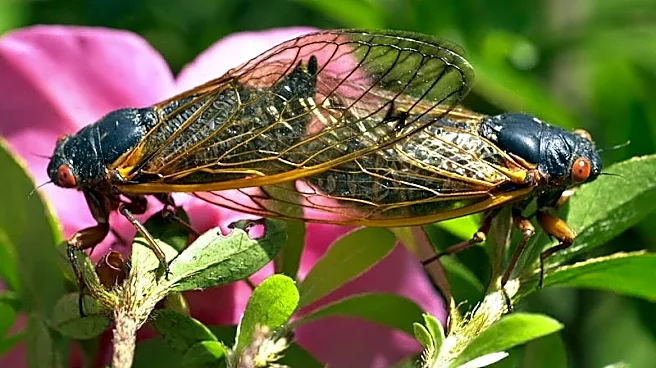
Yanega added that there should be two or three species of cicadas in the valley, but he's only observed photographs and records of there being one. That is the citrus cicada, which is otherwise known as the Apache cicada or, for the more scientifically inclined, Diceroprocta apache.
Why do cicadas make noise?
The distinct noises cicadas make, somewhat similar to the noise of sprinklers or television static, are male
cicadas attracting female cicadas to mate. Yanega said different species of cicadas make unique sounds so as to attract the same kind, though it would likely take a lot of training for a person to be able to tell the difference.
“It works pretty well,” he said. “I mean, we’ve got lots of cicadas out there, so it's clearly a successful strategy.”
How long do cicadas live? What are annual and periodical cicadas?
After male cicadas romance their female counterparts and they mate, the females will later lay eggs in tree branches. Yanega said they usually don't mate more than once.
The young cicadas (called nymphs) will then hatch, drop and burrow into the ground to feed on the tree’s roots, Yanega said. They crawl back up to the surface and shed their skin once they’ve matured. The cycle will repeat itself from there.
Citrus cicadas will live for around three to five years, almost all underground, though Yanega said no one is 100% sure of their life span.
Each year, a certain percentage of the cicadas will mature and emerge, though an individual cicada only comes aboveground once in its life. These "annual" cicadas are different from periodical cicadas, which can live 13 or 17 years underground then emerge at once in a swarm. Yanega said periodical cicadas are not present in the western United States.
What do cicadas eat?
Yanega said cicadas’ diet is almost pure water, which contributes to why it takes them several years to mature. It doesn’t make much difference what type of tree they develop by, he added.
“I think that they call them the citrus cicada because they do find them in citrus orchards, but they’re certainly not restricted to those,” he said.
Why are there cicadas in the desert past July?
Each cicada typically only lives a few weeks aboveground before dying, which based on their natural life cycle would mean that year's crop of adults are gone by August after being active in June and July. But Yanega said people constantly watering their trees throws the cycle off as it keeps the ground wet and underground cool.
“So in places like Palm Springs, they’ll stay active way past their normal time,” he said. “They’ll stay active through August, September, October, November. I actually even heard records, people calling me up in December and saying that they still hear cicadas, what’s going on?”
But there aren't really any negative consequences to this. Yanega said it may even be beneficial since more cicadas means more food for insect-eating mammals and birds.
This article originally appeared on Palm Springs Desert Sun: Why cicadas are still making noise in California