






For six years, eight inexpensive solar lights lined the walk to my front door. They were visible from the street every single day, and nobody said a word. Then the letter came. Violation. Fine. Nothing about the lights had changed. What changed was who was looking.
I have spent most of my career in governance — as a Marine Corps officer, a government official, a company board chair, and an executive coach focused on how large organizations make decisions. Yet I still received the letter. That is what is worth writing about — not the lights.
A rule that goes unenforced for six years is not a rule. It is a preference that eventually arrives as a surprise. Enforcement that appears out of nowhere does not teach a community what the standard is; it teaches
us that the standard depends entirely on who is holding the clipboard this year.

The second realization is more uncomfortable because it implicates me. I never read the thick packet of governing documents that arrives every year. I coach people on governance for a living, and I ignored my own. If you are honest, neither did you.
That matters more than it used to, because the law moved and almost nobody in this valley noticed.
In June of 2025, the California Legislature passed AB 130, and Gov. Gavin Newsom signed it. Buried inside were amendments to Civil Code sections 5850 and 5855 that rewrote how associations discipline members. Fines are now capped at $100 per violation, unless the board makes a written finding in an open meeting that the violation creates an adverse health or safety impact. Members now have a right to cure the problem before a hearing is held, boards have only 14 days to deliver a decision, and interest on unpaid fines is gone.
Attorneys who represent associations have written plainly that many existing fine schedules are now completely unenforceable.
Furthermore, an older provision states that an association may not fine anyone unless its board has adopted a schedule of monetary penalties and distributed it in the annual policy statement. No properly adopted, properly distributed schedule means zero authority to fine. Not a reduced fine — no authority at all.
In a valley with hundreds of associations, the question is often not whether a homeowner broke a rule. The question is whether the association ever established, in the precise manner the law requires, its power to punish the breaking of it.
The easy version of this column is a villain story, but that version is wrong. HOA boards here are volunteers. They serve without pay, take abuse at meetings, and inherit governing documents written by developers who left the desert decades ago. They hand enforcement to management companies whose business model rewards compliance volume, because that is what boards ask them to produce. Nobody designed this system; it accreted.
That is precisely how good rules go bad. Through drift. A rule is written for a reason; the reason fades, but the rule stays. Eventually, someone enforces a restriction whose purpose no one in the room can articulate, and the community learns the wrong lesson — that the association is something to manage around rather than something to belong to.
I have watched this failure of companies for 30 years. Enforcement is the cheapest available form of leadership and the most expensive available form of governance. It buys compliance and it spends trust — the only currency a volunteer board actually has.
If you own a home in a common-interest development in the Coachella Valley, ask your board for a copy of its current schedule of monetary penalties. Ask when it was last adopted, how it was distributed, and whether the fine amounts survive the $100 cap that became law in 2025. If the request produces a long silence, you and your board have learned something important.
To the boards themselves: Audit your authority before you exercise it. Ask counsel whether your fine schedule is valid today. Any board that would be embarrassed by that audit already knows the answer.
The lights are a small thing. What is not small is a community of neighbors discovering that the rules governing their largest asset have not been examined by anyone in years — and that the examination was always available, to any of us, for the cost of asking.
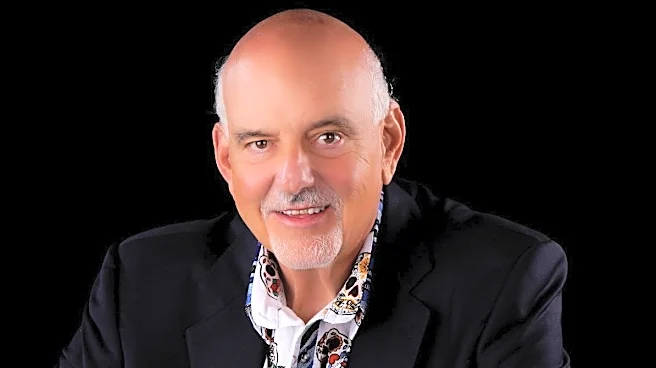
Bob Stone is an executive leadership coach, chair of several company boards, and a former Marine Corps captain and pilot. He lives in Palm Desert, where he serves as board treasurer for Genesis HOA and is writing a book titled "Why Good Rules Go Bad."
This article originally appeared on Palm Springs Desert Sun: Does your HOA have big fines? They're probably illegal now