





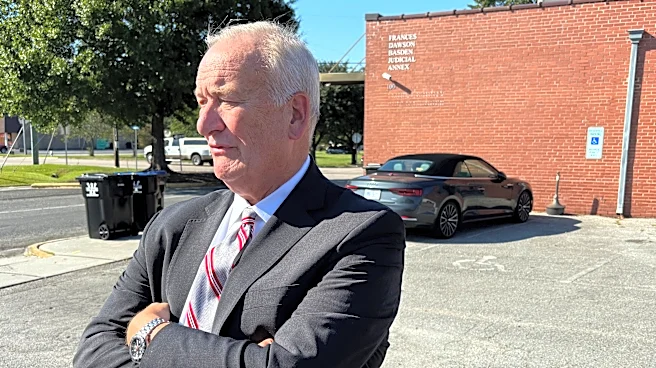

George Mandley knows what it’s like to have heart issues.
The Bolivia resident has survived two heart attacks, so when he began experiencing chest pains and shortness of breath, he knew it was time to go see his cardiologist.
After some testing at Novant Health New Hanover Regional Medical Center earlier this year, Mandley learned he would need open heart surgery.
“So, a week later, here I was,” he explained months later from his seat in the hospital lobby.
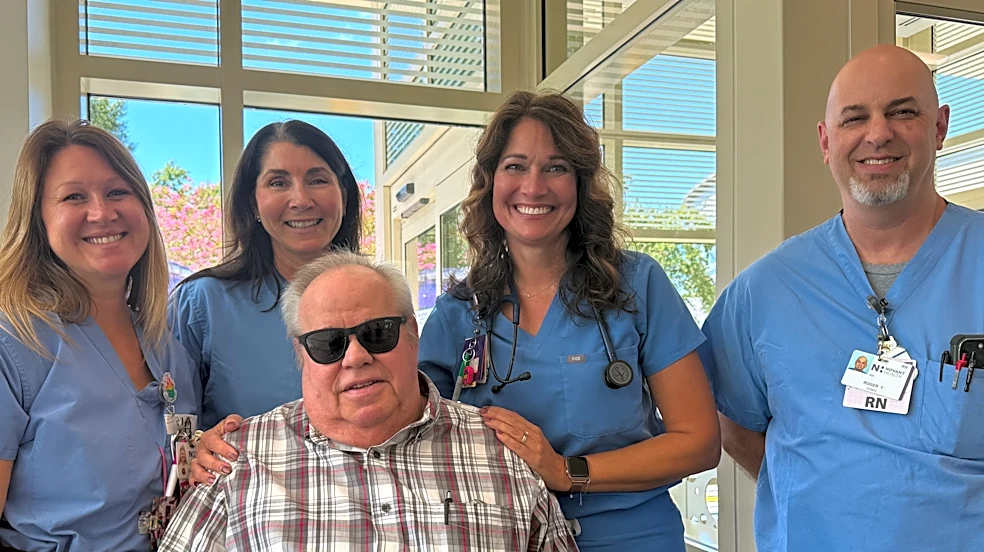
When Mandley returned to Novant Health New Hanover Regional Medical Center on Sept. 14, it wasn’t for treatment; now recovered from surgery, he returned to thank the nurses who cared for him.

Mandley had high praises for his care team, especially after he experienced atrial fibrillation — a scary
and potentially dangerous irregular heart rhythm — two days after surgery. At the time, Mandley was still in the hospital.
Mandley recalled that he was sitting in the chair and had no idea what was happening.
“I was like, ‘Oh … something can’t be right here,’” he recalled.
Nurses immediately came in and got to work. One of those was Hyla Smith.
Smith said Mandley had been doing well, and they were preparing to take him for a walk. While she was getting his lines in order, she noticed a few “blips” on the telemetry monitor.
She called for another nurse and the physician’s assistant who were nearby. They immediately got Manley back in bed and put the EKG machine on him to confirm whether what he was experiencing was atrial fibrillation with rapid ventricular response (AFIB with RVR). Once it was confirmed, the team administered medication to regulate his rhythm.

Smith tried to keep Mandley calm through the ordeal because she said it can be unnerving to see people rushing into the room, especially when the patient is already experiencing a racing heart, shortness of breath and a dropping blood pressure.
“You don’t want to scare your patient,” she explained.
While atrial fibrillation can be caused by coronary artery disease, hypertension, and heart failure, Smith explained that in this case, it was likely caused by open heart surgery.
“Every time we do heart surgery, we cut into your heart, and we tickle those areas of the heart as their healing,” Smith explained.
She added swelling after surgery can interrupt the electrical signals, leading to AFIB. When that occurs, she said they will administer medication to “calm the heart muscle down.”
While Mandley was in the hospital around people who knew exactly how to respond to the arrythmia, that’s not always the case. Atrial fibrillation can be dangerous if left untreated. Smith said it’s important that people communicate with their doctor if they experience a rapid heart rate or anything unusual.
Mandley said he’s grateful for the care he received throughout his surgery and recovery, and he’s glad for nurses like Smith and the care team.
“I couldn’t have gone to a five-star hotel and been treated any better,” Mandley said.
Renee Spencer is the community engagement editor at the StarNews. Reach her at rspencer@usatodayco.com.
This article originally appeared on Wilmington StarNews: Wilmington patient returns to thank nurse who spotted scary heart rhythm