
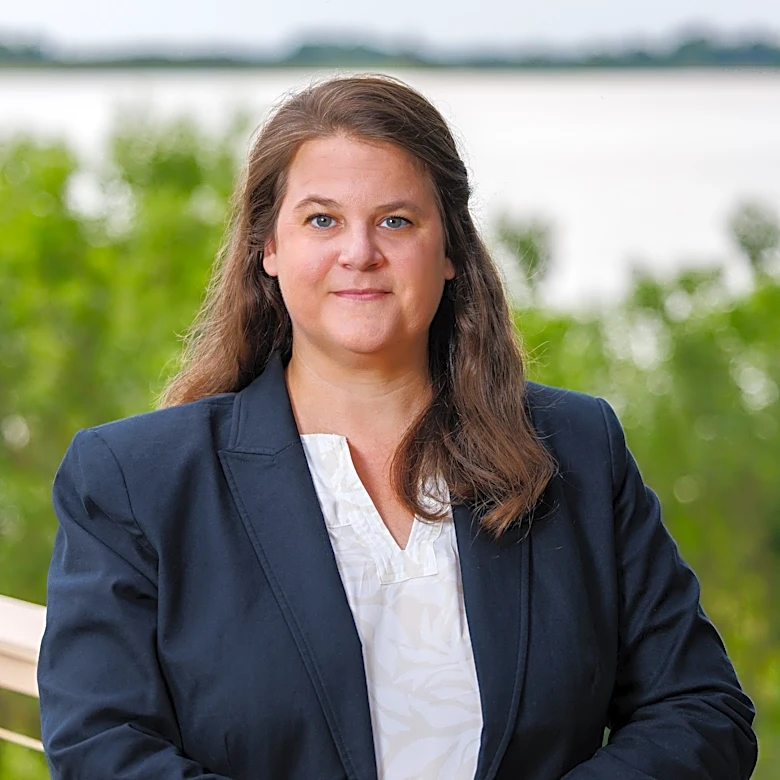




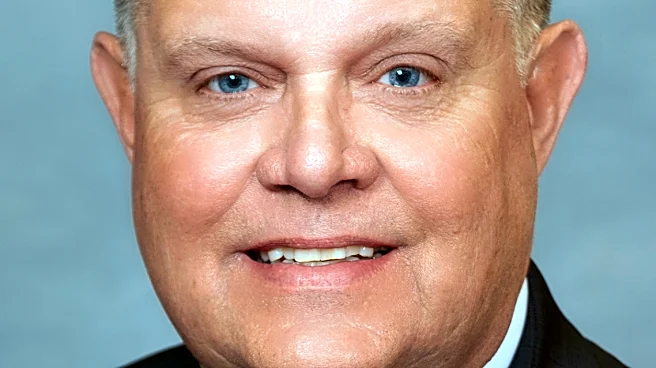
The race for the North Carolina District Court District 6, Seat 2 judicial seat is being contested between Republican Kurt Fryar and Democrat James Faison III. Faison currently holds the seat.
A four-year term is at stake. The position comes with a $170,853 salary.
The district court serves New Hanover and Pender counties.
The voter registration deadline is Oct. 9. In-person early voting begins Oct. 15, with same-day registration available. The absentee ballot request deadline is Oct. 20 at 5 p.m. In-person early voting ends on Oct. 31 at 3 p.m.
Election Day will be Nov. 3. The absentee ballot return deadline is Nov. 3 at 7:30 p.m.
North Carolina residents can check their voter registration status on the North Carolina State Board of Elections website.
Here are the candidates’ responses and their thoughts on current issues.
Candidate responses have been edited for grammar, style and length.

James Faison III
Age: 64
Occupation: District court judge
Education: Pender High School (1980); North Carolina Central University bachelor of arts degree, cum laude (1984); North Carolina Central University School of Law, jurisdiction doctor degree (1987).
Political experience: assistant district attorney, New Hanover and Pender counties (1992-2000); appointed as a district court judge for New Hanover and Pender counties (2000-present); appointed chair of governor’s DWI task force in 2014; appointed to the North Carolina Judicial Standards Commission (2018-2024); appointed director of the North Carolina Administrative Office of the Courts as chair of the North Carolina Drug Treatment Courts Advisory Committee, which is now the Judicially Managed Accountability and Recovery Courts (2008-present).
Political affiliation: Democrat

Kurt Fryar
Age: 51
Occupation: Attorney
Education: University of North Carolina at Chapel Hill juris doctorate (2002), University of North Carolina Wilmington master of science (1999), University of North Carolina Wilmington bachelor of science (1998).
Political experience: None
Political affiliation: Republican
Why are you seeking this judicial office?
Faison: I am immensely grateful to have served as a district court judge in New Hanover and Pender counties, the communities of my upbringing for over 26 years. I want to continue administering justice and applying the knowledge and experience I have gained over these many years I have witnessed firsthand how the power of the judicial office can be used effectively to help make communities safer and individual lives more productive. I want to continue helping our communities thrive with the use of restorative justice initiatives and programs which help transform lives while saving taxpayer dollars.
Fryar: I grew up in Wilmington and I have spent my entire career in our local courtrooms. Being a judge has always been in the back of my mind, but I never considered running for judicial office until I had a considerable amount of experience. I hope to improve courtroom efficiency and to ensure parties, attorneys and court staff are treated respectfully. After 24 years practicing in our local courts, I believe I have the experience, judgment and temperment to serve our community effectively from the bench.
What professional experiences have best prepared you to serve as a judge?
Faison: As an experienced judge, I have developed effective listening skills and appreciate the critical need for litigants to be heard attentively to receive justice. As a legal services attorney, I developed communication and problem-solving skills representing indigent clients before the Social Security Administration, the Employment Securities Commission, the Veterans Administration, and the United States Court of Veteran Appeals. As an assistant district attorney, I made quick and thoughtful decisions in response to defense attorneys, prosecuting witnesses and judges while simultaneously managing a heavy docket in the courtroom. These experiences helped develop my judicial temperament.
Fryar: I have successfully litigated cases in almost every forum our state court system offers, from special proceeding hearings before the clerk of court to appeals before the North Carolina Supreme Court. For the past 24 years, I have represented residents and local businesses in New Hanover and Pender counties. I understand the struggles families, victims, business owners, defendants and other litigants are facing when they wind up in court. Preparation, listening carefully and making timely decisions are vital to our court system.
What distinguishes you from other candidates in this race?
Faison: My distinguishing factors are:
• Honorable and distinguished service as a judge for over 26 years.
• President of the North Carolina Association of District Court Judges from 2024-25.
• Community Recovery Court and Family Court judge for over 25 years.
• Gubernatorial and Supreme Court chief justice appointments to state-level positions.
• Chair of the North Carolina Judicially Managed Accountability and Recovery Courts Committee from 2008-present.
• Decades of services and philanthropic support to youth community organizations and initiatives in New Hanover and Pender counties.
• Pender County Teen Court mentor for over 20 years.
• A unique perspective as a pastor on the bench for over 28 years.
Fryar: What really distinguishes me from the other candidates in the race is my extensive experience in private practice. I have run my own solo practice for the past 20 years. Before that, I worked at a law firm for four years. I have tried cases, argued motions, drafted pleadings, attended hearings for the past 24 years in private practice. Extensive hands-on litigation experience in civil, criminal and domestic matters give me a breadth of experience I believe would serve the court well.
What do you consider your greatest strengths as a lawyer or judge?
Faison: One of my greatest strengths as a district court judge is the ability to listen patiently and to judge without being judgmental. I believe a community is best served by a judge who can identify the problems stemming from the effects of substance abuse, absentee parenting and the breakdown of family domestic relations. I also possess the experience, wisdom and interest in providing solutions within the confines of the law and the use of available resources to help combat the problems facing our families and communities, which are ushering them into our justice system.
Fryar: I have the patience, common sense and sound judgment needed to serve as a district court judge. I will approach every case with an open mind. My rulings will be fair and based upon the law and facts presented.
What qualities make someone an effective judge?
Faison: I agree with Socrates who said, “Four things belong to a judge: to hear courteously, to answer wisely, to consider soberly, and decide impartially.” I understand my role as a judge and will continue to bring those qualities to the bench. Other guiding principles I follow which speak to the qualities of an effective judge are expressed in Micah 6:8, which says, “He hath shewed thee, O man, what is good; and what doeth the Lord require of thee, but to do justly, and to love mercy, and to walk humbly with your God.”
Fryar: First, a judge needs to know the law, rules of evidence and procedure. If there is one constant that keeps the system fair, it is to make sure that all parties play by the same set of rules, and that means the judge must know the rules. Second, a judge should be patient and respectful. Third, a judge should have the experience to understand the problems the people in the courtroom are facing. Fourth, a judge should listen with independence and impartiality and then apply the law without regard to politics, popularity, personalities or outside pressure.
What are the biggest challenges facing the court you are seeking to serve on?
Faison: Many courtroom cases are products of the devastating effects of controlled substance misuse, mental health crisis, and a breakdown in community and domestic relations. I believe a community is best served when a judge can identify these issues and is presented with alternative community-based resources to help craft the solutions. Shelter for the justice-involved homeless population, services for the justice-involved mentally challenged population, and therapeutic programs that provide intervention against addictive behaviors are the kind of resources our courts need to help keep our communities safe and offer healing to the oppressed.
Fryar: Substance abuse, particularly involving fentanyl, heroin and methamphetamine, continues to place tremendous strain on our courts and our community. Judges must address these cases individually, consistent with the law, while taking seriously both public safety and opportunities for effective treatment and rehabilitation. The second major challenge our courts face is high caseloads with limited resources. I will work to use the resources available as effectively as possible to resolve cases fairly, efficiently and without unnecessary delay.
Bob Liepa is the city of Wilmington and public safety reporter for the StarNews. You can reach him at RLiepa@usatodayco.com.
This article originally appeared on Wilmington StarNews: Meet the candidates for NC District Court District 6, Seat 2