






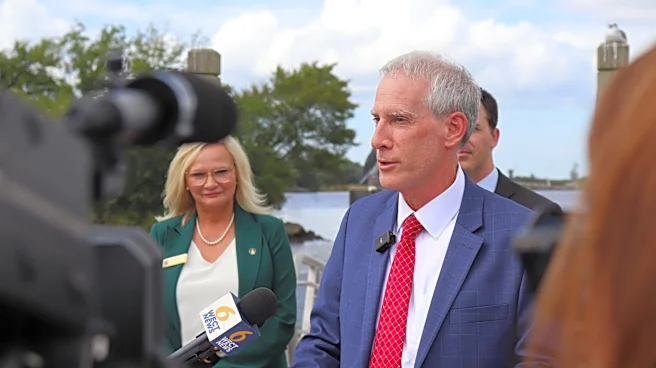
Jan Giacalone Kennedy, the New Hanover County Superior Court clerk, is being challenged for the position by Jennie Thomason. A four-year term is to be decided in the upcoming election.
The voter registration deadline is Oct. 9. In-person early voting begins Oct. 15, with same-day registration available. The absentee ballot request deadline is Oct. 20 at 5 p.m. In-person early voting ends on Oct. 31 at 3 p.m.
Election Day will be Nov. 3. The absentee ballot return deadline is Nov. 3 at 7:30 p.m.
North Carolina residents can check their voter registration status on the North Carolina State Board of Elections website.
Here are the candidates’ responses and their thoughts on current issues.
Candidate responses have been edited for grammar, style and length.

Jennie Thomason
Age: 54
Occupation: Attorney
Education: University of Louisville Brandeis School of Law, jurisdiction doctor; North Carolina State University, bachelor of social work.
Political experience: First-time candidate
Political affiliation: Democrat

Jan Giacalone Kennedy
Age: 57
Occupation: New Hanover County Superior Court clerk.
Education: University of North Carolina Wilmington, BA
Political experience: Sixteen years of service as the elected Superior Court clerk.
Political affiliation: Republican
Why are you running for clerk of Superior Court?
Thomason: As a native of New Hanover County, this isn’t just a place where I live and work: This is my home. As an attorney, social worker, victim advocate, and former magistrate judge, I have the skills to establish a clerk’s office that is accessible, efficient and accountable to everyone. We haven’t had the opportunity to choose our clerk of Superior Court since 2010. My education and experience paired with a fresh perspective make me uniquely qualified to transform the clerk’s office. I am excited about the opportunity to meet the ever-changing needs of our community and our court system.
Kennedy: I am running for reelection because as the daughter of a Korean and Vietnam veteran and a mother who worked 30 years for the state of North Carolina, it was taught to me at an early age what a privilege it is to serve the public. This position is not only about the elected position but also the entire 64 clerks that serve our county. We have undergone a transformational time during these past three years as the North Carolina court system has transitioned to an electronic court system. The next couple of years are pivotal in ensuring that the gains that have been achieved are not lost.
What education, legal management or public service experience best prepares you for this office?
Thomason: I earned my bachelor’s in social work from N.C. State and my juris doctor from the University of Louisville Brandeis School of Law. With more than 30 years of public service experience, including over seven years as a New Hanover County magistrate judge, I’m prepared to manage demanding caseloads, meet strict deadlines, navigate complex and changing statutes, and make careful decisions under pressure. Working nights, weekends, and holidays for my community has taught me the importance of timely, accessible service, and I’m ready to bring that experience, discipline and commitment to the clerk’s office.
Kennedy: I continued to learn every day on the job while also continuing legal education provided by the North Carolina School of Government as well as classes offered in conjunction with the North Carolina Administrative Office of the Courts. I have completed courses at Campbell Law University, the Institute of Government, the National College of Probate Judges and National Institute training on domestic violence prevention. I believe education is an everlasting pursuit. I have 33 years of public service experience.
What distinguishes you from your opponent?
Thomason: Unlike my opponent, I am a licensed North Carolina attorney with judicial experience and a person-first mindset. With my background in social work and victim advocacy, I will bring empathy and compassion while serving people as they navigate the justice system. As an attorney and former magistrate judge, I know how to interpret and apply complex, ever-changing laws. And as a longtime public servant in New Hanover County, I’ve built strong relationships with our legal, law enforcement, judicial and nonprofit communities. Those existing relationships will allow me to create a more accessible, community-focused clerk’s office.
Kennedy: Experience matters! Being an elected official is very honorable, and I am blessed to have been the elected clerk of the Superior Court for the past 16 years. This position requires someone who knows the office, who has worked from the ground up and made it a career. I am that person. I first worked as a deputy clerk and was promoted to assistant clerk before becoming the elected clerk.
What do you believe are the three most important responsibilities of the Superior Court clerk?
Thomason: The clerk must have the experience and temperament to make impartial judicial decisions while treating everyone with dignity and respect. The office should foster a culture where employees are proud to serve and every citizen receives professional service. The clerk must also be a responsible record keeper and ensure compliance with public records laws. In 2025, the ACLU sued our clerk’s office for failing to fulfill a public records request made of every North Carolina clerk’s office. Out of all 100 counties, only New Hanover failed to respond. This case demonstrates why timely, accurate and transparent records management must be a priority.
Kennedy: I would have to state our roles as judges of probate in estate and guardianship matters, adoptions, comptroller to the court system, recordkeeping and serving as administrators are all equally important. The clerk may be seen as the general manager of the court system, ensuring that everything runs smoothly.
What role does the clerk play as a judicial official, and how does that differ from being an administrator?
Thomason: As a judicial official, the clerk presides over important matters including wills and estates, guardianships, adoptions and foreclosures, making impartial decisions based on evidence, facts and current law. That requires strong legal knowledge and sound judicial experience. The clerk also oversees the daily administration of the office, including maintaining accurate records, dockets and court files and responding to records requests. A well-qualified clerk brings legal knowledge, sound judgment and strong administrative leadership to keep our courts accessible, compliant and running smoothly. By electing a clerk who is also an attorney, our community will get more value for our tax dollars.
Kennedy: As judges of probate, our roles are no different than those of other judges. We hear evidence, follow the law and make decisions based upon the evidence and law. North Carolina is the only state in which the judge of probate is also clerk of the court and record keeper. As record keepers, we have the responsibility of being accurate. As comptrollers, we are responsible for money. These are all enormous responsibilities in addition to our judicial roles.
What changes, if any, would you make to improve customer service for people using the clerk’s office?
Thomason: One of my first changes would be ending New Hanover County’s hour-long daily closure of the clerk’s office for lunch. All of the surrounding counties keep their offices open to the public by staggering employee lunch schedules. The closure creates a significant barrier to working people whose only opportunity to visit the clerk’s office is on their own lunch break. As a public servant, the elected clerk has a responsibility to provide access to government services for every citizen. Additionally, I would strengthen partnerships with local nonprofits to better connect people navigating the court system with the resources they need.
Kennedy: My opponent repeatedly criticized our choice to pause public window hours during the lunch break, suggesting that a staggered lunch schedule is a fix. That is a misunderstanding of how a courthouse runs. the midday window closing isn’t just for a lunch break. It is a critical, uninterrupted operational hour that gives our hardworking clerks the focus to catch up on intense back-office data entry. Staggering schedules would leave our front desks short-staffed and create severe backlogs that delay the justice system.
Bob Liepa is the city of Wilmington and public safety reporter for the StarNews. You can reach him at RLiepa@usatodayco.com.
This article originally appeared on Wilmington StarNews: Meet the candidates for New Hanover County court clerk