





Wilmington's film industry is open for business.
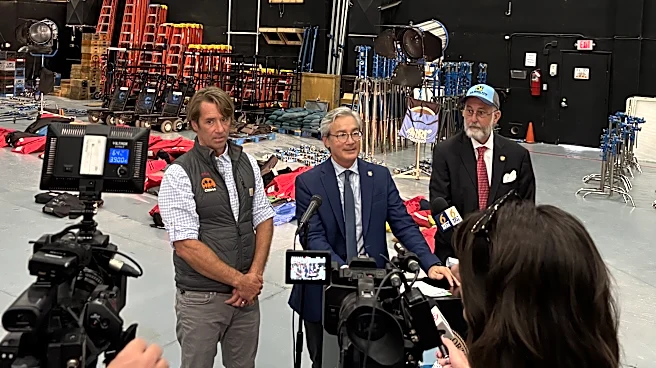
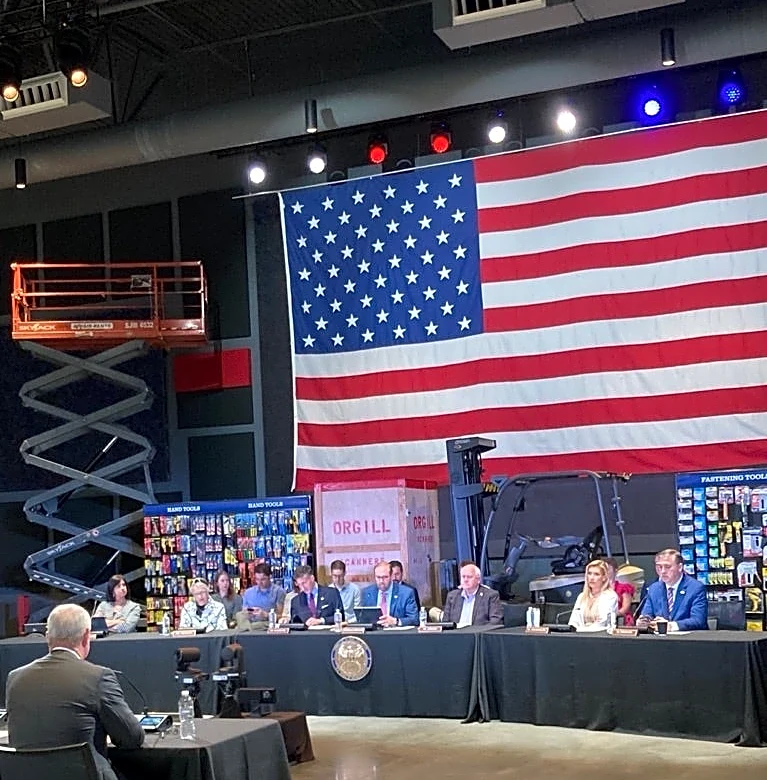
That was the message at a news conference on Tuesday, Oct. 6, at Cinespace Studios, where state political leaders pledged to add an additional $31 million to the N.C. Film and Entertainment Grant Program, which had run out of money to fund rebates for qualifying productions, leading many in the industry to fear a prolonged shutdown.
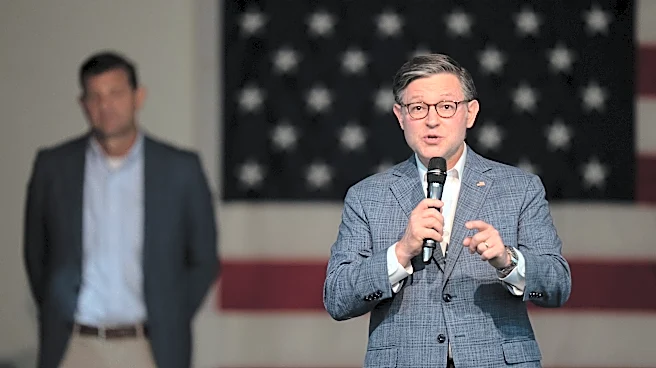
Announcing the additional funding was N.C. State Sen. Michael Lee, a Republican from New Hanover County who is the N.C. Senate's majority leader.
Lee produced a letter addressed to Dane Scalise, vice-chair of the New Hanover County Board of Commissioners, and signed by N.C. Senate President Pro-Tempore Phil Berger, N.C. House Speaker Destin Hall, N.C. State Rep. Ted Davis
of New Hanover County and Lee himself that pledged to appropriate $31 million "for new film projects in fiscal year 2026-27 (that) would be made available before Dec. 31, 2026" and prioritize projects in the Wilmington area.
That's in addition to $46 million already allocated for 2026-27, bringing the film grant's total commitment for fiscal years '26-27 and '27-28 to $108 million.

The letter blamed the shortfall on "mismanagement of funds by the Department of Commerce," which is led by Commerce Secretary Lee Lilley, who was appointed by Gov. Josh Stein, a Democrat.
Lee is running for re-election against a Democrat, Jessica Bichler, while Scalise, a Republican, is running for the seat soon to be vacated by Davis, who's not seeking re-election. Scalise's opponent is Democratic New Hanover County School Board member Tim Merrick.
In a news release, Bichler said "Lee’s announcement equates to a pinky promise to allocate funds, not a true appropriation.
“North Carolina’s film incentive program is fundamentally broken as a result of Republican leadership in the General Assembly over the last 15 years. Moving money around in a broken grant system isn’t a true fix, it’s a cheap trick to court votes a month before Election Day."
Bichler said, "lawmakers should revert to the film rebate system used prior to 2014, which … brought blockbuster hits like 'The Hunger Games' and 'Iron Man 3' to the state."
Lee, who joked that he was an extra in Wilmington-shot film "Weeds" starring Nick Nolte back in 1987, acknowledged that the $31 million appropriation was more or less an emergency stopgap and said the film grant program needs to be reassessed by the General Assembly next year.
The General Assembly is currently out of session, but Lee said the legislature would need to address and vote on the new film grant funding "in the not too distant future," possibly as soon as mid-November.
For Jonas Pate, the Wilmington-based creator of hit Netflix show "Outer Banks," the announcement "sends a message that we're still open. For a minute there, we weren't."
Pate said the announcement came "in the nick of time. If they solidify it, it could totally make a difference in whether 'Kildare'" — an "Outer Banks" prequel in development at Netflix — "shoots in North Carolina."
In August, Pate had penned an op-ed for the StarNews headlined, "Legislators must prevent shutdown of NC's film industry" in which he wrote that "a 'Closed' sign (had been) hung on one of North Carolina's signature industries" after the Department of Commerce said over the summer that it wouldn't be able to award any significant film grants for new productions until 2029.
Legislators appear to have listened.
Dozens of Wilmington film crew members were present for the press conference, many of them taking a break from wrapping the second season of ABC TV series "RJ Decker."
Once "Decker" wraps, there won't be any major projects shooting in the Wilmington area.
In September, Dark Horse Studios in Wilmington announced that it was for sale. In August, hit Netflix show "The Hunting Wives," which shot its first two seasons in Charlotte, announced it was moving production to Georgia because of the financial crisis in the state film grant program.
Speaking at the news conference, Chris Crowder, vice-president of client services and operations for Cinespace in Wilmington, said the announcement was "a big deal" and meant more jobs for industry workers.
"This gives us time (to find) long-term solutions," Crowder said. "I don't believe it's the end of the conversation. It's the beginning of the next one," adding that he wants to see "a sustainable program for the future."
Wearing a N.C. film industry baseball cap, Davis said he wants to send the message that "North Carolina was and is open for business."
Davis the state has spent $1.3 billion on the rebate program over the past decade, and that Scalise has promised him personally that he'd prioritize the film industry if elected.
"If he doesn't, I'll be all over him like white on rice," Davis said.
Darla McGlamery, business agent with for labor union IATSE Local 491, which represents film industry workers, said she was heartened by Tuesdays' announcement.
"We thought we were dead in the water," McGlamery said. "But we're buoyant. I Iook forward to taking the 'closed' sign (down)."
Wilmington filmmaker Kristi Ray of Honey Head Films, which just wrapped production on its most recent feature, said the announcement was welcome news, but that she'd like to see a more holistic approach to supporting the film industry moving forward.
"All this hot and cold is detrimental to the state," Ray said, adding that "it's good to have some positive news. There's no longer panic."
John Staton is the arts and culture reporter for the StarNews. You can reach him at jstaton@usatodayco.com.
This article originally appeared on Wilmington StarNews: Political leaders pledge to increase funding for NC film grant program