








As a child, Tiearra Ashe dreamed of one day going to college and becoming a psychologist.
Ashe, who grew up on Wilmington’s Northside, excelled academically and enjoyed her classes. But once she entered high school, she saw her dream begin to fade.
At just 14 years old, Ashe was pregnant.
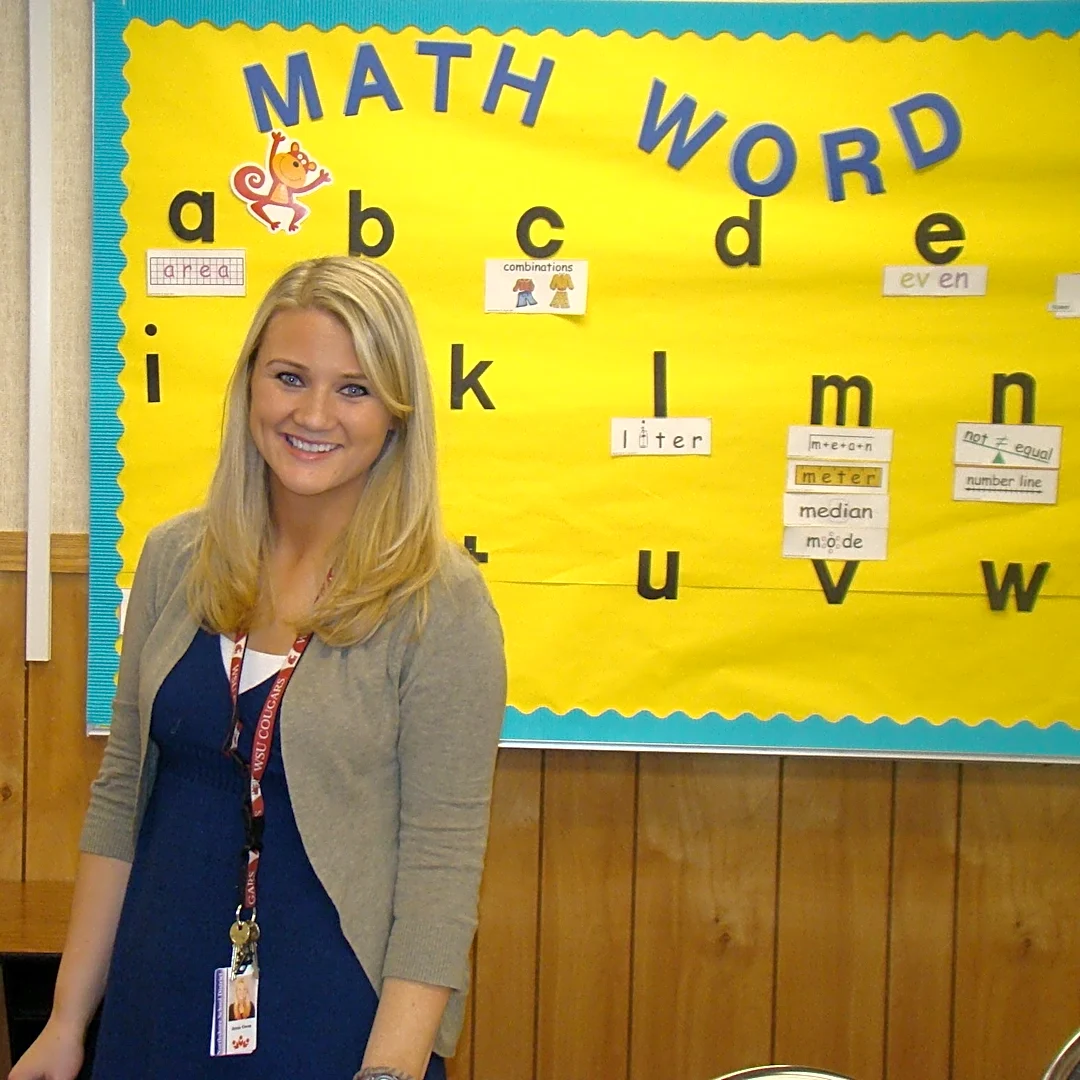
Then she met Dana King, coordinator of the Adolescent Parenting Program at Planned Parenthood South Atlantic in Wilmington, who helped her turn things around.
“When I met Mrs. King, I was not going to school and I was having issues with tardiness because I was embarrassed of going to school pregnant,” Ashe recalled.
King helped Ashe enroll in the Adolescent Parenting Program, which provided her with parenting skills, resources, and support as she navigated being
a teen mother.
Ashe is not alone. Data from the North Carolina Division of Public Health shows thousands of teens aged 15 to 19 give birth each year. In 2025, North Carolina’s estimated female population ages 15 to 19 was 355,037. That same year, there were 4,675 births to mothers in that age group.
In New Hanover County, the Adolescent Parenting Program aims to help young mothers. Both past participants and organizers say it’s working and changing lives.
‘She pushed me to graduate’
The Adolescent Parenting Program has been serving pregnant and parenting teens in New Hanover County for more than 30 years. King has served as the program’s coordinator for about 20 of those years.
The program, King explained, is set up as a secondary prevention program, meaning it’s targeted for young women 19 years old and younger who are pregnant or already have one child. The program provides them with the education, support and resources to delay a second pregnancy until they are ready.
“Hopefully, they get out of high school, which we definitely want them to do,” King said.
The 2023 North Carolina State Health Improvement Plan cited that pregnancy and parenting significantly contribute to teens’ decision to drop out of school, and data from The National Campaign to Prevent Teen and Unplanned Pregnancy shows that only about 50 percent of teen mothers receive a high school diploma by age 22 compared to 90 percent of women who do not give birth as a teen.
But the Adolescent Parenting Program is working to change those statistics by making school attendance a requirement for participants. They either must remain in school, or if they have dropped out, they must return. King noted they can choose to attend their high school or go through the adult high school program at Cape Fear Community College.
Past program participants say King provided encouragement and tough love to ensure they made it to the finish line.
“She pushed me to graduate,” said Kiara Nixon-Faulk, who graduated in 2018.
Lashawna Aiken agreed, noting that with King’s encouragement, she finished school sooner than anticipated.
“If you tell her something, she holds you to it,” Aiken said.
While King wants to see all the young women in her program graduate high school, her goal is for them to continue their education earning certificates, diplomas and degrees that will enable them to find jobs and support themselves and their children.

More than parenting classes
Pregnancy and parenting can be a difficult time for any person. Add the stressors that come with adolescence and school to that, and it can be overwhelming.
Data shows that pregnancy and parenting during adolescence can affect teens’ social, emotional and physical well-being.
The Adolescent Parenting Program provides support to help young parents cope with these issues. Participants must attend one-on-one meetings with King each month where they discuss parenting and prenatal care.
“Then we also talk about what’s going on in general with them — are they having some difficult times at school, do I need to contact their school social worker, and what’s going on at home,” King said.
King explained that working with teenage parents is about focusing on what matters and keeping the lines of communication open to ensure things aren’t missed or overlooked. These one-on-one conversations often lead to revelations and important topics, allowing King to provide resources and referrals to other community organizations — such as Smart Start or the Rape Crisis Center — that can meet those needs.

While some of those one-on-one visits occur in person, others happen virtually, but King notes there is one requirement.
“I must physically see them,” she said.
In addition to the one-on-one meetings, the young parents must also participate in peer group sessions each month. These offer education on topics, such as early childhood education and healthy relationships.
“For instance, last year, I was seeing a lot of depression, and I was like, ‘I need to bring in more about mental health,’” King explained.
One meeting each year is dedicated to car seat training, which ensures all participants know how to properly secure their children in a car seat and the seats are appropriate for the child’s size. Car seats are provided to anyone in the program who needs one.
Every time the young mothers attend these educational peer groups, they receive an incentive, and those incentives vary. Program participants also receive tangible items, such as diapers and wipes, and if they need transportation to a doctor’s appointment either for themselves or their child, it is provided either through an Uber, Lyft or by King herself.
In addition to the required educational and one-on-one components, there is also time for family and fun. King tries to host large events where the young mothers can bring their children and families. One example is the annual egg hunt held at a local park.
Participants say they are grateful for the support and camaraderie the Adolescent Parenting Program provides.
When Nixon-Faulk joined the program in 2015, she was struggling to cope with the demands of her life as a teen mom and others’ perception of her.
“People stereotype teen moms,” Nixon-Faulk said.
She recalled there were “a lot of naysayers” as she pursued school and a career, but being able to talk to King and the other women helped her cope and push through.
“You have someone in your corner who believes in you,” Nixon-Faulk said.
For Carmen Mayes the isolation she felt at school was difficult. She said in the Adolescent Parenting Program, she found a sense of belonging.
“I always felt like I was the oddball in the halls or in class,” Mayes said. “This made me feel like I wasn’t alone.”

Fewer teen births, but disparities exist
In the 1980s, the teen birth rate began rising to its highest levels since the 1950s. In 1991, it reached 62.1 births per 1,000 women aged 15-19, according to the Centers for Disease Control and Prevention (CDC). As a result, policymakers across the U.S. created organizations and programs to address the issue.
Adolescent pregnancy prevention and parenting programs grew out of these efforts, and the data shows they are working. According to provisional data from the CDC, the nation’s teen birth rate dropped to a historic low of 11.7 births per 1,000 females aged 15 to 19, and the number of repeat teen pregnancies to adolescent mothers has seen a significant decline.
While this is good news, there is still more work to do. In North Carolina, the teen birth rate is a bit higher at 14.3, and if one examines the data by race and ethnicity, that number climbs.
A publication from the North Carolina Department of Health and Human Services, titled “Healthy North Carolina 2030: A Path Toward Health,” discusses teen birth rate disparities, noting that “African American, Hispanic, and American Indian girls give birth at rates that are more than two to three times that of white girls.”
“These disparities can be traced to persistent racial segregation of neighborhoods that contributes to sharp income inequality, poor economic development, and under-resourced schools associated with lower educational attainment and the number of safe recreational and social opportunities for teens,” the document states.
King noted that participants in her Adolescent Parenting Program come from all races and backgrounds, and while local Planned Parenthood staff could not speak directly to those disparities, they believe the Adolescent Parenting Program is working.
King recalled that when she first began as program coordinator, nearly 50 percent of teen mothers got pregnant again within a year of giving birth. Today, that number is much lower.
According to data from the North Carolina Division of Public Health State Center for Health Statistics, there were 7,377 teen pregnancies in North Carolina in 2023. Of those, 22.3% or 1,648 were repeat pregnancies. During that same time, New Hanover County recorded 142 teen pregnancies with only 30 — or 21.1% — being repeat pregnancies.

Years later, the impact remains
The program’s impact is told through both the data and the participants’ stories.
Aiken, now a mother of six, continued her education and found her passion: caring for young children. Aiken graduated from Cape Fear Community College’s early childhood education program earlier this year and now works for the City of Wilmington. She lives in the downtown area and tries to serve as a mentor for other young girls who are pregnant or parenting.
“It’s really good to have an example like myself to tell them that it’s not the end of the world,” Aiken said. “You may have to work harder, but you can still do it.”
Although Mayes graduated from cosmetology school, she works full-time as a caregiver for children with special needs. Mayes has an apartment in the Wilmington area and is working to co-parent her daughter who just turned 5 years old.
After graduating from high school, Nixon-Faulk went to school for medical assisting, and after working in the field, decided she wanted to continue her education. She currently works as a medical assistant for Novant and is currently working on her prerequisites for a nursing degree. Nixon-Faulk, now 27 years old, bought her first house when she was 24.
Ashe, who joined the Adolescent Parenting Program in 2013, graduated from New Hanover High School in 2017, and went on to serve in the Air Force where she became an intelligence analyst, rising to the rank of staff sergeant.
She lives in Fredericksburg, Va., with her son who is now 12 years old. Ashe noted that the Air Force has provided her with the means to provide for her son while continuing her education. As she transitions out of the Air Force later this year, she has an exciting journey ahead.
In December 2025, Ashe married a man who is also in the Air Force, and the couple is expecting a child this fall. After spending some time as a stay-at-home mother, Ashe will begin a doctoral program at Wright State University’s School of Professional Psychology to fulfill her dream of becoming a clinical psychologist.
All the women say they keep in touch with King, and they credit her and the Adolescent Parenting Program with helping them succeed and achieve their goals.
Ashe had high praises for King and the work she’s done to help young women succeed.
“She’s literally a hidden gem,” Ashe said. “I call her my guardian angel, and I am grateful that she intervened as I had a very tumultuous life at that time. She was Heaven-sent to me.”
Renee Spencer is the community engagement editor at the StarNews. Reach her at rspencer@usatodayco.com. This story was produced in partnership with the Coastal Journalism Hub, a collaborative focused on health and wellbeing in New Hanover County.
This article originally appeared on Wilmington StarNews: Teen moms find support, diplomas and careers through Wilmington program