
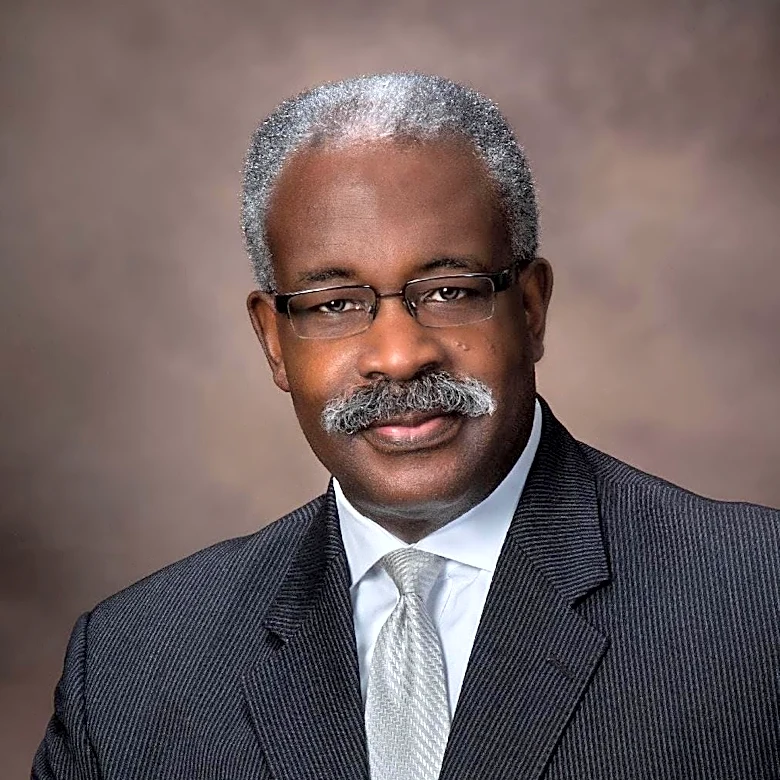
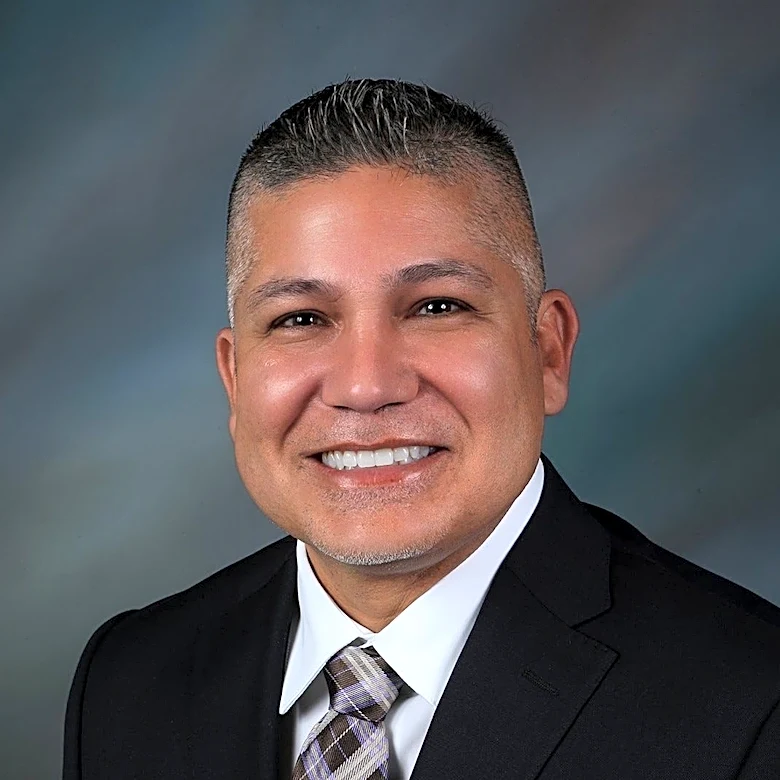




The race for the North Carolina Superior Court District 6B, Seat 1 judicial seat is between Frank Jones, a Republican, and Kelly Colquette Hanley, a Democrat. Jones is seeking reelection to a second eight-year term.
The position comes with an annual base salary of $209,165.
The court covers part of New Hanover County.
The voter registration deadline is Oct. 9. In-person early voting begins Oct. 15, with same-day registration available. The absentee ballot request deadline is Oct. 20 at 5 p.m. In-person early voting ends on Oct. 31 at 3 p.m.
Election Day will be Nov. 3. The absentee ballot return deadline is Nov. 3 at 7:30 p.m.
North Carolina residents can check their voter registration status on the North Carolina State Board of Elections website.
Here are the candidates’ responses and their thoughts on current issues.
Candidate responses have been edited for grammar, style and length.

Kelly Colquette Hanley
Age: 61
Occupation: Attorney
Education: Tulane University School of Law, New Orleans, jurisdiction doctorate (1991); Syracuse University BA, broadcast journalism and international relations (1987).
Political experience: First time running for public office
Political affiliation: Democrat

Frank Jones
Age: 66
Occupation: Superior Court judge
Education: JD University of North Carolina-Chapel Hill School of Law (1985); BA business management and BS economics at North Carolina State University (1981).
Political experience: Elected Superior Court judge Nov. 6, 2018, and running for reelection.
Political affiliation: Republican
Why are you seeking this judicial office?
Hanley: As a criminal and civil trial attorney for more than 30 years, I experienced firsthand that judicial decisions have an indelible effect — emotionally and financially — on people’s lives long after their case ends. Hence, it is essential that our constitutional rights, including our right to a fair and impartial trial, be protected. I am running for Superior Court judge to ensure that people appearing in court are listened to and treated fairly and respectfully, and that decisions made — no matter how difficult — will be based on facts and applicable law, free from undue influence, public opinion or partisan interests.
Jones: I seek reelection because I have made positive contributions to our judiciary and to this community. As a lifelong resident, I care about our community and realize the importance of local courts to our quality of life. Serving as your Superior Court judge is a privilege required to be earned every day. I am proud of my record as your Superior Court judge. No jury trial over which I presided has been overturned due to legal error. Our community resumed jury trials during the pandemic months before most other districts. The lack of judicial discipline attests to my judicial temperament.
What professional experiences have best prepared you to serve as a judge?
Hanley: As an assistant district attorney in Houston, I prosecuted hundreds of felonies, including murder, sexual assault and gang-related cases, fighting to bring justice to victims and their families while also tasked to ensure a fair trial for the accused. In Wilmington, beginning in 1998, I handled criminal, Department of Social Services/juvenile and family matters. Many of my clients were able to maintain custody of their children or seek treatment rather than incarceration. For 5 1/2 years, I served as the family/trial court administrator, providing valuable insight into our judicial operations. Since 2007, I have represented plaintiffs and defendants in multimillion dollar civil litigation matters.
Jones: The past eight years as your Superior Court judge have best prepared me to continue in this role. Thirty-three years as a trial attorney taught me how to advocate, and the past eight years on the bench taught me how to adjudicate. I have presided over cases from murder to malpractice and held court in 20 counties. Forty-one years of daily courtroom experience allows me to anticipate problems before they arise, which ultimately results in better decisions, fewer delays, and better use of court resources.
What distinguishes you from other candidates in this race?
Hanley: A distinguishing factor is my extensive criminal, administrative and civil experience acquired over 25 years. For several years I prosecuted and defended against several violent felonies. I learned how to efficiently schedule calendar cases to avoid unnecessary delay. For nearly 20 years I have represented clients in complex civil cases. I understand firsthand the importance of being prepared, and I have a strong command of motion practice, procedure, and trial work. I welcome the opportunity to hear any criminal or civil matter, no matter how complex, nuanced or challenging.
Jones: A demonstrated record of judicial success. Over the past eight years as your elected Superior Court judge, I have presided over more than 100 jury trials, rendered hundreds of decisions in criminal and civil cases, and issued countless search warrants to law enforcement at all hours. Every word I speak and every decision I make is on the record and subject to appellate review. Respectfully, my record has held up. Voters do not have to take my word for what kind of judge I would be; they can look at the judge I have been.
What do you consider your greatest strengths as a lawyer or judge?
Hanley: Working as a prosecutor and representing people in criminal and civil matters has given me the unique experience to understand positions from all sides. As a trial attorney, I fully understand and appreciate the time, money and sleepless nights it takes to prepare for motions, hearings and trial and the anxiety people experience waiting for rulings or verdicts. Appearing in court — particularly for victims, witnesses, jurors and other litigants — can be nerve-racking and time-consuming. Throughout my legal career, I have endeavored to listen astutely, fight zealously for my clients, pursue justice and treat all people with respect and professionalism.
Jones: Patience, diligence, and a personal commitment to doing my best in every aspect of life. Everyone who appears before me deserves to be fully and fairly heard by a judge who has read the file and understands the case. Behind every legal argument is a person entitled to courtesy and respect from the bench. My personal commitment does not begin or end at the courthouse door. Serving as your Superior Court judge requires me to conduct myself, personally and professionally, in a manner worthy of the trust this community has placed in me.
What qualities make someone an effective judge?
Hanley: Socrates stated 2,500 years ago, “Four things belong to a judge: to hear courteously, to answer wisely, to consider soberly, and to decide impartially.” These qualities exist today and are more important than ever. It is essential to give people their “day in court,” be prepared, and be respectful of jurors, litigants/attorneys and staff. In my career, I’ve learned that not one size fits all. Having the honor and privilege as a Superior Court judge serving our community, I would endeavor to look at the big picture, be commonsensical, considerate, thoughtful and make decisions fairly and impartially.
Jones: Drawing on 41 years of daily courtroom experience, I believe effective judges are engaged, prepared, and firm but fair. Exemplary judges respect both the office they hold and every person who appears before them. Fairness requires the self-control to set personal feelings aside and decide objectively without regard to whom may benefit or how the ruling is received. Firmness requires the strength of character to make sound decisions as every ruling in a contested case will naturally disappoint someone. A decision reached in a dignified proceeding by a patient, neutral, prepared judge promotes public confidence in our courts.
What are the biggest challenges facing the court you are seeking to serve on?
Hanley: Challenges facing the court include ensuring equal access to the courts for all people (pro se litigants are generally at an extreme disadvantage), staff shortages and bringing cases to close in a timely and efficient manner to avoid unnecessary delay and backlog. Other challenges include a lack of resources to persons who need treatment or access to employment and education. Technological challenges plague the court system, such as a lack of up-to-date equipment in the courtroom for evidence presentation as well as systemic issues with North Carolina’s e-court filing system. With concerted efforts, these issues can be resolved.
Jones: In our community, a majority of Superior Court criminal cases stem from substance abuse or mental health issues or both. The court’s single greatest challenge is the shortage of accessible treatment options to address such issues. Without meaningful alternatives, incarceration becomes the default response, and prisons become de facto treatment centers. Incarceration alone for nonviolent offenders is, however, but a short-term solution. Unless the underlying problems are adequately and preemptively addressed, recidivism and the cost to our community will unfortunately remain high.
Bob Liepa is the city of Wilmington and public safety reporter for the StarNews. You can reach him at RLiepa@usatodayco.com.
This article originally appeared on Wilmington StarNews: Meet the candidates for NC Superior Court District 6B, Seat 1