






North Carolina officials on Sept. 10 announced a nearly $600 million settlement with Chemours and DuPont over contamination tied to the production of manmade chemicals like GenX at the Fayetteville Works plant roughly 70 miles upstream of Wilmington.
“Chemours and DuPont devastated North Carolina’s water and natural resources for decades,” said Attorney General Jeff Jackson. “This deal forces them to pay for the harm they caused the people of Southeastern North Carolina and gives our local governments more resources to help ensure clean drinking water for families."
The deal between the state, 11 local governments and the two companies − DuPont operated Fayetteville Works for decades before spinning it off to Chemours last decade - is the largest
environmental settlement in North Carolina history. It also marks a significant victory for state regulators who have been criticized in the past for not doing more to hold the companies accountable for the massive environmental mess they created after knowingly discharging the manmade chemicals into the state's water, air and groundwater for decades.
It was nine years ago that the StarNews first reported that DuPont and now Chemours had been dumping unknown manmade chemicals into the Cape Fear River that couldn't be filtered out before entering public water systems. The chemicals, formally known as per-and poly-fluoroalkyl substances (PFAS), are manmade substances that don't break down quickly − hence their name forever chemicals − and have been tied to a host of health problems, including several types of cancer, immune suppression issues and organ disruptions.
The discovery of these unknown substances in water supplies prompted many public utilities, including the Cape Fear Public Utility Authority that serves most of New Hanover County, to install large and expensive filtration systems to deal with the contamination, with ratepayers picking up the tab. Folks who rely on private wells for their drinking water have been largely left to fend for themselves.

The legal fight to get Chemours and DuPont to pay for clean-up and mitigation efforts has dragged on for years, frustrating residents and local officials. State regulators have been more successful in stopping new discharges from Fayetteville Works by threatening to pull the facility's permits if Chemours didn't clean up its act, but even those actions haven't moved quickly enough for many.
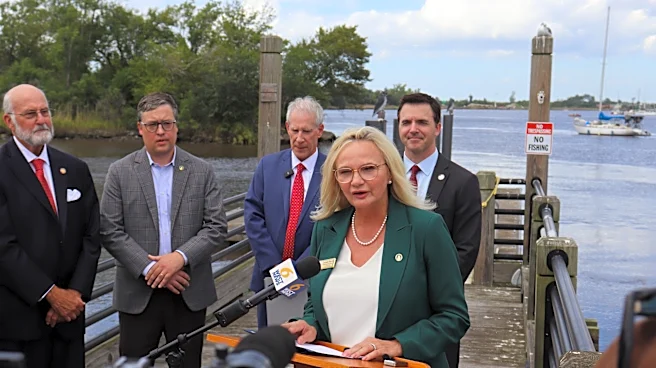
New Hanover County Board of Commissioners Chair LeAnn Pierce said that the county will receive $22.8 million over a 10-year period.
"The board intends to use those funds to address the problem itself," Pierce said. "Providing clean drinking water and addressing PFAS contamination here at home, starting with the people who rely on private wells who have carried this burden the longest."
State officials said the Sept. 10 announcement represents significant progress in holding the polluters accountable.

“This settlement is a huge victory for North Carolina,” said Reid Wilson, head of the N.C. Department of Environmental Quality. “These companies are finally paying for the damage they caused to North Carolina’s land and waters."
The announcement also comes just three months after Chemours reached a deal with the federal government over forever chemical contamination in four states, including North Carolina.
Under that settlement, Chemours would pay a fine and conduct a program to mitigate PFAS discharges from its plants in four states, including North Carolina. In all, the deal was expected to cost the company roughly $450 million.
But North Carolina officials blasted the deal, saying it represented little more than a slap on the wrist for Chemours, removed the company from future liabilities, and did little to nothing to improve the existing PFAS contamination problems in the Tar Heel State.
While the settlement represents a step in the right direction, environmental and clean water advocates said there remains much work to be done to clean up the mess left behind by decades of unregulated dumping of manmade chemicals into North Carolina's environment.
“This settlement provides much needed money for municipalities impacted by Chemours’ pollution, but it is not the end of the story,” said Jean Zhuang, senior attorney at the Southern Environmental Law Center, which has represented groups suing the company over the forever chemical contamination. “Chemours' planned expansion, extensive groundwater contamination, and ongoing releases of ultra short-chain PFAS into drinking water supplies all remain unresolved.”
Chemours has announced plans to expand PFAS production at Fayetteville Works, and is seeking state approval for the project. But many activists and local governments have said the company should clean up its existing forever chemical contamination before being allowed to ramp up its operations. Concerns over ultra-short PFAS chemicals, which can slip through existing filtration systems, also are growing and deserve more study, they say.
This article originally appeared on Wilmington StarNews: State announces settlement in fight over Cape Fear River contamination