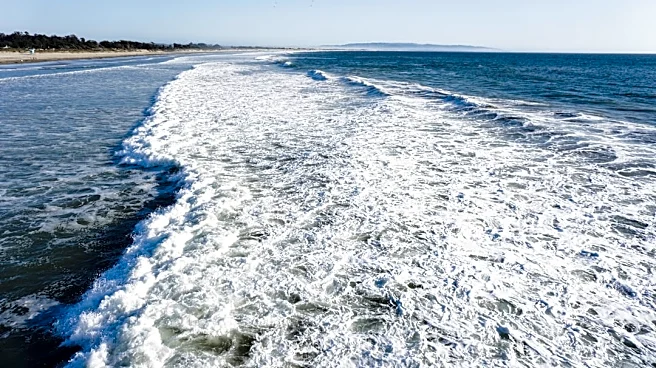




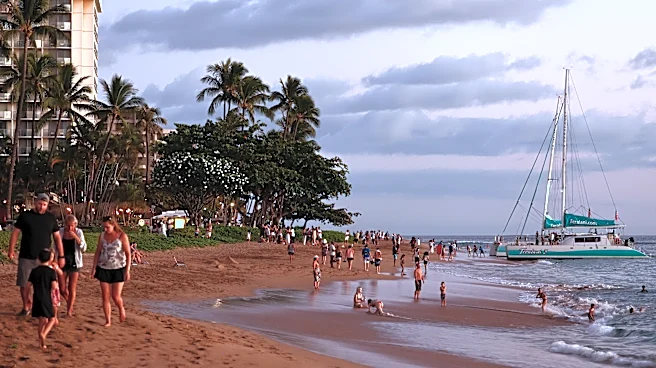

NORTH TOPSAIL BEACH | The beach was wide just after lunchtime on a recent Wednesday as kids frolicked in the surf and nearby parents relaxed under their sun shades.
But the scene at the northern tip of North Topsail Beach wasn't one from a typical North Carolina beach. Instead of carefully avoiding fragile dunes to reach the beachfront, visitors navigated around and sometimes over layers of sandbags − some buried − that formed the last line of protection for dozens of oceanfront homes and condominiums.
"It's nice at low tide. At low tide," emphasized Bill Franklin, a visiting surf fisherman from Tennessee, noting there isn't a beach at high tide because the waves push up against giant sandbag walls erected in front of many structures at the north
end.
And that sums up the problem facing the Onslow County beach town, and it is a microcosm for the tug-of-war facing local officials, state regulators and coastal residents as they balance the need to protect a valuable tax base and coastal economies with the cost of maintaining beaches that are increasingly under threat from wandering inlets, sea-level rise and stronger storms fueled by climate change, and simple financial dynamics.
The question also raises the issue of what sort of oceanfront North Carolina wants: one where the natural ebb and flow of beaches and dune lines determines the visual and practical facts of how the state's barrier islands are developed or one, adopted by other coastal states, that relies on seawalls, jetties and other hardened structures to keep Mother Nature at bay, at a substantial cost.
Looking at hardened structures
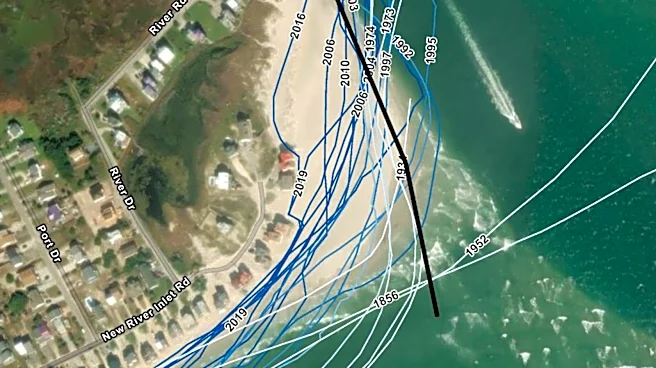
Under the town's existing management plan for the area near New River Inlet, sand from dredging of the inlet by the Army Corps of Engineers and other sources is occasionally placed on the beach to try and stabilize it. But the sand never lasts long, with parts of the north end having receded by nearly 250 feet since 1996 − with erosion rates reaching as high as 100 feet a year near the Topsail Reefs condominium complex.
The end result has seen North Topsail and homeowners turn to sandbags to protect threatened structures, with sandbag revetments now protecting roughly 3,600 feet of shoreline on the north end.
That's prompted town officials to mull over building a terminal groin at New River Inlet. The corps recently released a draft environmental impact statement looking at alternatives to mitigate the north end's erosion woes, which includes a look at North Topsail's preferred option of integrating a terminal groin into the inlet management plan that also would include beach nourishment.
The terminal groin, a low-slung structure built perpendicular to the shoreline designed to trap sand, would be more than 2,000 feet long, including sheet piles and in-water rubble sections. The corps' draft study estimates the construction and maintenance of a terminal groin would cost $18 million over the project's 30-year lifespan.
A public hearing on the corps' draft study is scheduled for 6 p.m. Sept. 22 at North Topsail Town Hall, 2008 Loggerhead Court.

Long-standing ban on oceanfront structures
Any terminal groin proposal, however, could face some serious headwinds and struggle to gain traction.
Beyond the cost, which would be a big financial lift for a town like North Topsail without federal or state help, North Carolina has had a de facto ban on hardened structures along the oceanfront, except in some very specific cases, for decades. While the prohibition has softened a bit in recent years, it largely remains in place.
But the call to allow more structures on the beach has been getting louder, largely fueled by the sight of homes falling into the ocean on the Outer Banks and the N.C. Department of Transportation's struggles in keeping N.C. 12 − the ribbon of asphalt that ties all the islands' small communities together − open.
Proponents say times along the coast have changed, and state policy needs to match the new realities that residents, visitors and local officials are dealing with along the N.C. oceanfront in a world of increasingly more dramatic and severe weather events. Current rules push beach communities to favor nourishment, enhanced dune systems, and other "natural" approaches to shoreline management.
But opponents of a change, including environmentalists and coastal advocates, say the existing policy has served the coast and its communities well, calling the use of structures like seawalls, sandbags and jetties a pyrrhic victory that while maybe offering a short-term solution does little more than delay the inevitable. It also doesn't solve the underlying long-term problem that North Carolina can't protect all parts of the oceanfront from rising seas and there are some areas where it might simply make better financial, environmental and political sense to abandon instead of throwing more money at the problem.

Taking sand from one area to help another
But retreat or abandoning homes to the ocean isn't a popular or politically palatable option for many coastal officials.
That prompted several coastal legislators to submit bills in the N.C. General Assembly this year to allow more oceanfront hardened structures, although they all stalled in committee.
The N.C. Coastal Resources Commission also has increasingly found itself on the frontline of the debate. The commission's science panel this summer presented a report looking at the impacts of hardened structures on the oceanfront and approaches other states have taken to dealing with erosion woes. In short, the report stated that while building a hardened structure can have localized benefits for that stretch of beach, it will have adverse impacts somewhere else along the oceanfront. In effect, you'd be robbing Peter of sand to pay Paul.
But some commission members said they would support allowing North Carolina to look at new technologies and other ways to stabilize chronic erosion problem areas, since current methods aren't working or aren't feasible.
That idea of wading into what should be a political decision wasn't supported by the majority of the commission, however, since the board is supposed to advise officials on policy, not set it.

'It's a tough one'
Back at the north end of North Topsail, Chris and Mary Johnson, visiting from Ohio, relaxed on the sand in front of a giant wall of sandbags while their kids played in the nearby surf.
"It's just a shame what's going on here," Mary Johnson said, pointing to the sandbags behind her. "But I just don't know what the answer is."
Chris Johnson nodded his head in agreement.
"It's a tough one," he said.
Reporter Gareth McGrath can be reached at GMcGrath@usatodayco.com or @GarethMcGrathSN on X/Twitter. This story was produced with financial support from Journalism Funding Partners. The USA TODAY Network maintains full editorial control of the work.
This article originally appeared on Wilmington StarNews: North Topsail mulls terminal groin as erosion woes persist