

In the court of online opinion, the Sept. 2 announcement that Wilmington's biggest fall festival, Riverfest, was canceled for 2026 elicited reactions ranging from outrage to yawns.
A few even trollishly celebrated the so-far temporary demise of one of Wilmington's longest-running festivals, which Riverfest organizers vow will return for 2027. This after the festival's board unanimously voted to cancel in response to an "untenable" location approved by the city of Wilmington at Nutt and Brunswick streets on Wilmington's Northside.
But with Riverfest definitely not happening this year, what does that mean for Wilmington, and for the long-term health of the festival itself?
Riverfest has been held on the first weekend of October since 1979, when the festival
was created as a way to draw people downtown at a time when the area was in decline. That year, the nonprofit Residents of Old Wilmington teamed up with the Downtown Area Revitalization Effort, now known as Wilmington Downtown Inc., to put on the first Riverfest.
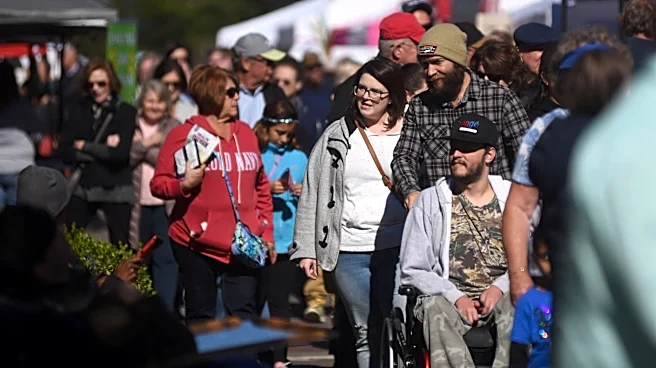
Now, an estimated 100,000 people attend Riverfest each year, with an estimated economic impact of "millions" according to the festival.
"Any festival cancellation is a letdown to downtown businesses, as our merchants rely heavily on both locals and the influx of visitors Riverfest draws to the area," said Liz O'Donnell, treasurer of the Downtown Business Alliance, a nonprofit group that promotes downtown as a business destination. "The festival provides a vital platform for the business community, and while it is a historic event, recent additions like drone shows demonstrate its ability to evolve. We believe it has a very meaningful future as a staple of Wilmington's cultural and economic identity."
Catherine Hawksworth owns the gift shop/boutique/record store Modern Legend on North Front Street, which is celebrating its 10th anniversary in October. She said Riverfest hasn't historically been a huge business weekend for her store, lagging behind weekends with conventions for Wilmington-shot show "One Tree Hill," like the one coming to town Sept. 18-20.
A block closer to Market Street, Hunter Ford, owner of the Momentum Distillery, said the loss of thousands of people and millions of dollars flowing into downtown was bound to impact businesses.
"Riverfest is an opportunity for locals who don't always come downtown to come down here and put eyes on my business," Ford said, adding that, even if store visitors don't buy anything, they might come back again later, say, at Christmastime. "It's a huge economic impact that the city's now not going to get."
Ford, who said he's not associated with Riverfest, said he thinks the city put the festival in a difficult position and questioned why some festivals, like the Azalea Festival, held each April, or American Craft Walk Wilmington, scheduled for Sept. 12, are allowed to set up on Front Street while others aren't.
"Why is one on Front Street and the other one in a parking lot?" Ford asked. "From an outsider's perspective, I think Riverfest called the city's bluff."
Riverfest has long had a cultural impact just as big if not bigger than its economic impact.
Compared to its fancy spring cousin, the North Carolina Azalea Festival, Riverfest is less formal, more populist and grittier, perhaps, and more downtown-centric. After all, this is the festival that used to run a boozy "river raft race" between improvised crafts where, in the festival's first year, a woman was swept beneath a barge and was lucky not to drown.
Along with the loss of the New Hanover County Fair & Expo, some online commentors decried a changing Wilmington they see as losing its identity.
"The culture of our city isn’t what it used to be and the people in charge could care less," read one comment on a Facebook post about the Riverfest cancellation, while another posted an AI-slop image of "the ghost of Riverfest" rising and destroying Wilmington.
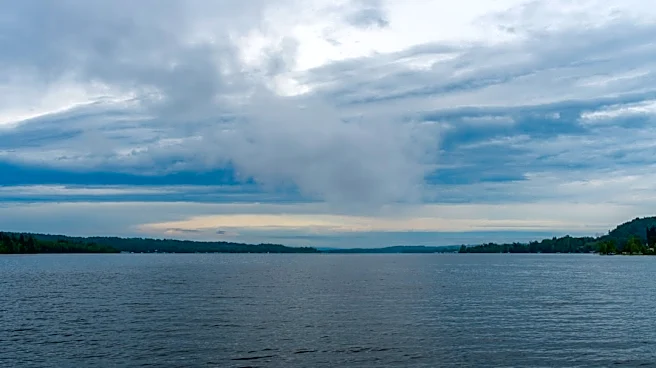
Wilmington Mayor Bill Saffo said that he sees Riverfest as culturally vital to the city, a festival that celebrates the Cape Fear River "and everything we've done to enhance it," he said, like the Wilmington Riverwalk, Live Oak Bank Pavilion/Riverfront Park on downtown's Northside and the still-developing Water Street Park, which is coming to where Riverfest was originally held for decades before moving to Front Street and then north.
"It's all done for our love of the river," Saffo said. "The whole reason the community was built was because of the river. Riverfest is the quintessential festival for that. It still draws lots of people."

In his conversations with city staff, Saffo said, his takeaway was that Riverfest "vendors did not like the location" by the Skyline Center, but that, in his view, "Vendors shouldn't be determining the site."
"It took us by surprise when they said they were going to cancel," Saffo said.
Issues like construction — including this year on the Front Street Bridge, which is scheduled to undergo maintenance, including lane closures — crop up every year, Saffo said. Events including the Ironman triathlon, the Azalea Festival and the Wilmington Holiday Parade "have to make alterations from time to time. Our intent is always to bend over backwards as opposed to having to cancel."
Riverfest Director Roderick Bell did not respond to messages seeking comment.
"I was at the very first (Riverfest). It's a very big part of the tradition of Wilmington," Saffo said. "I hope it comes back. Lots of people look forward to it. It has a long tradition. I would hate to see it go away."
John Staton is the arts and culture reporter for the StarNews. You can reach him at jstaton@usatodayco.com.
This article originally appeared on Wilmington StarNews: Wilmington Riverfest cancellation will have cultural, economic impacts