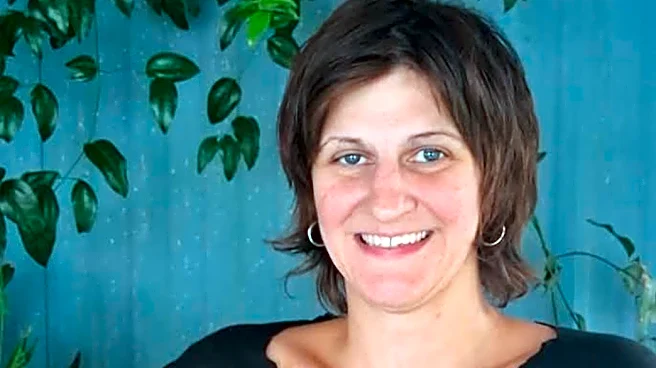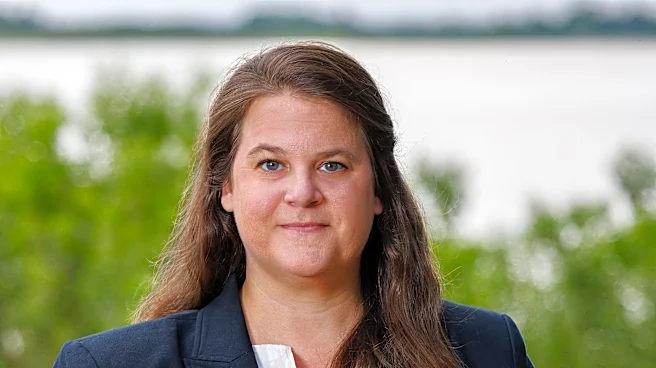

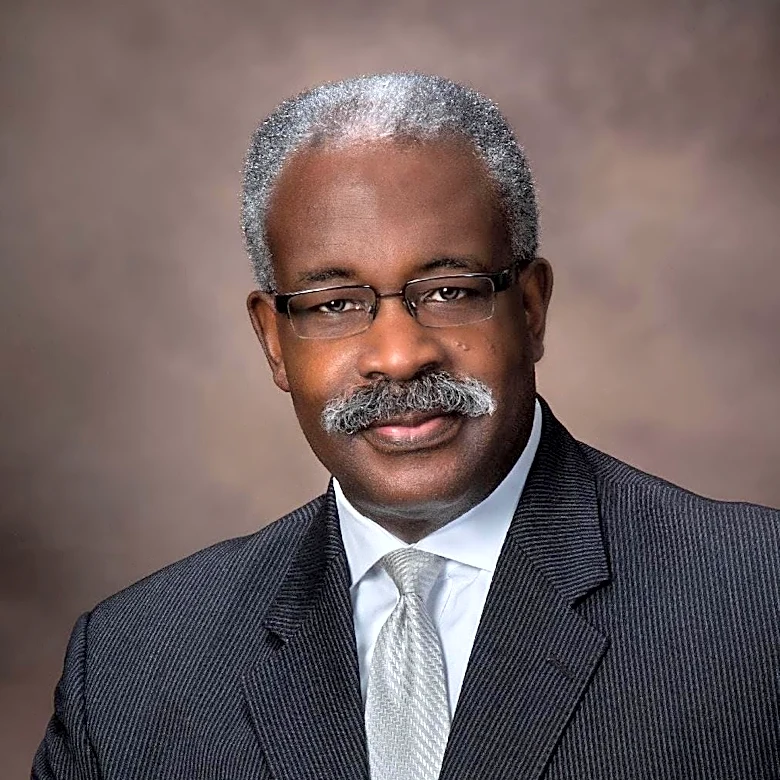





Judge Chad Hogston faces a challenge from first-time candidate Katherine Corpening for the position in North Carolina District Court District 6, Seat 4.
A four-year term is at stake. The position comes with a $170,853 salary.
The district court serves New Hanover and Pender counties.
The voter registration deadline is Oct. 9. In-person early voting begins Oct. 15, with same-day registration available. The absentee ballot request deadline is Oct. 20 at 5 p.m. In-person early voting ends on Oct. 31 at 3 p.m.
Election Day will be Nov. 3. The absentee ballot return deadline is Nov. 3 at 7:30 p.m.
North Carolina residents can check their voter registration status on the North Carolina State Board of Elections website.
Here are the candidates’ responses
and their thoughts on current issues.
Candidate responses have been edited for grammar, style and length.

Katherine Corpening
Age: 39
Occupation: Assistant public defender
Education: Wake Forest University, BA in sociology; Campbell University School of Law, jurisprudence doctorate.
Political experience: First-time candidate
Political affiliation: Democrat

Chad Hogston
Age: 55
Occupation: District court judge
Education: James Madison University, undergraduate degree (1993); Campbell University, law degree (1996).
Political experience: Won an open seat on the District Court bench in 2010 and has served in that post ever since.
Political affiliation: Republican
Why are you seeking this judicial office?
Corpening: I am running to bring a new perspective to the bench. As a public defender, I have collaborated with many agencies and community partners to bring positive change to our community, and I want to continue that work as a judge. I have seen how uninformed decisions from the bench create negative ripples throughout our community, and I want to work with our community partners to find better solutions.
Hogston: I am seeking reelection to the judicial seat I have held since 2010 because I have served the citizens of New Hanover and Pender counties with the highest level of honor, respect and gratitude. Over the years I have settled into this position and learned what is required to be an excellent District Court judge. I am extremely confident that if you ask any of the attorneys, clerks, law enforcement officers, or other courthouse staff about my qualifications, they would absolutely confirm that I have the qualities needed to continue to serve as a District Court judge.
What professional experiences have best prepared you to serve as a judge?
Corpening: My career as a public defender has prepared me well to serve as a judge. Most of my time is spent in the courtroom, advocating for clients and connecting those in need with the resources to help them. Throughout my career, I have focused on our specialty courts, including drug court and mental health court. These courts balance accountability with treatment, creating positive change for individuals and for our community.
Hogston: I have been a District Court judge for the last 16 years, which is the best experience you can have to continue to serve in this position. Before being elected in 2010, I was a practicing attorney in New Hanover and Pender counties for 15 years. This gives me a total of 30 years of courthouse experience. I have served the people with the utmost respect and humility over the entirety of my career, and I believe that anyone who has worked with me over the years would concur.
What distinguishes you from other candidates in this race?
Corpening: I have taken an active role in our court system from the beginning of my career, participating in roundtables and committees to reform our pretrial practices, establishing a mental health court, and writing new rules of practice under the e-filing system. I am an advocate for my clients, but I also advocate for our court system, seeking to improve efficiency and outcomes. This requires working with all the agencies at the courthouse, and I have worked hard to build relationships with attorneys, clerks, and law enforcement.
Hogston: My 30 years of experience as both an attorney and District Court judge. I do not take this position lightly, and I understand in order to serve you need to have accumulated years of experience, success, failures, and knowledge to appropriately assume the role as a judge. I have those qualities, and would be honored to earn your vote to continue as your District Court judge.
What do you consider your greatest strengths as a lawyer or judge?
Corpening: I value my patience and ability to pause. I have seen people judged too quickly in court, before they were given a meaningful opportunity to explain. Court can feel like a factory line, all the parts moving along at the same steady pace, but some people get overlooked or misunderstood in the process. I have always taken the time to explain, even repeating information, if someone needs extra time to understand. Participating as the defense attorney in drug court and mental health court, I learned more effective ways to encourage and motivate change in others, something that would benefit our judges to know as well.
Hogston: My many years of experience on the bench have taught me so much about human nature, the struggles that everyone goes through, and what is needed to hopefully move people in the direction of having a better life for themselves. I am very even-keeled, allow all litigants in court to be heard completely, and am respectful of people’s time. I render decisions in a thoughtful way, and consider the positions of all parties involved in a dispute. I think most folks leave my courtroom feeling they were heard, that they were treated fairly, and with respect and dignity.
What qualities make someone an effective judge?
Corpening: Effective judges lead with respect for the law and the people before them. Some of the best judges speak with such respect to people in the courtroom that even when they are sending someone to prison, that individual leaves with hope instead of despair. That hope can spark meaningful changes in that person’s life. A willingness to learn is also an essential quality for an effective judge, a willingness to learn about our community, a willingness to learn about the parties before them, a willingness to learn about new opportunities.
Hogston: Humility, gratitude, empathy, confidence, wisdom and life experience. Also the ability to distinguish between justice and grace — and how and when to use them.
What are the biggest challenges facing the court you are seeking to serve on?
Corpening: Time is one of the biggest challenges we face in our courthouse. The electronic filing system has slowed down court processes, limiting the number of cases we can get through in a single court session. The effect of this slowdown impacts how long it takes cases to be resolved in both criminal and civil courts. When we struggle to resolve cases quickly and efficiently, our jail numbers can rise, victims go without closure, and our community suffers. Mental health resources are difficult to navigate. Our jails become de facto treatment centers for mental health, but they are not equipped to manage those in crisis.
Hogston: It seems like people have become more and more frustrated, angry, divided and hopeless about a lot of things happening in their lives. As a judge, we need to both acknowledge these struggles and be a light in dark places. We live in a very adversarial world, and there’s no place that magnifies that more than a courtroom. A judge can change people’s lives in an instant, for better or worse. Having served unopposed as a District Court judge for the last 16 years, I think we have the ability to make a lasting impression on folks that come in front of us in a way that directs them towards the light versus the dark.
Bob Liepa is the city of Wilmington and public safety reporter for the StarNews. You can reach him at RLiepa@usatodayco.com.
This article originally appeared on Wilmington StarNews: Meet the candidates for NC District Court District 6, Seat 4