






When it comes to snakes, Georgians may generally think of rattlesnakes, rat snakes, maybe some water snakes. But there's a big, black, shiny one that's king of them all.
What is Georgia's longest snake?
Not only is the Eastern indigo snake the longest snake in Georgia, but it's considered the longest native snake in North America at up to 9 feet in length. While technically the Burmese python can grow longer and can be found in America, it's an invasive species.
What do eastern indigo snakes look like?
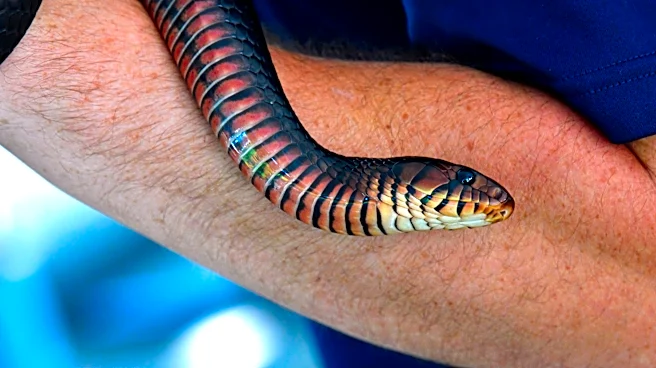
The Eastern indigo snake derives its name from the glossy blue-black color all across its body. Its scales are iridescent and may give off a rainbow-like look when exposed to light. Some of these snakes have reddish or cream-colored scales on the chin, throat, and cheeks.
Are eastern indigo snakes venomous?
Eastern indigo snakes are not venomous, but that
doesn't mean they are not dangerous.
Are eastern indigo snakes dangerous?
Rather than relying on injecting its prey with venom or disabling it with constriction, eastern indigo snakes simply overpower their prey with their muscular jaws and swallow it whole. Zoo Atlanta says they "literally will eat any animal that they can overpower and consume, including large insects, small turtles, and every variety of other reptile or bird, mammal, amphibian and fish. They are immune to the bite of the vipers, and so they regularly eat rattlesnakes, cottonmouths and copperheads." U.S. Fish and Wildlife Service calls it "the emperor of the forest."
All that being said, these snakes are not considered dangerous to human, and some experts even say they are docile by nature. If they are threatened by a human, they don't even bite. Instead, they strike with a closed mouth, according to the Orianne Society.
Snake boots are available at Bass Pro Shops
Are eastern indigo snakes endangered?
Eastern indigo snakes are considered "threatened" under the Endangered Species Act, and the species is a focus area for Fish and Wildlife. The natural communities of Georgia's Coastal Plain have been drastically reduced by agricultural activities, forcing these snakes to cross roads closer to dangerous humans and into smaller, isolated areas.
Many were depleted by the pet trade before receiving federal protection. Despite being illegal, the continued practice of introducing gasoline down gopher tortoise burrows ("gassing") to drive out eastern diamondback rattlesnakes results in the likely death of all burrow inhabitants, including the indigo snake.
There are no exact numbers for the species in Georgia, however the state's biodiversity portal has identified 152 areas where the snake is present. In June, Zoo Atlanta posted a video say they released over 21 Eastern indigo snakes back into the wild this year, totaling nearly 300 snakes released since 2010.
Where do eastern indigo snakes live?
The Eastern indigo snake's favorite habitat is longleaf pine forests, however it may also be found in sandhills, pine flatwoods, wetlands, and coastal scrub. Georgia Biodiversity Portal says they've also been known to use stump holes and gopher tortoise burrows in the winter.
Miguel Legoas is a Deep South Connect Team Reporter for Gannett/USA Today. Find him on Instagram @miguelegoas and email at mlegoas@gannett.com.
This article originally appeared on Savannah Morning News: Georgia is home to North America's largest snake, growing 9 feet
Our editors independently choose our recommendations. Some content is produced with paid support from a third party, however our editorial decisions remain independent. If you buy through our links, the USA TODAY Network may earn a commission. Prices and availability may change.