





To the Editor:
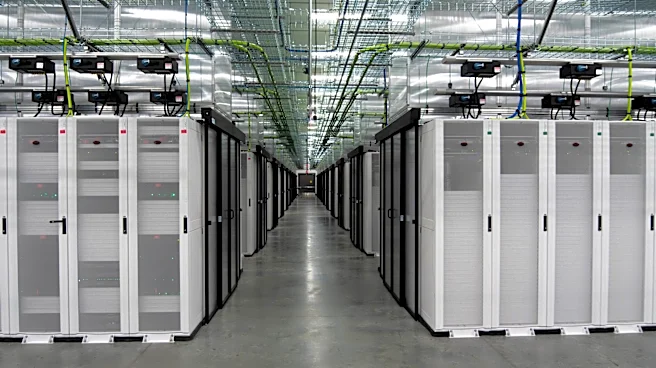
This week OpenAI announced Project Camellia, a $20 billion data center campus in Effingham County, about 25 miles up the road from Savannah. The next evening the company held an open house in Rincon so residents could ask questions. The feedback from that room is supposed to turn into something called a Georgia Community Compact, which will spell out what the company owes the community.
That compact is being written right now. So this is the moment to ask a better question than the one being asked. Can we look at the deal from a revenue side rather than a cost perspective and develop a better solution for the county’s residents?
Let me say first that OpenAI has handled the cost side better than most. Closed-loop cooling so it isn't
drinking the county's water. A commitment to pay the full freight on the infrastructure and electric service, so residential rates don't absorb it. Up to a thousand megawatts of flexible demand response, meaning they throttle down before your air conditioner does. Those are real commitments and they are more than a lot of communities have gotten.
Then there is the community benefits package: $80 million pledged across the life of the project. It sounds like a big number. Here's what it is next to what the campus produces.

OpenAI has reportedly contracted with Georgia Power for 3.2 gigawatts, delivered in phases between 2028 and 2032. Run that through the going rate for renting compute and, at full build, a campus that size produces somewhere in the neighborhood of $10 to $20 billion in revenue for OpenAI. Not over the life of the project. Every year.
Against that, $80 million spread across 25 years works out to about $43 per Effingham resident per year. To be clear, that is the deal as announced this week, not a proposal of mine. Forty-three dollars a person a year, from a campus producing billions.
I don't think that's greed on anybody's part. I think it's just how these deals have always been structured. Communities negotiate over inputs, the power and the water and the tax abatement, and then a grant program gets bolted on at the end as goodwill. Nobody negotiates over output, because until recently there was no clean way to measure it.
There is now. And there's a model for it that has been running for 50 years.
I picked this thread up from John Gruber, who pointed at the Alaska Permanent Fund as a template worth copying. Alaska doesn't tax the cost of drilling. It takes a royalty on the oil that comes out, pools it, and mails every resident a check. It has run since the 1970s. It is credited with holding down income inequality, and it is worth noting that Alaska is not a left-wing state. A resource dividend is not a partisan idea. When there's money on the table, everybody would like their share.
The objection is that compute isn't a barrel of oil with a posted price. It is now. There's a daily published index for what an hour of GPU compute rents for, quoted like a ticker. So the county never has to audit anybody's books. You take the compute capacity installed on the site, apply the published market rate, take a small percentage off the top. Every number in that formula comes from outside the company.
Now the part that should get Effingham's attention. The county has about 75,000 residents. A royalty of one percent on that campus at full build comes to $100 to $200 million a year. Split across the county, that's roughly $1,400 to $2,900 per resident, every year. Set that next to the $43 in the package as announced. For a family of four it's $5,000 to $11,000 a year. That is at or above what Alaska pays its residents, from one campus, at a rate low enough that it would barely register on OpenAI's cost structure.
Effingham is already reaching for something like this. County leaders have talked about Project Zero, an initiative to wipe out county homestead property taxes using the new revenue. That's a good instinct and I'd credit them for it. But it only reaches people who own property, so every renter in the county gets nothing. And it runs through the county budget, where one dollar can always be swapped for another and a future commission can quietly undo it. A check doesn't have those problems. You mail it, you don't bank it.
The leverage here exists exactly once, and it's now, while the compact is still a draft and the concrete hasn't been poured. Effingham has spent this week being asked what it wants. The answer shouldn't be a bigger grant. It should be a share.
Lee Mikles,
Savannah, Ga
This article originally appeared on Savannah Morning News: Could Effingham residents get paid by OpenAI? | Opinion