






This story was originally published byThe Imprint, a national nonprofit news outlet covering child welfare and youth justice. Sign up for The Imprint’s free newslettershere.
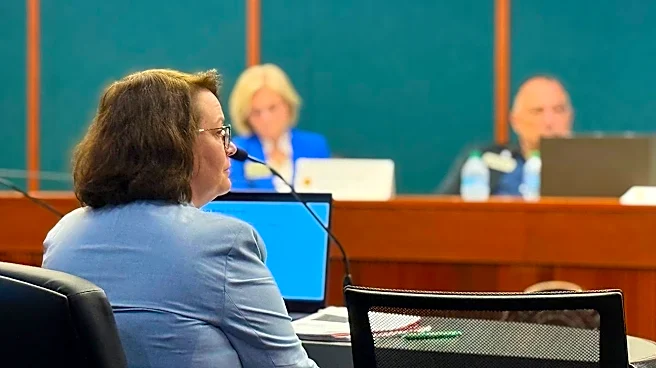
Georgia child welfare officials and juvenile court judges testified before state lawmakers Thursday in the first of several planned public hearings led by a committee evaluating the “escalating costs of foster care.”
The hearing follows the creation of a new, bipartisan committee created in response to the Division of Family and Children’s more than $85 million budget deficit. The shortfall prompted the department to cut off support services for families, terminate longtime contracts with community providers and slash enhanced payments for caregivers and organizations that
serve the highest-need foster youth.
Youth advocates, former child welfare directors and service providers protested the division’s responses.
On Thursday, committee chair Sen. Kay Kirkpatrick said foster care costs have increased by 159% since 2022, and the goal is to better understand what’s driving that. She hopes the committee can help avoid deficits in the future and “ensure that future resources are available to achieve the best possible outcomes for foster kids.”
House and Senate committee members will release policy recommendations in a final report by Dec. 1. A state audit of the division’s finances is also expected to be published sometime next month.
“This committee is not about blame or finger pointing,” Kirkpatrick said. “We’re looking for thoughtful and respectful consideration of this complex topic.”
During the four-hour meeting, a range of issues were discussed — from increasing mental health challenges among teens to a shortage of beds in treatment facilities and federal cuts impacting the availability of community-based services.
Melissa Barwick, a top official at the Georgia Department of Human Services, which oversees the child welfare division, identified rising costs of services known as “wraparound” care as the primary driver of budget pressures. Behavioral aides, therapy, crisis care and transportation are among the most expensive services, she said. She defended the department’s decision to require that these services be approved by state officials on a case-by-case basis.
“Our goal is not to reduce wraparound services to zero,” Barwick said. “The goal is to look more closely at cases and see where we may be overusing services that are duplicative or that are not appropriate for that case.”
Officials are also asking more of service providers, and working to offset the costs of court‑ordered assessments and treatment by having parents use their own insurance or Medicaid, Barwick said.
Two Georgia juvenile court judges, Monica Wilburn and Alison Toller, told lawmakers that these recent cost-control measures are backfiring — forcing kids to stay in foster care longer than they should and placing new burdens on juvenile courts and case managers to find solutions.
Toller, who sits on the bench in Dawson and Hall counties, said the recent decision to require state approval for many contracts has “abruptly stopped” services needed to care for foster youth and reunify families. Toller said judges have been forced to hold more hearings than usual to figure out whether services have been approved or not. And attorneys and court-appointed special advocates are having to spend more time pushing for help that should already be in place.
Not all counties have been impacted, she said. But in some, the changes have “caused placement disruptions and caused significant trauma in some cases to our children,” the judge told lawmakers. Some kids have gone months without seeing their parents, even when the court had ordered supervised visitation, she said.
Both judges highlighted the need to expedite the state’s authorization of services and to provide better case management.
“Every month,” Toller said, “a child in foster care carries not only fiscal costs — which is the topic of the day here — but also emotional costs for these children.”
This article originally appeared on Savannah Morning News: Georgia officials examine foster care budget crisis