







Perfect Score, Director’s Select, Best of the Best and Leader of the Pack are just a few of the awards for Superlophus. I’m also reasonably sure you are thinking: What is a Superlophus?
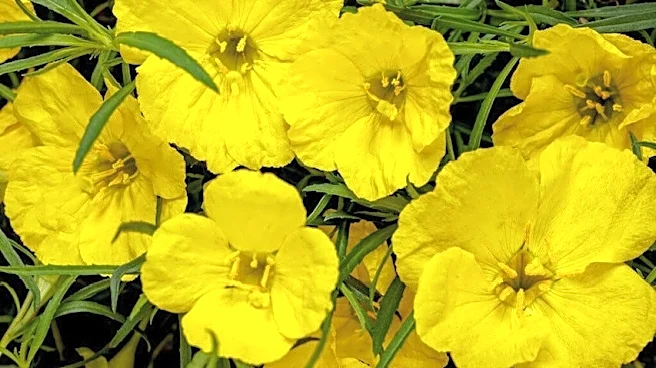
Superlophus Sunglow is the official name botanically known as an Oenothera commonly called Texas Primrose. That’s right: this golden yellow flower that is a non-stop bloomer and tough-as-nails is a native selection and winner of 15 awards from Canada to Mississippi.

Like a forensic files investigation Superlophus Sunglow has one more botanical mystery as its former name was Ladybird Sunglow Calylophus. If you look up both the botanical and common name, it will seem as if some plant war has been going on. In a humorous response remember what the scientific community
once told me, Taxonomists have to eat too!

Superlophus Sunglow oenothera has so much going for it besides being tough and standing up to triple digits. It reaches up to 24 inches tall with an equal spread. The flower’s shade of yellow brings cheer and happiness and pollinators love them. The foliage is a terrific texture addition, looking like fine grass. It does not attract the ‘Bambi Brigade’.
A great plant can survive name changes and Superlophus Sunglow oenothera was dazzling at 2006 plant trials thanks to its contribution to a new recipe called Seaside Carmel. I think it would have been fun if it had been called ‘Caramel By the Sea,’ but I digress. This recipe also features Superbells Blackcurrant Punch calibrachoa and Luscious Basket Tangeglow lantana.

There is another similar recipe that gives you options if you are creating the mixed containers on your own. It is called Goldfish and features of course the star of this column: Superlophus Sunglow Texas primrose, Luscious Basket Tangeglow lantana but differs with the addition of Superbells Coralina calibrachoa.
Susan Middleton Turner, who has shared her photos of Supertunia Mini Vista Indigo and Supertunia Mini Vista Pink Cloud petunias has done it once again, but this time with the Superlophus Sunglow Texas primrose oenothera.

In bannister baskets on the front side of the home, she created living bouquets with Superlophus Sunglow and Cora Vinca. The yellow of the Superlophus Sunglow stands out in dramatic contrast with dozens of other flowers in planters like Supertunia Vista Fuchsia petunias, Surefire Cascade Red begonias, Diamond Frost euphorbia and hanging baskets of ColorBlaze Mini Me Chartreuse coleus.
Just off to the side Susan demonstrated the ability of the Superlophus Sunglow to stand alone in a monoculture-type planting. The large basket hanging downward looked like a giant globe of yellow flowers.

While the Superlophus Sunglow Texas primrose is a treasured annual, gardeners in zones 8a to 10b may enjoy them as a perennial. They perform great in containers where well-drained soil is the norm. Landscape beds with good drainage will likewise yield the green thumb.
For containers an application of controlled-release fertilizer at time of planting and replicated when plants look tired can be expected.
If plants get leggy and open, use a sharp pair of scissors or shears to remove up to one-third of the plant's volume. This would be a good time to apply water-soluble plant food. The plant food and trimming will stimulate growth and bloom within one to two weeks.
Superlophus Sunglow Texas primrose is a winner from Mississippi to Canada and will win for you. Start sourcing now to be ready to create Proven Winners recipes or your own ‘Caramel by the Sea’.
Follow me on Facebook @NormanWinterTheGardenGuy for more photos and garden inspiration.
This article originally appeared on Savannah Morning News: Why this tough Texas primrose is a garden winner | Exclusive