





Not everyone identifies as a nerd. Decades of print media, sitcoms, films have portrayed the intellectually dedicated and deeply curious as awkward pariahs often too focused on niche interests to be of greater social relatability. Certainly, no one willingly wants to be an outcast. But if you proudly display your nerdiness and geek-tastic pursuits as badges of honor, Cartersville, Georgia, might be the small town getaway your misunderstood brain so desperately craves.
Cartersville, home to Smithsonian affiliates the Booth Western Art Museum and Tellus Science Museum as well as Savoy Automobile Museum and Bartow History Museum, is a nerd’s mind-spark shimmer of Shangri-La adventure. Museum City also boasts outdoor activities at nearby Redtop Mountain
State Park plus the unexpected, otherworldly intermingling of industry, art, and nature at Old Car City U.S.A. Even if you’re too cool for school, Cartersville has intriguing experiences you’re bound to appreciate.
On a bright Sunday afternoon I checked into a restored, early 20th century bungalow rental, quickly identified which places were walkable and which would require a car, and soon was moseying to the Booth Western Art Museum less than a mile from my stay.

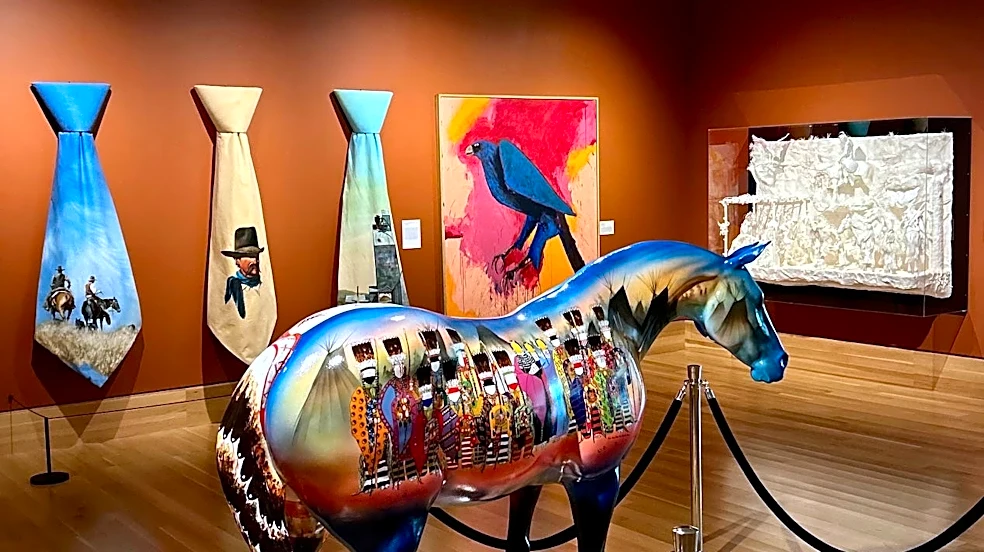
Though I’d known of the Booth, I admit having had an aversion to it. I presumed its art would be predominantly of a John Wayne/ Marlboro Man ethos—not particularly aligned with my broader artistic interests. That assumption proved to be very wrong. The Booth not only boasts the world’s largest permanent collection of Western art within its 120,000 square feet of gallery space, (so, yes, there’s traditional cowboy-style works), but also the museum highlights Civil War art, movie posters, a Presidential gallery, contemporary Western art, a children’s space and so much more.

On the museum’s third floor, “Preternatural & The American West” presents the work of Michael Scott, on display May 9 through Oct. 11. The exhibit consists of 30 large scale oil paintings depicting fundamental forces of nature in tense relationship with the impacts of human activity on the natural landscape. A quote from Scott above one one of the paintings emphasizes “science creates nature; nature inspires art; and the interplay between these two elements results in magic.” That sentiment runs palpable throughout the show.

Massive paintings convey crisp, deep landscapes in vibrant hues that necessarily coerce viewers to consider their understanding of nature and how their actions impact places near and far. “Messenger of the Bitterroot” is particularly captivating. In it, a snowy owl rises from the glowing embers of a recent forest fire as the setting sun smolders behind distant mountains. The image is both beautiful and agonizing, a visual meditation on the paradox of simultaneous hope and despair.
Sunday afternoons, the Booth Western Art Museum opens from 1 p.m. to 5 p.m. and costs $16 to enter, and yes, I meandered and contemplated all four hours.
Afterward, I walked up the street to family-owned eatery Tandoori Table for a treat of Indian cuisine. The father and son who took care of me helped select dishes that were gluten and dairy free, plus recommended a delicious guava drink that had the perfect amount of spice. Best part: my meal was just over $18.

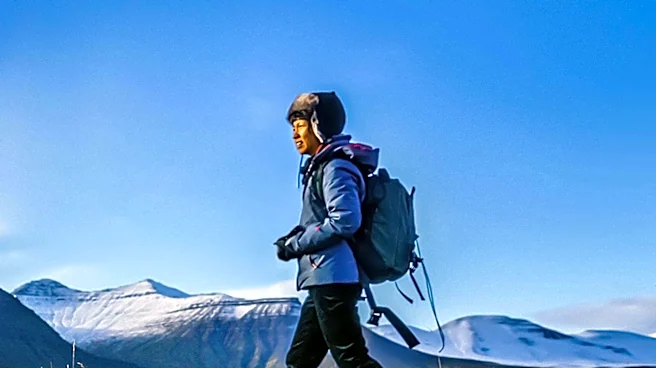
Monday morning, I ambled a couple blocks to Noble & Main Coffee Co. This former car service station now lives as a highly curated coffee shop, roasting beans and serving brews from around the world. With hot cuppa in hand, I was soon driving to Red Top Mountain State Park for a mid-morning hike on the 3.5-mile Iron Hill Trail.
Lake Allatoona surrounds nearly all of the state park, and with rolling hills and a great mix of hardwoods, you are guaranteed grand views and pleasant hiking. At the trailhead, bright sunlight filtered through the trees, warming the air and earth. Pockets of Carolina wrens, cardinals and tufted titmice flitted through the forest along the water’s edge. A handful of other hikers passed from the opposite direction, and an occasional mountain biker would slow before passing on my left. It all bolstered my spirits, thinking of the beautiful living diversity our planet sustains. The tufted titmice were especially interactive and responded when I imitated their calls. One landed eye-level on a nearby pine branch, and in fervent reproach, the tiny bird blurted a series of high tones and scratchy reprimands before flying on to loftier branches!

Afterward, I was en route to the Tellus Science Museum, and if you are fond of space, rocks, and dinosaurs you will love the Tellus. The “Fossil Gallery” not only features dinosaur species I didn’t know existed, but also includes a display of the Geologic Time Scale illustrating the age of the Earth as documented through geologic time and the fossil record. This isn’t necessarily the splashiest feature in the exhibit, but the subject matter always makes me think about how vast the universe is beyond our planet. The timeline follows the beginning of Earth 4.6 billion years ago to the present era while depicting when different species entered and left the fossil record. For example, roughly 65 million years ago, The Great Cretaceous Extinction wiped out 75% of plant and animal species on the planet, ending the reign of dinosaurs, while the earliest Homo sapiens fossils date back a mere 300,000 years. Humans are mere infants within the cosmic scheme.

I was thinking about what a rube upstart our species is, when I noticed it was time to catch the 2:30 p.m. showing of “Spark” at the Bentley Planetarium. I settled into the low-lit theatre to learn more about the lifecycle of stars, how the Milky Way Galaxy formed, and that all the atoms in our bodies and on the Earth owe their existence to the birth and death of stars across the universe, that we are beings of celestial dust, connected to each other and beyond because of the cosmos. Thoughtful and complex, yet accessible, awe inspiring, I highly recommend “Spark.” The Tellus Science Museum is open daily 10 a.m. to 5 a.m. with $20 entry and $5 to view programs in the Bentley Planetarium.
Next morning, tempered with greater cosmic knowing and steeled to a broader geologic perspective, I drove to Old Car City U.S.A., where the quirkiness of nature taking over discarded automobiles would further galvanize my creative introspection. What began in 1931 as a family-owned general store transformed over the decades into a service station and then into the “world’s largest-known classic car junkyard.” At 88-year-old, Dean Lewis powers all 34-acres of Old Car City U.S.A. and has been collecting classic vehicles on the property for over 50 years.

After paying the $20 entry fee, I was soon meandering among fallen Ford Fairlanes, rust encrusted Studebakers, and busted out Mustangs all with some manner of vegetation slowly reclaiming their automotive identity. Peppered among rows of decaying cars were hand-painted signs conveying facts and thoughtful observations. One proclaimed, “The United States is the only developed nation where medical bankruptcies occur.” Another declared, “Kangaroos cannot jump backwards.” The proclamations coupled with the insistent sounds of blue jays, cardinals and Carolina wrens heightened the unique surrealism of the ordered yet chaotic landscape—here, metal carcasses once loud and heavy on city streets were now softly disintegrating into the forest floor to the insistent clamor of quarreling birds.

I stayed two-and-a-half days in Cartersville and absolutely loved how my experiences made me reflect on human existence, our place within the cosmos, and that our actions on Earth really matter and have consequence. As stated earlier, bonafide nerds will adore Cartersville, especially if you stay more than a couple days. This trip, I didn’t make it to the Savoy or Bartow museums but will next time. Lastly, Cartersville’s downtown boasts several walkable streets of mom-and-pop shops, independent boutiques, and family-owned restaurants—nerds and non-nerds alike will appreciate the authenticity of small town hospitality!
This article originally appeared on Savannah Morning News: Discover why Cartersville is a 'nerd's paradise' | Exclusive