







Questions about how a new data center will be powered — and what its massive energy demand could mean for local residents and the electric grid — were key topics at a special information session in Rincon yesterday.
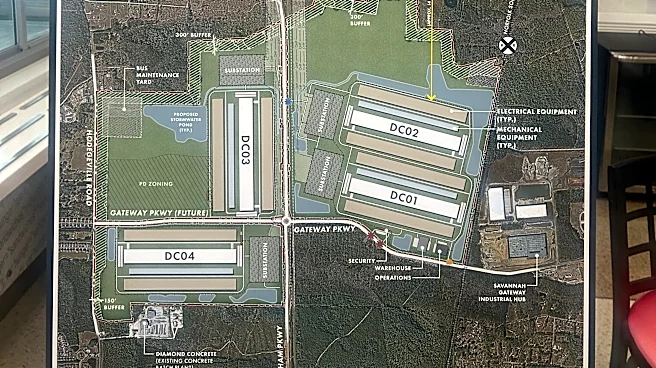
The discussion comes as Effingham County officials consider Project Camellia, OpenAI's proposed 1,440-acre data center campus near Rincon.
Hosted by the Effingham County Chamber of Commerce, the session was curated specifically for employers, elected officials and community leaders to get feedback on concerns ranging from the environment to water concerns.

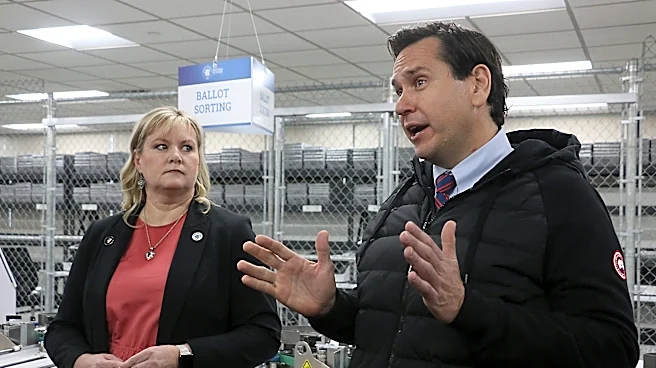
Betsy McGriff, project manager at the Georgia Tech Center for Economic Development Research, Dr. Ahmed Saeed, assistant professor at Georgia Tech School of Computer Science, Dr. Ameet
Pinto, associate professor at Georgia Tech School of Civil & Environmental Engineering and Dr. Laura O. Taylor, director of the energy policy and innovation center at Georgia Tech School of Economics, led the discussion.
Residents submitted questions ahead of time, which were read aloud by McGriff during the event.
The session was not intended to address Project Camellia specifically, and Georgia Tech officials said they do not take a position for or against the proposed project.
Here are three takeaways from the event.
Power
Residents heard from Taylor about how Georgia Power plans to meet growing electricity demand from data centers and other large industrial users without overloading the grid, especially during summer afternoons where high temperatures and humidity mean more people will be running their air conditioning units.
"3.2 gigawatts is a lot of power, enough to power over two million homes," said Taylor. "This is only part of the overall growth for Georgia Power. In April, they contracted with 32 large load customers, data centers and manufacturing to be delivered between now and 2030-2031."
Taylor went on to say the state's power supply will be in demand as more industries come online. The Public Service Commission announced Dec. 19, 2025 its strategy to ensure its power capability, saying an agreement with Georgia Power includes construction of 9,985 megawatts of new energy and that 80% of that will power data centers.
According to a fact sheet published by the Public Service Commission, ratepayers will be protected from rate increases even if the data center never comes online.
Taylor added the majority of the 10 gigawatts will be natural gas, although some will also be solar and that new power purchase agreements with Mississippi Power and Alabama Power can be delivered across state lines to Georgia if needed.
"[Transmission lines] are like a net that covers the state and we move this power from generators to where the demand is," said Pinto. "In order to move this power, they will be upgrading transmission lines so they can carry more power by building 1,000 miles [of transmission lines] and adding new substations across the state."

How are data centers cooled?
As a proposed data center moves forward, questions are growing over how much water the massive facility could consume and whether local water supplies can keep pace with its demand.
Water consumption has become one of the most closely watched aspects of data center development, particularly in communities concerned about long-term demands on local water systems.
Uniprism, a market research firm that studies energy and power, among other things, wrote on their LinkedIn page that the chips used in data centers power a vast network of servers that serve as the backbone for cloud services, AI models and more. Pinto said that data centers have changed over time and that newer, high-powered large-scale facilities are using more chips to power their facilities and also spoke to how cooling systems work.
"Similar to a car radiator, there is liquid flowing through tubes and then a lot of air blowing through those tubes," she said. "There may be some instances when you have to evaporate some of the water, so it does not mean zero water consumption."
A spokesperson for OpenAI said at the open house July 23 that the entire project is expected to use 30,000 gallons per day.
What are the economic benefits?
OpenAI has pledged a $20 billion investment in the project, which local officials have promoted as a major economic development opportunity. The investment includes construction of a 1,440-acre campus, as well as a minimum of 400 jobs, although the project is expected to create 1,000 jobs on site, as well as thousands of jobs through construction and suppliers.
Taylor shared the potential economic benefit from data centers.
"The benefits of any new commercial development creates new jobs and increased demand for local goods and services," said Taylor. "More people are buying things and going out to restaurants. [It also adds] new tax revenues which can be substantial."

Taylor said one of the key questions communities should consider is what alternative development might have occurred on the site if the data center project had not moved forward.
"From an economic standpoint, it's not this project vs. nothing," said Taylor. "It's what else would go there? The intent of that land is not to stay undeveloped. It was built to be developed. When it comes to tradeoffs, this is where things get more nuanced than just dollars. [Let's look at] environmental costs – any building creates impervious surface - lots of water runoff that could increase streambank erosion - air emissions and the impact on human health. These things are harder to measure in dollars. That’s why community discussions are important."
How other communities regulate data centers
Georgia Tech has created a data center ordinance hub on its website to help track how data centers are regulated through land use as a growing number of communities want to mitigate how data centers are planned for their communities, according to Taylor. At least two dozen cities across the state have implemented height restrictions, among other things.
"With regard to noise, ordinances are typically measuring noise at the property boundary and they set day time and night time limits," said Taylor. "For daytime its 65 decibels – normal conversation when people are standing a couple of feet apart. Those requirements get tighter at night where it is 55 decibels, which is described as moderate background noise. Coweta County required a noise study prior to any construction and data centers are allowed no more than an increase in five decibels."
What else was discussed?
According to Brandt Herndon, chief executive officer for the Effingham County Industrial Development Authority, the property where the data center will be built had been zoned for industrial development for years and although staff examined potential manufacturing opportunities, those never panned out.
District 2 Commissioner Roger Burdette added that at one point, there was a proposal for some 6,000 homes where the industrial park currently is and some thought it would be ambitious to do.
Burdette said county leaders want residents to have access to factual information as discussions about the project continue.
"We are trying to get as much data out to folks as we can," said Burdette. "Not opinions, but data."
County Commissioners will host a work session 10 a.m.-1 p.m. Saturday for Project Camellia, detailing the history of the site, benefits of the project and more. The meeting will be held at the county's administrative complex in Springfield.
Latrice Williams is a general assignment reporter covering Bryan and Effingham County. She can be reached at lwilliams6@gannett.com.
This article originally appeared on Savannah Morning News: Effingham County Chamber of Commerce hosts data center Q&A session