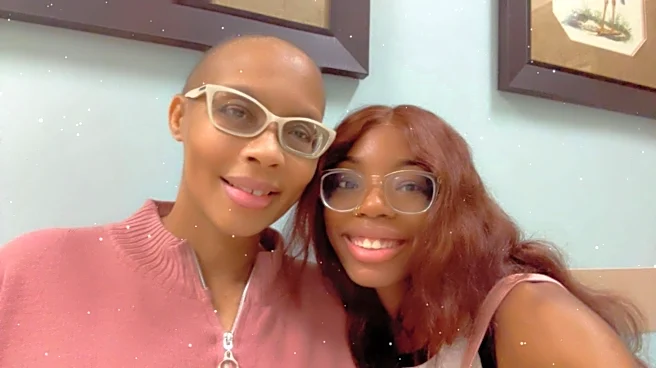





As soon as Talisha Shine received the news that she had breast cancer, she sat at her computer and did what she does best. She began organizing data to make sense of it all.
Shine, 53, who has an extensive background in health care information technology, was surprised when she read the word “carcinoma” on her doctor’s online portal but refused to panic.
“It was a little sobering and daunting, but I wasn’t fearful,” she said of seeing the report on May 17, 2025, which was a Saturday. Despite being diagnosed with aggressive invasive ductal carcinoma, “at no point did I feel that I was going to die. Cancer is not a death sentence. Cancer is a process and you have to go through the process.”

Through a self-exam, Shine had found a lump in her left breast. Coincidentally, she was due for her annual mammogram and told the technician about “the pebble-sized” lump.
Shine is a self-described proactive person and, by Monday morning, when her ob/gyn called, she was more than ready to proceed with whatever was to come. Her doctor referred her to a team of qualified, trusted specialists, and plans began falling into place.
Shine had already decided to use artificial intelligence to help understand what would be happening. Later, she documented her journey online in her LinkedIn profile.
“I turned to ChatGPT to help me manage the deluge of information that comes with a diagnosis: pathology reports, lab results, research articles, treatment options, side effects,” she wrote. “At first, I just needed to ground myself to find footing in not only my diagnosis but also its impact. Soon AI became my one-stop resource where I could solace my apprehension while strategizing my next steps.”
Sharing her experience online was “not just about me,” Shine said. She wanted family and friends to benefit from her research.
Ironically, a month after Shine received her diagnosis, her younger sister found out she also had invasive ductal carcinoma in her left breast, just like Shine. They both tested negative for the BRCA gene, which raises the risk of several cancers.

Nevertheless, her sister’s diagnosis kicked (Shine) into high gear.
“I documented thoroughly to make it better and easier for her,” she explained.
Meanwhile, Shine had a biopsy “super fast,” and started six rounds of chemotherapy every 21 days to reduce the tumor.
“Chemo was rough and painful,” she said. “It was truly poison.” The AI assistant that she had created initially told her what to expect down to the minute details. “By day 10 I knew I would feel better and I did.”
She was cancer-free by mid-fall and underwent a bilateral mastectomy on Nov. 6, 2025. Although the cancer had been in only one breast, she opted to have both removed.
“They came as a set and they came off as a set,” she said, joking, adding that she is a positive person and lives up to her last name. Next was five weeks of radiation, which she completed on Feb. 28 of this year. During a follow-up appointment, Shine’s oncologist ordered a CT scan, a blood clot was discovered, and she was rushed to surgery.
The blood clot was determined to be a side effect of chemo and the sedentary aspects as a result of radiation, she explained. The life-threatening situation proved to be no stumbling block for Shine who kept on working at her remote job every day during treatments.
“With cancer, you lose so much of everything – your hair, your eyebrows,” she said. “I wanted to fight this. I showed up every day and that’s what I want to share with people,”
Shine also says that her experience has reshaped how she thinks about human-AI coordination “not as a replacement for expertise, but as a bridge between uncertainty and understanding.”
This article originally appeared on Savannah Morning News: How AI helped one woman navigate breast cancer treatments