



This story was originally published byThe Imprint, a national nonprofit news outlet covering child welfare and youth justice. Sign up for The Imprint’s free newslettershere.
Amanda Heath was very prepared and very nervousthe day she pulled up to a Georgia foster home to meet the first child she would represent as a court-appointed special advocate.
It was 2009, she was a 24-year-old Mercer University law student and the case would be her inaugural exposure to juvenile courts. Heath had pored over the police reports and court documents detailing what the 4-year-old girl had endured, and knew the file cold.
She felt the weight of her task and the consequences it carried for a child separated from her parents. But it wasn’t until she met the little
girl and saw “that light still in her eyes,’’ that the reason for her role came into simple focus.Behind all the paperwork, she understood, was a child’s life.
That understanding informed how Heath would approach the many child welfare cases she came to preside over as a juvenile court judge later in her career.
“We get so caught up in the checklists and the guidelines and timelines. These are people. This is their case. This is about them and their life,” Heath said in a recent interview with the Imprint. “I need to know who they are. What’s their favorite color? What’s their favorite food? What cartoons do they like?”
Today, Heath serves as a Superior Court judge presiding over civil, domestic and felony criminal cases in Burke and Richmond counties.
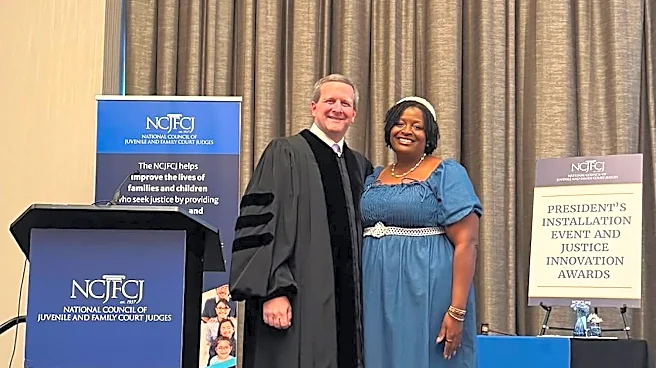
Though she no longer oversees child welfare cases, her expertise and insight into the juvenile courts is considered so valuable that last month she was elected president of the National Council of Juvenile and Family Court Judges. As one ofthe country’s oldest and largest judicial membership organizations, the council influences juvenile and family court policies and practices nationwide.Its 2,000 members include judges, attorneys, probation officers, child welfare advocates and other juvenile and family law professionals.
Heath, 41, began her career after law school prosecuting violent felonies and drug cases in “accountability courts” that offer rehabilitation alternatives to defendants with substance use problems. She later switched to defending the clients, which allowed her to appreciate the value of community resources for adults struggling with mental health and substance use.
In 2016, she served as a juvenile court judge, becoming the youngest sitting judge on the Augusta Judicial Circuit. Her accomplishments on the bench included securing a $100,000 state grant to create a new, evidence-based response for youth sex trafficking victims in Augusta.
Gov. Brian Kemp selected her to fill a vacancy on the Superior Court in 2021. The appointment made Heath the first Black woman in the circuit’s 152-year history to serve in that role. In 2022, voters elected her to the post.
In her new council president role, Heath said she wants to prioritize training and technical assistance for under-resourced tribal courts, and draw more attention to the crisis of missing and murdered Indigenous youth.She hopes to attract more attorneys, social workers and other child welfare professionals to the judicial council, believing that everyone involved with juvenile courts needs access to the same training and best-practices information.
Additional issues she intends to champion include increased education and training regarding the behavioral health needs of foster youth; shifting the courts’ response from “trauma informed” to “trauma responsive” in order to better serve families, and initiatives prioritizing the physical and mental health of judges and others working in child welfare.
“In order to do this work, you’ve got to have the fire in your belly,” she said. “It’s very intense — a lot of potential for vicarious trauma. So you really have to have something inside of you that is burning bright to continue to forge forward to be there for these children and families.”
Heath, who likes to sing in her free time, marked her latest achievement by belting out “Proud Mary’’ at her installation ceremony. The lifelong Tina Turner fan asked fellow judges to step in as her backup Ikettes.

The Imprint spoke to Heath last month to discuss her approach to child welfare cases and her new role. This conversation has been edited for brevity and clarity.
One of the biggest stories in Georgia child welfare this past year has been the Georgia Division of Family and Children Services’ projected $85 million deficit, which the state backfilled. The agency’s director, in part, blamed judges for ordering “excessive” services for families. What are your thoughts about this?
As judges, the buck stops with us. If we’re going to exercise our best efforts to assist these children and families, we want to make sure that we are putting forward the correct evaluations, recommendations for treatment, things of that nature. It’s also crucial our judges know what’s available within their jurisdictions. It’s about what’s really specific to this child and to this family.
I'm thankful the state stepped in to fill those gaps for the division. I’m hopeful this will open the door to having those conversations between the division and the judiciary to come to a common ground. We all have the same end goal for the families.
Advocates for parents and children, and some judges, have raised concerns that legal representation is inadequate in some family courts. Do you share any of those concerns?
We need great advocates for our parents and for these children. Our biggest issue is just trying to find the lawyers who are willing to step into this unique world. It’s not a place where we’re going to make a lot of big money, so it’s hard to find a lot of busy practitioners to take some cases in this area.
Going back, how did your work in drug accountability courts shape how you handled juvenile court cases, and what parallels are there?
I look at the person more holistically because really, juvenile courts are an accountability court. You have all the different partners at the table. You still have that adversarial nature to it, but at the same time, everyone wants to see this family do well. Everyone would love to see this child do well. That’s a really great concept, unique to the juvenile court world and accountability courts.
Poverty, housing instability, food insecurity, substance abuse — these are frequently the backdrop of child welfare involvement. What challenges around these issues do juvenile court judges face and how do you think they should be addressed?
A lot of families are only one paycheck away from being in a very dire situation. So we’re telling parents, “You need to have stable housing,” but with the rental rates, that’s a very tall order. If I’ve got to go to my treatment at this one place, and I’ve got to go to my drug screen at this other place, and I don’t have a car, I end up missing these appointments. Then I go to court and it looks like I don’t care.
I can order all these different things, but if I know the person really has no way to get to those appointments, how can we bring them to the parent? How can we develop some type of one‑stop shop where the parent doesn’t have to run all around town to get everything done, but can go to one place and receive the services and complete the things that are on their case plan and help set them up for success?
Support for parents frequently includes helping them to secure resources, such as therapy. But not every community has easy access to such help, particularly in more rural parts of Georgia. What’s your idea for how under-resourced areas can navigate this?
We have to get creative, and in this virtual world we’re in, there’s so many things that can be delivered online, especially therapy.
As a court system, we’re not built to take on every single issue that’s happening in our society. But there are community partners that are built for that. They can see the benefit of, if we make this investment here, we’re not going to pay for it on the back end with trying to house children in custody. Or having to pull children into foster care because their parents can’t meet certain needs.
In more complex cases, you have to make a decision on when to legally separate families. How do you assess these cases?
The hardest thing within the juvenile world is doing termination of parental rights rulings. You’re terminating this inherent constitutional right parents have to raise their children — something not to be taken lightly.
One of my mentors said juvenile courts are the emergency room of the judicial system, and I’ve definitely seen that to be true. Everything kind of comes to a head within the juvenile justice system, in which we have probably the least resources available.
You’re making decisions based on the information that you’re provided, and trying to make that best decision to really aid and help the families and the children that come before us.
How did you work with families who may not understand their rights or how the court system works?
I made it clear to every family that came before me: “I know you feel like everyone’s against you. You feel like the Division of Family and Children Services has come in and taken your child; you know the judge is against you. We’re actually here to put things in place to assist you in fulfilling that essential role of being able to successfully raise this child.”
Sadly, sometimes we can’t go that route. But that’s definitely always the goal.
This article originally appeared on Savannah Morning News: Judge Amanda Heath takes helm of national court group