








Bryan County's population has increased by 16% in the past six years, according to Dr. Michael Toma, professor of economics at Georgia Southern University. U.S Census data predicts the county's population at 52,000 people.
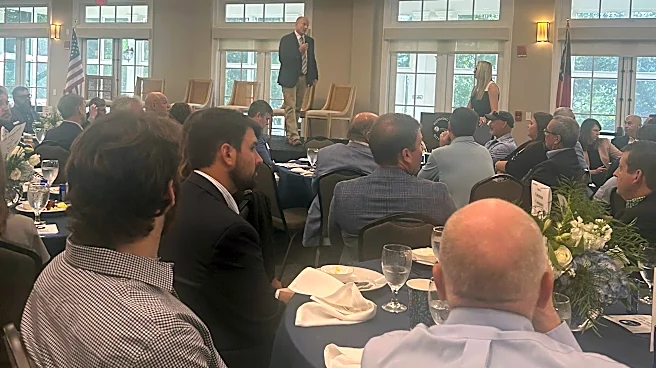
That assessment came during Bryan County's annual State of the Community address on Friday, when leaders and residents gathered at the Richmond Hill City Center to hear officials discuss the impact growth is having on local businesses.

As more industry locates to the area, business owners are grappling with growth and its subsequent strain on the county's infrastructure but local leaders say they are planning for growth.
How is growth shaping Bryan County?
According to Toma, 5.7 million container
units moved through ports managed by the Georgia Ports Authority in 2025. He said that number could climb to 9 million over the next five to 10 years, which could signify more logistics development in the region.
“Development of (an automobile manufacturing) industry that we didn't have three years ago, continued growth and development in the port is going to change the trajectory,” said Toma.
"It already has changed the trajectory of growth in our regional economy," he said. "... Over the last 15 or 20 years, it's been about 2.2-2.3% growth annually in employment.”
Richmond Hill City Manager Chris Lovell said now is the time to embrace growth.
"It's coming, and we better embrace it," said Lovell. "We better look for ways to broaden the tax base because residential doesn't do it."
Traffic and road congestion in the county continues to be a hot topic. But Toma says the county's pace regarding infrastructure improvements is in good shape, saying that motorists may not enjoy the sight of orange barrels along corridors, but that signifies improvements are ongoing. He added that road improvements tend to lag behind population growth by five to 10 years and that the county is well ahead of that.
"I think you can be confident your elected leaders and planners are doing what they need to do to ensure Bryan County can grow to its potential," said Toma.
With regard to future road enhancements, Bryan County Manager Ben Taylor said that although traffic lights are more cost-effective, roundabouts are aesthetically pleasing. He also stated that the county is in its infancy stage in terms of what the future will look like.
"With that blank slate, you have to get the planning right the first time," said Taylor. "You can put in a red light; red lights are a lot cheaper, but guess what? You got people sitting in them, getting frustrated with traffic. You got people calling my office, complaining about the timing of that red light. So do a little bit more money and do something that's going to last a little longer, ease traffic a little better, and build a roundabout. That investment is really going to turn into a very good, well-planned community."
Taylor assured the public that through careful planning and reliable data, officials are working to ensure the right decisions are made now and long-term.
Get involved
Pembroke City Manager Chris Benson called on the community to get involved, pointing to a lack of participation in community meetings. Comprehensive plans must be updated every five years, per state mandate, and Benson said community input matters.
"There's a heavy public engagement process," said Benson. "We just don't necessarily always get those results when we have these public hearings and these community meetings, asking for the community input. They're not heavily attended. ... Show up to the council meetings, even when there's something not on the agenda that you aren't interested in just to show your face, just to be engaged."
Latrice Williams is a general assignment reporter covering Bryan and Effingham County. She can be reached at lwilliams6@gannett.com.
This article originally appeared on Savannah Morning News: Bryan County growth tops 16%, forcing focus on roads and planning