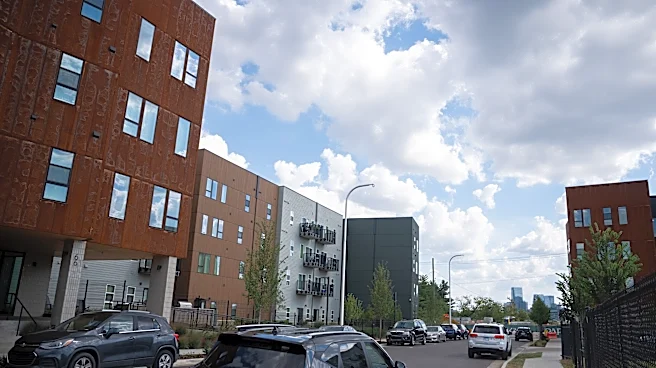




The view of Savannah’s Oglethorpe Mall from the intersection of White Bluff Road and Abercorn Street isn’t what it used to be.
In place of the former Sears store are five buildings of apartments, a clubhouse and resort-style pool at Madison Oaks. But the multi-family complex didn’t sprout on its own, it required rezoning at Savannah City Council.
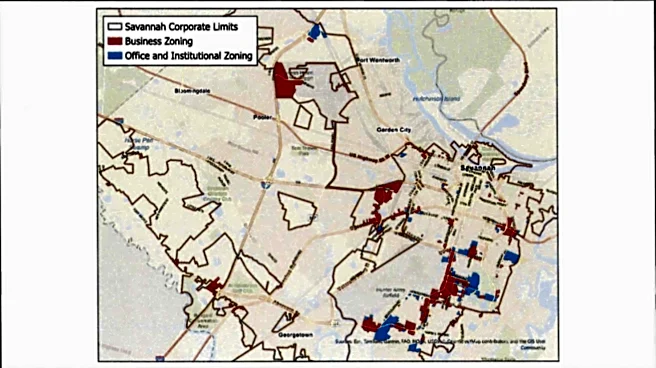
City Manager Jay Melder highlighted the project as one that would have not required rezoning under a zoning proposal being considered by city council. The measure proposes allowing new multi-family housing types in select business and office zoning districts.
“We have to look at the tools that incentivize the increase of supply for housing as well,” Melder said.
road on citywide housing bus tour

The proposed change is aimed at making it easier to increase housing supply in the city, and ideally lower housing costs as a result. Council workshopped the proposal and postponed a final vote on the measures at its Aug. 27 meeting, where intense discussion over the city’s approach to housing affordability surfaced.
Multiple members of council expressed the need to have more time to consider the proposal, with some suggesting tweaks to its parameters. The workshop was over two hours with additional discussion during council’s regular meeting that afternoon. It was the second time the item was up for approval after council also continued the item at its Aug. 13 meeting.
District 1 Alderwoman Bernetta Lanier supported the item’s continuance. Lanier specifically expressed the need to protect smaller business-zoned lots in her district in order to attract needed retail on the west side.
The alderwoman commented on how residents of the district spend most of their money, such as for food and entertainment, outside the district. Melder proposed adding a provision that would exempt parcels under half an acre from the zoning amendments, a tweak that could now be added to the proposal given the continuance.
“We need to make sure that, as we accommodate and plan for this growth and development, we do not make it more difficult for the retailer to be there,” Lanier said.

The continuance was supported by a majority of council members, with only District 4 Alderman Nick Palumbo and District 6 Alderman Kurtis Purtee voting against it.
The zoning amendments were also formed out of a city council housing tour in April. The tour took members of council and city staff across the city to show potential locations where new housing could be developed with zoning changes.
After the workshop, council directed staff to specifically pursue ordinance changes that could permit more by-right housing in the business and office districts. The amendments went through the Chatham County-Savannah Metropolitan Planning Commission in June, where the planning board recommended approval of the items.
Palumbo expressed some frustration with council’s lack of speed in approving the items. Palumbo said he has seen how the proposals work in his district, where Madison Oaks is located, also referencing a successful hotel-to-apartment conversion at The Spoke.
A large number of the potentially impacted areas are south of DeRenne Avenue, in portions of town represented by Palumbo and Purtee.
“Some of these principles are working, but for it to continue working we need to enshrine it in code. It can’t be a one off,” Palumbo said.

Melder said at the workshop the city has been more aggressively pursuing housing affordability solutions since adoption of the Housing Savannah Action Plan in 2021. The city manager pointed to city support of successful Low-Income Housing Tax Credit applications for the former fairgrounds property and 1700 Drayton St as examples.
The city has also utilized the Savannah Affordable Housing fund and partnerships with the Chatham-Savannah Landbank Authority to create housing for those at-risk, or transitioning out of, homelessness. Projects such as The Cove at Dundee and recently unveiled row homes on Florance Street are common examples.
But efforts to change zoning parameters to promote increasing housing supply have been less common. The city’s primary zoning change to promote new housing was the Affordable Housing Overlay and density bonus program approved in April 2025.
Johnson expressed a need for the city to have its pedal to the metal on housing, saying the city is currently on the “losing end” of residents’ affordability challenges. The mayor added that the new zoning proposals may not be perfect but could be approved and refined in the future as the need arises.
“You achieve affordability by density. You just have to,” Johnson said.
Evan Lasseter is the City of Savannah and Chatham County government reporter for the Savannah Morning News. You can reach him at ELasseter@savannahnow.com.
This article originally appeared on Savannah Morning News: Savannah City Council grapples with housing-related zoning measure