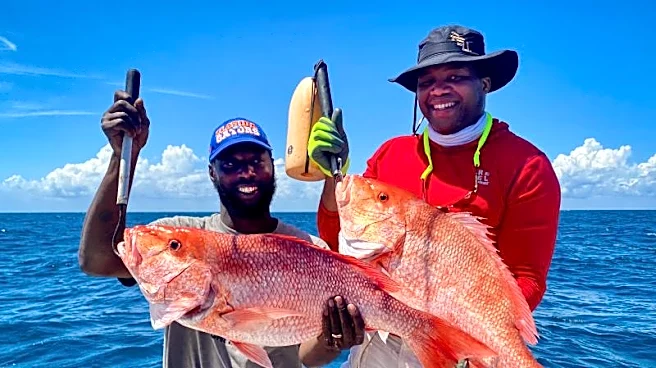





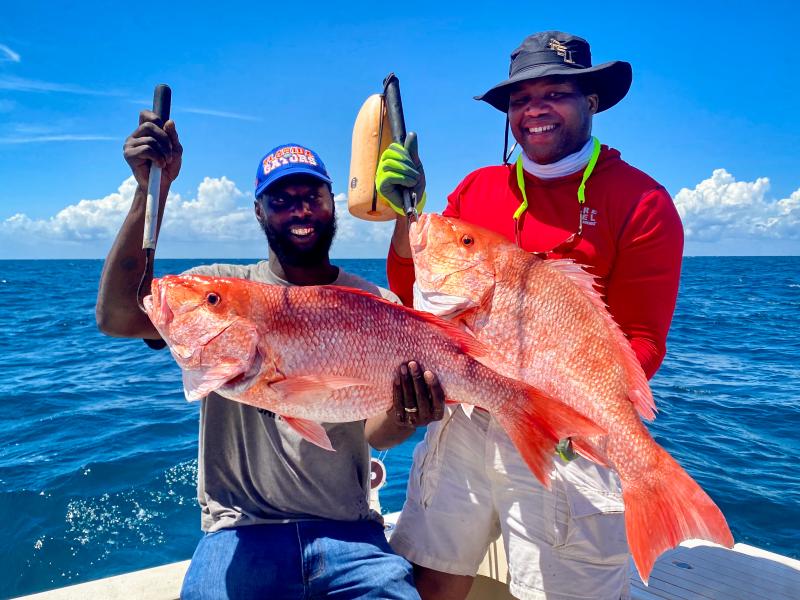
A controversial red snapper season currently underway off the coasts of Florida, Georgia and South Carolina is the latest battle in the long-running conflict between commercial and recreational fishers over limited fish populations.
But this time, the 14-day season promises to yield something both sides want: data.
Red snapper in the Gulf and the South Atlantic were overfished in the 1990s, leading to tight federal limits on commercial and recreational harvests. Since 2008, Georgia anglers have been allowed to fish for red snapper for only a few days each year, if at all.
Now, NOAA Fisheries says red snapper populations have recovered enough to support an “experimental” season that will test a new Georgia system for reporting how many red snapper are
caught—and thrown back—by recreational fishers.
Recreational catch data, which is used to help determine whether a species is overfished or in danger of being overfished, has historically been gathered by making phone calls or mailing surveys to a small sampling of anglers—sometimes weeks after their fishing trips—and asking them to recall their catch.
“That can be a tricky thing for some people to recall,” said Doug Haymans, director of the Coastal Resources Division of the Georgia Department of Natural Resources (DNR), which manages Georgia fishing permits.
For rare species like red snapper, estimates from these surveys typically have high error margins—as high as 50 percent, according to the Georgia DNR. Such limited and unreliable data can make it difficult to know whether fish stocks are being depleted.
Georgia is now moving from phone calls and mail surveys to VESL, a digital app that recreational fishers must use to report their catch in real time.
“The Achilles heel in red snapper and many other federally managed species is the data collection process,” said Haymans. Data collected through VESL can offer a more complete picture of the red snapper fishery, he said. This 14-day red snapper season will be the first opportunity for Georgia to test recreational fishers’ use of the app and whether they comply with the mandatory reporting process.
“Not everybody’s going to do what is required of them,” said Haymans, “but we hope that we’ll see something better than what we get from a survey right now.”
NOAA faces red snapper lawsuit—again
To gain access to the fragile red snapper fishery in the South Atlantic, Georgia had to apply for a special federal permit known as an exempted fishing permit. Exempted fishing permits have ignited controversy in the past, as commercial fishers argue they unfairly benefit recreational anglers and allow NOAA to sidestep federal requirements that ensure fisheries are managed sustainably.
NOAA Fisheries has been sued by commercial fishers several times for its use of exempted fishing permits, including a lawsuit earlier this summer over a proposed 30-day red snapper season for recreational fishers in the South Atlantic. A federal judge issued an injunction to halt the season before it got underway.
Now NOAA faces another lawsuit over the October red snapper season. The plaintiffs—who include commercial fishers and fish wholesalers from Florida and North Carolina—accuse the federal government of skipping the scientific review and opportunities for public input that are required before making changes to fishery harvest limits.
While it’s too late to stop the 14-day season, which started on Oct. 9, the plaintiffs hope to establish a legal precedent whereby NOAA must comply with its own laws when issuing exempted fishing permits, said Seth Atkinson, the attorney arguing their case.

Is the reward of data worth the risk of overfishing?
Commercial fishers also say that this year’s extended recreational season runs the risk of overfishing red snapper. Red snapper are usually caught by anglers targeting other species, and when they get tossed back, an estimated 23 to 30% will either perish from a condition called barotrauma or get eaten by another predator.
Death by discard is the leading cause of mortality for red snapper and has long hampered the recovery of the species.
Extending the recreational harvest season runs the risk of setting back red snapper recovery, said David Krebs, a commercial fisherman and owner of Ariel Seafoods in Florida. Ariel Seafoods is the main plaintiff in the lawsuit challenging NOAA’s use of exempted fishing permits.
But Krebs also allows that it could lead to better data on red snapper than state and federal agencies have ever had.
“If they’re going to actually have accountability measures…having the app on your phone, and you’re going to tell the government what you caught…that’s going to be wonderful,” said Krebs.
“If we actually know how many fish are out there, then you can manage that species appropriately,” he continued.
But he and other commercial fishermen worry that NOAA’s repeated attempts to extend recreational harvests of red snapper through exempted fishing permits are driven by pressure from the lucrative recreational fishing industry, which wants access to red snapper.
“Just trying to sit behind a wall and a door and say, ‘Oh yeah, there’s plenty of fish out there’ because we need them to be out there, that doesn’t manage the resource,” Krebs said. “That manages the people.”
In Georgia, Haymans said that recreational fishing organizations have been “vocal supporters” of exempted fishing permits. He said that the goal of Georgia’s October red snapper season is both to test the VESL reporting app and give recreational anglers more fishing days.
The funds for the VESL app were provided by Yamaha Rightwaters, an arm of the boat manufacturer Yamaha that promotes environmental stewardship. Georgia DNR approached the company to ask for the funds, Haymans said, and were given them “with no strings attached.”
“We don’t believe there is a risk for overfishing” during the October season, he said.
He added, “We’ve worked hard to minimize any risk.”
As for whether NOAA has violated its own laws in issuing the exempted fishing permits, he said, “That will be for a federal court…to decide.”
Stephanie Castellano covers climate change and the environment in coastal Georgia. You can reach her at scastellano@usatodayco.com. This reporting content is supported by a partnership with Journalism Funding Partners.
This article originally appeared on Savannah Morning News: Georgia anglers embark on controversial red snapper season | Exclusive