








Environmental concerns over a proposed natural gas power plant to be built in rural Colleton County have prompted two South Carolina Lowcountry landowners to turn to the S.C. Supreme Court.
After a motion for reconsideration was denied by the S.C. Public Service Commission, which in May approved a permit to construct a massive energy plant in Canadys, area residents John M. Burbage and Lauren V. Moody Stanfill filed a brief notice of appeal Sept. 1 with the Supreme Court.
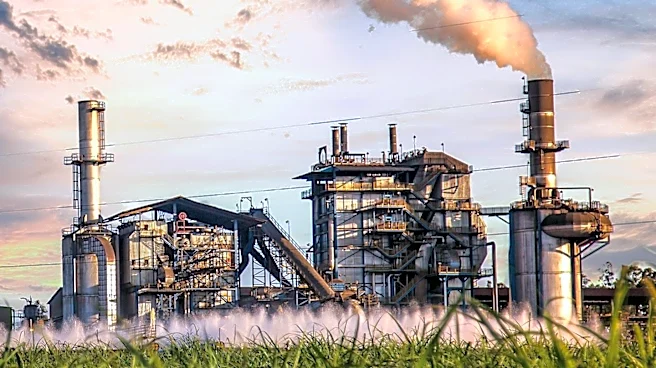
On May 14, South Carolina's PSC voted 7-0 to approve an application by Dominion Energy and Santee Cooper to jointly construct Canadys Station, a proposed natural gas combined-cycle generating facility that "is needed to serve South Carolina’s rising demand for energy," the energy companies
stated in a joint May 14 news release.
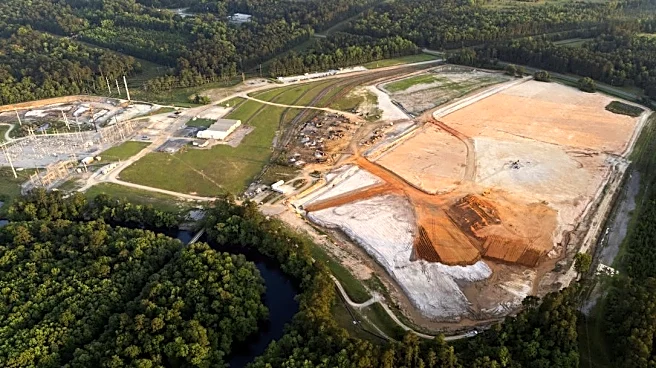
The Canadys Station is to be located at a former coal-powered site near the Edisto River, in the ACE Basin watershed area of the Lowcountry.
On June 29, landowners Burbage, a Hampton County resident, and Stanfill, filed a motion for reconsideration of that approval, arguing that the PSC didn’t really dig into the evidence on environmental issues like air pollution, water pollution, and public health impacts, and that Dominion Energy and Santee Cooper didn’t provide enough information for an informed decision.
That motion was unanimously denied by the PSC on July 16 with a directive stating that the Commission "thoroughly addressed and considered" the matter. The plaintiffs were notified in August with a formal order.
In itsJuly 16 commission directive, the PSC cited several reasons for this denial, most notably:
- The "greater weight of the evidence" supports the PSC's approval of the project.
- The motion for reconsideration does not identify a specific error of law.
- "That the impact of the facility upon the environment is justified, considering the state of available technology and the nature and economics of the various alternatives and other pertinent considerations."
- "That there is reasonable assurance that the proposed facility will conform to applicable state and local laws and regulations issued thereunder, including any allowable variance provisions therein, except that the commission may refuse to apply any local law or local regulation if it finds that, as applied to the proposed facility, such law or regulation is unreasonably restrictive in view of the existing technology, or of factors of cost or economics or of the needs of consumers whether located inside or outside of the directly affected government subdivisions."
The proposed plant will provide approximately 2,200 megawatts of electricity – "enough to power over one million homes with advanced, proven technology and state-of-the-art environmental protections," stated the energy companies in the May 14 release.
The 17-page motion for reconsideration argues, "It is simply not credible to conclude—without having undertaken any environmental analysis of future consequences—that a 2,200-megawatt natural gas combined-cycle plant will not have direct, indirect, or cumulative environmental effects."
Other key quotes from that motion:
- “Rather than providing a critical decision-making tool intended to inform the Commission, [Dominion Energy and Santee Cooper] provided nothing but an overview of certain current environmental conditions.” (pg. 5)
- “[The] Environmental Report and testimony improperly deferred the required air and water quality analysis to other agencies, even though that analysis should have been considered a prerequisite to issuing the Certificate.” (pg. 6)
- “[The] Commission ignored concerns by Intervenors Burbage and Stanfill, who raised concerns about fine particulate matter and its effects on public health as well as the Project’s effects on water quality.” (pg. 6)
- “The record is devoid of evidence sufficient to enable this Commission to make the required statutory findings concerning the Proposed Facility’s probable environmental impact, including evidence addressing the magnitude, scope, duration, and public health implications of the anticipated environmental effects of construction and operation.” (pg. 12)
Burbage and Stanfill are represented by multiple South Carolina law firms in the Lowcountry and Columbia, and the notice of appeal was filed by attorneys with Wyche, P.A., of Columbia, and Creech Law Firm of Ridgeland.
In a statement issued in late July, the Conservation Voters of South Carolina said it would continue to "support impacted community members who showed up throughout this process to speak against the Edisto gas plant for its impacts on South Carolina’s clean air, natural lands, and electric bills."
While located in a rural corner of Colleton County, the new facility will be constructed at a former Dominion Energy coal plant site approximately 40 miles northwest of the urban area of Charleston.
Energy officials say the project will provide a "long-lasting economic boost" to the local community, hundreds of contracting jobs will be created during construction, and many full-time jobs will be created to operate the plant.
Dominion Energy and Santee Cooper officials say they will continue to partner on additional regulatory approvals necessary for the project.
In May, South Carolina Gov. Henry McMaster signed into law an energy package that permits Dominion Energy and state-owned utility Santee Cooper to partner on the $2.5 billion, 2,000-megawatt natural gas-fired plant expected to be operational by 2030, but some cost estimates are already exceeding that number, say opponents.

Prior to this approval, the PSC held hearings on the power plant project, including customer public hearings on March 23 and April 7, and a full evidentiary hearing the week of April 13.
During those hearings, community members shared concerns over plant costs, the impact on their electrical grid and utility bills, and degradation of the ACE Basin watershed area due to the power plant, an associated pipeline, and other industrialization.
To supply this proposed, massive new power plant, these S.C. utility partners have contracted with Elba Express Company, LLC (EEC), a Kinder Morgan company, to construct a 71-mile, underground natural gas pipeline from Georgia, across the Savannah River, through Hampton and Colleton counties in lower S.C., a project which is highly contested by local residents and landowners. in a controversial project that is expected to impact almost 200 property owners.
Elba Express has recently filed scores of lawsuits against landowners in both counties, seeking to have the courts compel these individuals and businesses to give them access to their land for surveys.
Many of these landowners have since fought back with counter court filings, including an attempt at a class-action lawsuit, and that legal battle continues as well.
This article originally appeared on Savannah Morning News: Lowcountry landowners file Supreme Court appeal over Canadys power plant