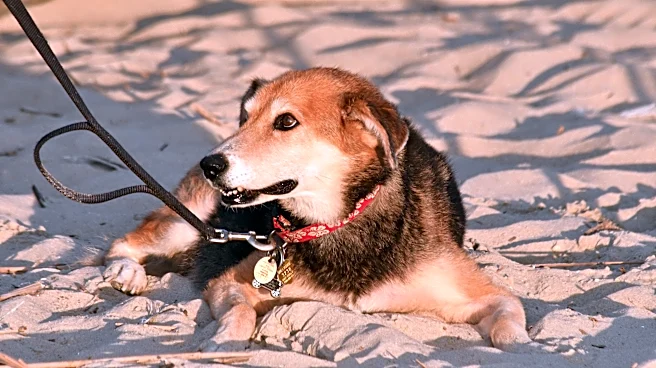









The City of Tybee Island is considering a “pilot program” that will allow dogs on certain parts of Tybee beach as early as this December.
In a city council meeting on Thursday, council members debated the idea, which has been often entertained over the years by the small island community but never implemented. Now, council members seem poised for a trial run.
For a limited time, dog owners would be able to purchase permits to bring their dogs on the beach through the parking apps used on the island. Council member Nick Hale ran down a list of proposed rules: One dog per person, and dogs must be leashed at all times. Owners must bring waste bags and pick up after their pet. Dogs must be vaccinated. Dogs would not be allowed in the dunes or vegetated
stretches of the beach.
Negative impacts from having dogs on the beach would stem from owners not following the rules, suggested Hale, who said he has spoken with representatives of other beach communities that allow dogs.
“It’s not a dog problem, it’s a people problem,” he said.
But that statement was roundly rejected by council member Kathryn Williams.
“That is scientifically false,” she said, referring to research she said had been sent to council members about how dogs impact shorebirds using beach habitat.
“If you read the email we received that gave all this research about birds and interactions with dogs, it’s the presence of the dog that will cause the birds to fly away,” she said. “And so even if the dogs are behaving and just walking along, it will still be disruptive to wildlife.”

The threats dogs pose to coastal wildlife, such as sea turtles and shorebirds, have been well documented, confirmed Abby Sterling, senior director of shorebird conservation for Manomet, a nonprofit that studies birds in coastal ecosystems.
“There’s been research conducted across the entire Atlantic flyway that’s looked at how recreational disturbance impacts shorebirds, specifically, and what we see is that there are nonlethal threats sometimes,” she said.
Dogs can squish and kill nestlings or chicks, she said. But nonlethal threats—when shorebirds are distressed by dogs or people enough that they stop feeding or resting—can take just as much of a toll. Birds that are frequently disturbed won’t gain the weight they need to continue their migration routes, or breed and rear young successfully.
Tybee’s beach is home to several shorebird species, including piping plovers, Wilson’s plovers, black skimmers and American oystercatchers. Many of those birds pass through on their migrations in fall and spring; others will spend the whole winter nesting on Tybee.
Tybee is already a well-peopled beach. But adding four-legged visitors could increase stress on shorebird populations, many of which are already in decline along the entire Southeastern coast.
“What we see is that birds that [stop over] and even winter on very busy beaches have lower fitness overall,” Sterling said, which weakens their chances of survival.
Tybee’s dog pilot program could coincide with the birds’ winter nesting period. However, that’s also when tourism on the island slows down, and the economic benefits of a dog-friendly beach held sway for part of the discussion. Welcoming people with dogs could bring more visitors, more business and more parking revenue in the off-season, Hale pointed out.
A few local business owners attending the meeting agreed.
“I love the idea of thinking outside the box and bringing more people out here,” said Steve Farace, owner of Farace’s Finest Pizza & Pints, who said he's had to close for a few weeks in January when business slowed to a trickle.
Council members said they would like to survey Tybee residents and businesses to get their opinions on the pilot program. And they will continue to weigh potential drawbacks to the program, including the cost to the city from enforcing its rules, against the economic advantages.
And aside from the threats to local wildlife, council members and residents in attendance acknowledged concerns to human safety, including the risk of dog bites.
“I am very pro animal,” said Williams, who has two dogs of her own. “But…it’s not really about our personal preference and the fact that I love to take Abe and Ozzie to frolic on the beach. It’s about our responsibilities as elected officials, and public safety is our number-one responsibility.”
Stephanie Castellano covers climate change and the environment in coastal Georgia. You can reach her at scastellano@usatodayco.com. This reporting content is supported by a partnership with Journalism Funding Partners.
This article originally appeared on Savannah Morning News: Tybee renews debate to allow dogs on the beach