



Texas Tech University’s Indrajit Srivastava recently received a $2.1 million Maximizing Investigators’ Research Award from the National Institute of General Medical Sciences to further his research into second near-infrared imaging technologies for biomedical imaging.
Srivastava, an assistant professor in the Department of Mechanical & Aerospace Engineering in the Edward E. Whitacre Jr. College of Engineering, has been researching and developing second near-infrared (NIR-II) bioimaging tools that help clinicians see deep inside the body with more clarity.
“This award is a strong example of the kind of interdisciplinary, high-impact research that advances Texas Tech’s strategic research priorities,” said Song-Charng Kong, chair of the Department
of Mechanical & Aerospace Engineering. “Dr. Srivastava’s work has the potential to enable new biomedical imaging and sensing technologies while strengthening collaborations across engineering, health sciences and other disciplines, positioning Texas Tech to make meaningful contributions in this rapidly emerging field.”
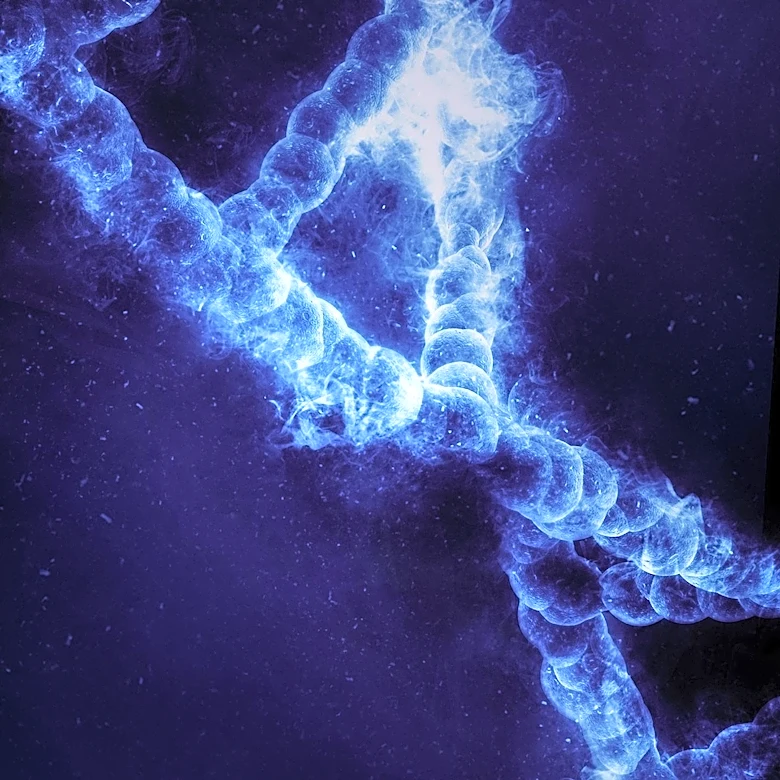
NIR-II imaging uses longer wavelengths of near-infrared light that can offer advantages for imaging through biological tissue, including reduced scattering and background interference compared with other techniques. These properties make NIR-II technologies particularly promising for applications where researchers need to visualize structures deeper within a body.
Specifically, Srivastava’s research focuses on developing next-generation NIR-II imaging technologies and nanomaterials that can provide brighter, clearer and more durable visualization of biological tissues. A key part of this work is understanding how the properties of these nanoprobes influence optical performance and behave in biological systems.
His laboratory is funded by the Robert A. Welch Foundation, the Cancer Prevention & Research Institute of Texas and the American Heart Association, and it aims to develop technologies that can provide strong, sustained signals while remaining suitable for use in complex biological environments. The laboratory has also explored afterglow imaging in which special fluorescent polymers are combined with proteins that persist after the excitation light is turned off. This approach allows the imaging signals to penetrate deeper and last longer.
Srivastava sees MIRA as not only an opportunity to fund his research for the next five years, but as validation for the work already being done in his lab. This includes developing a method to create 3D phantom models that replicate optical and physical properties of tumors.
Unlike other grants that may fund a specific project, MIRA specifically funds the researcher, allowing them flexibility to pursue new discoveries as they arise without having to resubmit a proposal.
“It’s a lot of responsibility,” Srivastava said. “They’re trying to see what my vision is for the next five years. I now have the responsibility to push the NIR-II imaging field forward.”
According to Srivastava, NIR-II imaging remains largely in the preclinical phase and is not used in operating rooms, but there are significant opportunities to improve the performances of imaging probes and their behavior in the body.

“Current dyes, such as indocyanine green, are good but are not very photostable; they start disintegrating in 15 or 20 minutes,” he said. “You need to give surgeons as much time as they need. This is why I think the goal to develop more photostable probes is really exciting.”
Srivastava says awards and recognition like MIRA help place Texas Tech on the map when it comes to NIR-II biomedical imaging.
“If people want to be trained in optical imaging or molecular imaging, they should be interested in coming to Texas Tech,” he said. “We have labs here that will be part of the next generation of imaging techniques for surgical and other biological disease visualization.”
This article originally appeared on Lubbock Avalanche-Journal: Texas Tech researcher receives NIH funding for biomedical work