

Editor’s Note: Jack Becker is the editor of Caprock Chronicles and is a Librarian Emeritus from Texas Tech University. He can be reached at jack.becker@ttu.edu. Today’s article is the second of a three-part seriesby frequent contributor Chuck Lanehart, Lubbock attorney and award-winning history writer.
People talk about you
After all this time
You were many things to many people
But you were a friend of mine.
—Waylon Jennings
Well before Buddy Holly and the Crickets became international rock stars in 1957, Buddy performed with multiple mostly forgotten musicians from the Lubbock area.
Among other major inaccuracies, the 1978 movie “The Buddy Holly Story” opened with a scene portraying Buddy performing at a roller rink backed by fictional characters
based on drummer J.I. Allison and bassist Joe B. Mauldin (soon to name themselves The Crickets). Later, the same two characters accompany Buddy to Nashville to record a failed version of “That’ll Be the Day.” The scenes are based on true events, but Allison and Mauldin never recorded together with Buddy in Nashville.

Part One of this series described Buddy’s collaborations with, among others, his brothers Travis, who died in 2016. and Larry, who died in 2022. Jack Neal of the “Buddy and Jack” duo became an electrician and moved to Ruidoso, New Mexico, but little is known of his post-Lubbock days. There is a report he possessed two unissued gospel-style songs that Buddy recorded in about 1957, "I Heard the Lord Calling for Me” and “I Saw the Moon Crying Last Night.” Jack died in 2015, at age 81, recognized as a vital part of Buddy Holly's early musical roots in Lubbock.
Others involved in the pre-Crickets days continued in Buddy’s early career, including Sonny Curtis, Bob Montgomery, Don Guess, Larry Welborn and J.I. Allison, all Lubbock County residents.
In 1954, Buddy befriended a young, ambitious teenager from Littlefield, Waylon Jennings, who would become a DJ at KSEL radio. Buddy and Waylon hung out together in Lubbock—engaging in a bit of mischief involving Sonny and another of Buddy’s new friends, emerging superstar Roy Orbison of Wink, according to Sonny. Buddy never performed with Roy, and he didn’t perform with Waylon until the ill-fated Winter Dance Party tour of 1959.
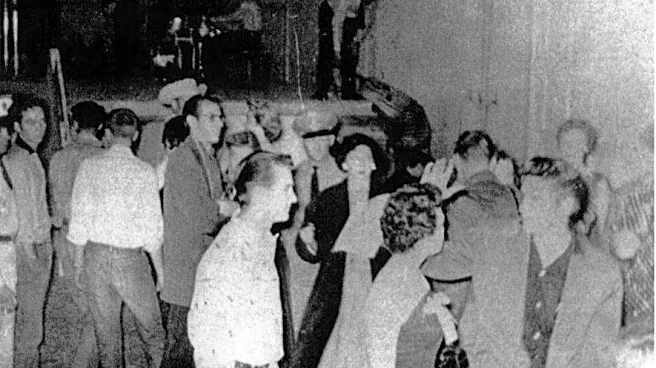
January 6, 1955, was the date that dramatically changed the lives of Buddy and all of his musical buddies. Billed as a “bop” singer from Memphis, the little-known swivel-hipped Elvis Presley was the first headliner booked for Lubbock’s new South Plains Fair Park Coliseum. Buddy, Sonny and hundreds of others who witnessed the performance were forever changed by the experience.

Sonny was a backing guitarist for Elvis’ opening act. “Elvis made a huge impression, and Buddy was even more impressed than me,” Sonny recalled. Sonny joined Buddy to open for Elvis at later Fair Park engagements and witnessed a memorable Cotton Club performance.
“Bales of cotton were stacked around the stage to protect Elvis from the audience. The most beautiful girls in Lubbock were trying to climb the bales to get at him. That’s what impressed us as much as the music.” Sonny said, “I had always thought that pickin' was only about the music, but man, all of a sudden, there were screaming girls involved. How intriguing!”
(See Caprock Chronicles: “1955-56: Elvis Impacts the Icons of West Texas Music,” published in the A-J May 4, 2019.)

Buddy, Sonny and Don Guess immediately taught themselves to rock like Elvis. Sonny loved the sound of Elvis’ guitarist, Scotty Moore, and soon mastered his style. Don played “slap bass” in the percussive style of Elvis’ bassist Bill Black. Buddy, of course, was now an Elvis-style rocker, playing rhythm guitar and singing, forsaking country, bluegrass and gospel music.
On Feb. 13, Elvis was back in Lubbock, still far from being on top of music charts. This time, the opening act for the show was the local group, Buddy and Bob, accompanied by Larry and Sonny. Elvis returned to Lubbock to perform several times in 1955-1956. Sometimes Buddy and his friends watched him from the audience. Sometimes they got a performing spot low on the bill. They became friends with Elvis and would try to entertain him by showing him the sights of Lubbock.
Soon, Buddy’s band and their Elvis-style performances earned gigs for the Lubbock boys in venues all across West Texas. They also began a serious attempt to record songs at KDAV and elsewhere. The core of Buddy. Bob, Sonny, Larry, Don and others traveled several times to Nesman Recording Studio in Wichita Falls and cut demos, none of which went far. In June of 1955, drummer J.I. Allison joined Buddy’s musical buddies.
Thanks to a chance encounter with country singer Marty Robbins’ manager, Decca Records in Nashville noticed Buddy’s music. Looking for an answer to the mounting success of Elvis, who recorded for Sun Records in Memphis, Decca offered Buddy a recording contract. Although the Decca sessions can be described as failures, it was a major step in Buddy’s journey to rock stardom.
Again, because of major inaccuracies in the 1978 movie, “The Buddy Holly Story,” what happened after the Decca contract was offered was nothing like what was portrayed in the film.
Look for part three of this series in an upcoming Avalanche-Journal.
This article originally appeared on Lubbock Avalanche-Journal: Caprock Chronicles: Buddy Holly’s musical buddies before the Crickets, Pt. 2