



On Oct. 23, 1956, in Budapest, Hungary I awoke, a worried seven-year-old. I had neglected to complete my math homework and dreaded going to school that day.
I was soon happy to learn I was safe – school was cancelled and my dad, then the youngest Lt. Colonel in the Hungarian Army, had been called out in the middle of the night.
I didn’t realize that I would never go back to that school again, nor that I would soon have to flee with my dad from my home and family, not to see them again for 10 long years.
Unbeknownst to me, that was the dayHungary’s brief revolution to break free from the enslavement of the Soviet Empire started.
By 1956, any illusion of a promised socialist “workers’ paradise” had long been shattered among the Hungarian people, replaced
by universal disgust over the brutality, corruption, suppression, hypocrisy, and misrule of the Soviet imposed dictatorship.
Despite having no internet, no social media, no faxes, not even telephones (as they were rare and belonged only to the privileged) with which to mobilize the masses, that day the Hungarian people came together as one.
As often happens with popular uprisings, it started with students demanding reforms.
On Oct. 23, they took to the streets of Budapest in their thousands, soon joined by factory workers and ordinary citizens. The pro-regime secret police responded with bullets, but Hungary’s national army immediately switched sides and went over to support the people. Within a few days it seemed the Revolution had won – with Soviet forces leaving Budapest and a new government declaring Hungary’s neutrality and withdrawal from the Warsaw pact, the Soviet Union’s version of NATO.
Holed up in our apartment with my stepmom, listening to radio Budapest, even as a child I noted the sudden change in programing, which had switched from nonstop Communist propaganda to discussions of freedom and democracy.
And everywhere throughout the city, Hungarian flags appeared with holes in the center where people had cut out the hated red star, symbol of the regime.
But the Revolution was betrayed.
For years, America’s “Radio Free Europe” had urged the nations behind the Iron Curtain to throw off the Soviet yoke, thus leading people to believe that if they rose up, the U.S. would come help.
It never did. Unwittingly, the poor Hungarians had picked a bad time for an uprising.
The Revolution happened just weeks before November’s U.S. Presidential elections in which Eisenhower was running for a second term; not a good time to expect the White House to take actions which could lead to World War III.
And on Oct. 29, without informing the U.S., a surprise invasion was launched by Britain, France and Israel to seize the Suez Canal, which Egypt had nationalized earlier that year.
The U.S. was understandably furious at its “allies.” In addition to shattering the Western alliance, this action refocused the world’s attention from Hungary to Suez, giving the Soviets cover to plan a massive military assault on Hungary.
When the Soviets responded to the Hungarian uprising
The blow came on Nov. 4 with the Soviets launching over 1,000 tanks and masses of ground troops. While Hungarians fought back bravely - including children targeting tanks with “Molotov Cocktails” - they had no chance.
Effective resistance was crushed nationwide by Nov. 10. My own dad knew he’d soon be facing a firing squad, so we left that week, crossing the still unguarded Austrian border and beginning the long journey which would lead us to America.
We were among the 200,000-plus Hungarians who fled as refugees through Austria and Yugoslavia, with over 30,000 of us settling in the U.S. – thanks to the graciousness and generosity of the American people and government.
The final message broadcast on Nov. 4 by the last remaining rebel radio station before being taken down by the invading Soviets, which was heard in Vienna, was a plea to the world: “Civilized people of the world... On the watchtower of a thousand-year-old Hungary, the last flames begin to go out. Soviet tanks and guns are roaring over Hungarian soil... Save our souls. This word may be the last from the last Hungarian freedom station. Listen to our call. Help us—not with advice, not with words, but with action, with soldiers and arms."
It was not to be; help never came.
While the crushing of the Hungarian revolution by Soviet might was an immediate defeat for the forces of freedom and liberty, it was the first major tremor which shook the Soviet Empire to its core.
The Revolution not only shattered the myth of Communist unity but also disclosed the mass discontent of the people behind the Iron Curtain over the awful lives they were forced to live under Soviet style socialism. It was like Dorothy pulling the curtain from the Wizard of Oz!
Thousands of Western intellectuals, writers, artists, journalists and academicians, who had been enraptured by the Siren Call of Communism, finally saw the truth and brutality of its inhumanity. Many turned away and became dedicated anti-communists.
Most significantly perhaps, the Revolution offered a precedent and model for what would come a few decades later to end Soviet domination: the Prague Spring of 1968 and Poland’s Solidarity Movement in the 1980s.
The Revolution’s revenge came on May 2, 1989, when Hungarian Border guards took down the barricades and electric detection devices on the Hungarian - Austrian Border, literally putting the first physical crack in the Iron Curtain.
This brave act allowed thousands of East Germans, who could travel to Hungary as “tourists,” to escape to the West.
The government – still “Communist” in name only - followed this a few months later by officially opening the border. This quickly led to cascading events in other Soviet dominated countries, which culminated in Germans tearing down the Berlin Wall two months later.
Those of us who personally experienced the inhuman brutality and suffocation of Communism, even briefly as a child, are shaking our heads at the recent allure to many Westerners – especially the young -- of the same poison the Soviets peddled, this time under the guise of “Democratic Socialism.”
These naïve Westerners overlook the fact that refugees and migrants are not taking boats and making life threatening journeys to flee to countries which practice that system, like Cuba, or North Korea, or Eritrea.
The massive flow continues from them. If those currently wishing for Communist style socialism could experience what ordinary people endure living under such a regime, they would quickly abandon their ill-conceived dream.
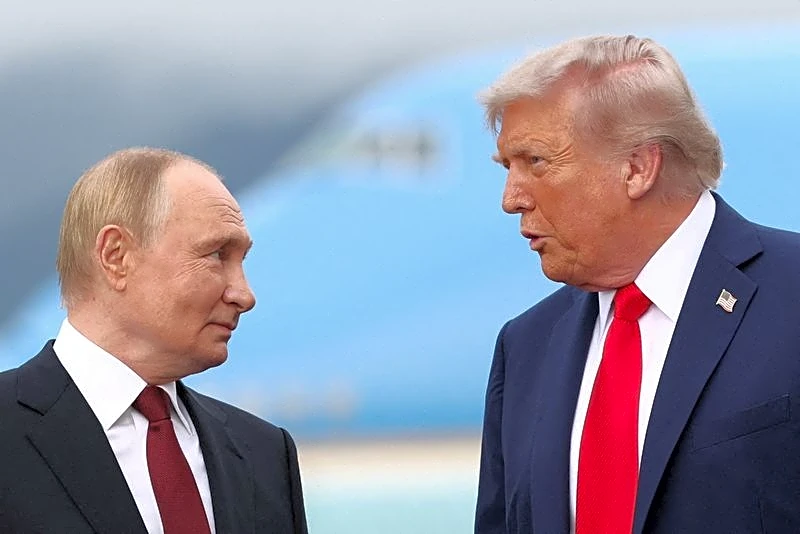
Equally concerning is a dramatic change in the direction of U.S. foreign policy. The current White House seems to have embraced the goal of “Making Russia Great Again”! This is totally incomprehensible to those of us who suffered under a “Greater” Russia during Soviet days.
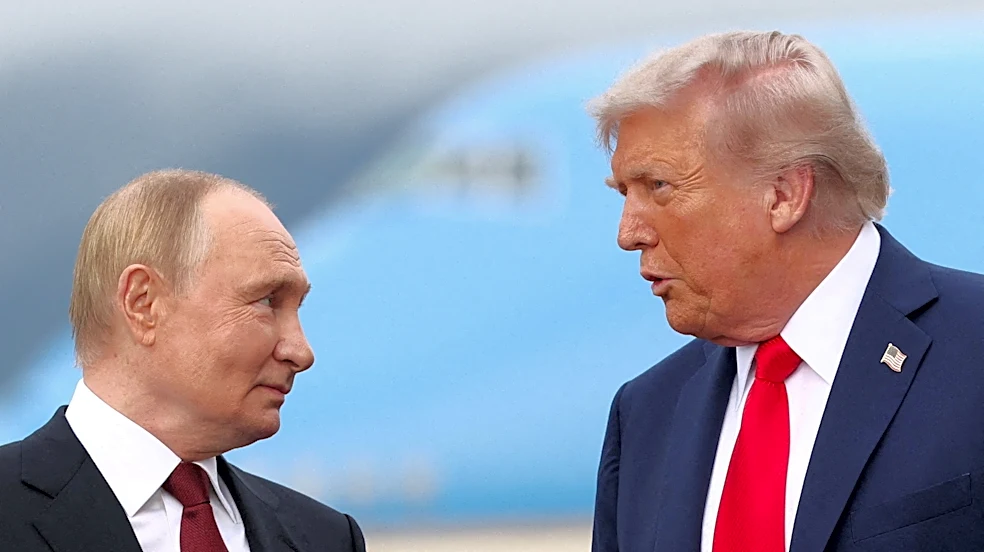
No one should doubt that Russian President Putin’s DNA contains the same poison which drove the Soviet Union to acts of untold cruelty in its drive to dominate the world.

Putin seeks to re-create the power and influence of the Soviet Union, and witnessing the United States actually helping him seems lunacy. Ukraine is standing up to the bully, just like the Hungarian patriots tried, and they need help, not hindrance.
No one should forget the insightful observation of the great Austrian Economist Jospeh Schumpater: "The trouble with Russia is not that she is socialist but that she is Russia."
Along with thousands of Hungarian patriots in 1956, millions of others have needlessly died over the decades illustrating that truism! The Soviet Union belongs in the trash heap of history; let’s leave it there. And may what remains of Communism soon join it.
Ambassador Tibor Nagy most recently served as acting Under Secretary of State for Management in the second President Donald Trump administration. He also served as Assistant Secretary of State for Africa in the first Trump administration after serving as Texas Tech’s Vice Provost for International Affairs following a 30-year career as a U.S. Diplomat. Follow him on Twitter @TiborPNagyJr.
This article originally appeared on Lubbock Avalanche-Journal: Tibor Nagy on lessons from Hungary's 1956 revolution, 70 years later