






Editor’s Note: Jack Becker is the editor of Caprock Chronicles and is a Librarian Emeritus from Texas Tech University. He can be reached at jack.becker@ttu.edu. Today’s article is the ninth of an extended monthly series about Route 66 by Lubbock attorney Chuck Lanehart and Lubbock photographer Mark Umstot.
Amarillo by mornin'
Amarillo's where I'll be
—Composers Terry Stafford and Paul Fraser, hit recording by George Strait
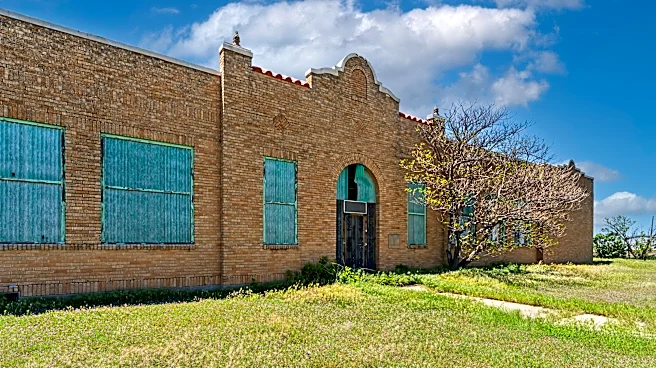
After leaving Groom, the next Route 66 town was Conway, in southern Carson County, which has two claims to fame. First, settlers of the 1890s established the first permanent school in the Panhandle here, serving the children of area farmers and ranchers.
A century later, the Slug Bug Ranch was created in Conway. An artistic parody
of the famed Cadillac Ranch, VW Beetles were half-buried near Old Route 66. But the school is now closed, and the Slug Bug Ranch was relocated to Amarillo in 2024.

Established as a railroad town in 1892, the community grew to as many as 175 residents in 1969, but today, Conway is essentially a ghost town, with only a few people living nearby. Route 66 continued another 28 miles west before reaching—by 1920’s Panhandle standards—a metropolis.
The straight shot of Route 66 through the Texas Panhandle was interrupted by only one community of any size, Amarillo, a town of just 15,000 in 1920, six years before the highway was established.
Long before the area was settled, roaming New Mexican traders and sheepmen noticed yellow soil along creekbanks and perhaps the golden wildflowers abundant during the spring and summer. They named a nearby creek and playa lake “Amarillo,” Spanish for yellow.
Like many towns in the area, Amarillo began as a railroad stop. The Fort Worth and Denver City Railway built tracks across southern Potter County in 1887, and entrepreneurs soon chose a well-watered section of land along the railroad right-of-way for a town site.
Originally called Oneida, town planners soon renamed the place after the nearby playa lake and creek known as Amarillo, properly pronounced in Spanish “Ah-mah-REE-oh.” But pioneer railroad employees mangled the word, so the city’s Anglicized name has always been pronounced, “AM-ə-RIL-oh.”

Soon, voters chose Amarillo as Potter County seat, and the town became the dominant hub for Panhandle, South Plains and eastern New Mexico ranchers and farmers transporting their cattle and wheat to market via rail. In 1899, Amarillo was incorporated as a city.
After World War I, oil, gas and helium discoveries near Amarillo helped create a booming economy as Route 66 was constructed, and the city became a major tourist stop. In the 1930s, Amarillo residents were victims of the double disasters of the Great Depression and the Dust Bowl, but the town continued to grow.
Amarillo was a regional center for federal relief programs like the Works Projects Administration, which helped to improve city streets, water and sewerage facilities.

By 1940, Amarillo’s population had skyrocketed to 50,000. During World War II, Pantex Ordinance Plant produced bombs and ammunition, and Amarillo Army Air Field trained military pilots.
Cutting through the middle of Amarillo, Route 66 was the major east-west thoroughfare. It followed Amarillo Boulevard to the north of downtown, then curved southwest, leaving the city near the Veteran’s Hospital.
A city spur followed Fillmore south into the downtown area and turned on West 6th Avenue through San Jacinto Heights.
In the 1970s, Interstate 40 was completed to the south of the old highway, replacing Route 66. But Amarillo was a well-established city, so there was negligible impact on the general economy.
Today, Amarillo’s 13-block historical district—added to the National Register of Historic Places in 1994—offers visitors an interesting look back at Route 66 and its art deco heritage.

Among the sights is the venerable Adobe Ranch Hotel—now an apartment building—a prime example of U-shaped motels that lined Route 66 in Amarillo and many other towns.
Antique dealers and gift shops beckon tourists along a magical mile of Old Route 66 on Southwest 6th Avenue between Georgia and Western Streets.
There are vintage gas stations, classic car shops and other businesses harkening back to Amarillo’s prime Route 66 past, between 1926 and the early 1960s.

Amarillo’s Big Texan Steak House, originally established in 1960 on Route 66, was moved to Interstate 40 in 1970, and remains one of the most popular tourist attractions in the Panhandle, now known as the Big Texan Steak Ranch.
One of the most famous of all Route 66 destinations is just west of Amarillo on Interstate 40, near the former Route 66. The Cadillac Ranch, an avant-garde sculpture of ten vintage Cadillacs (1949-1963) half-buried nose-first on the barren prairie, was built in 1974 by a group of art hippies from San Francisco called The Ant Farm and funded by Stanley Marsh 3, the eccentric multimillionaire Amarillo artist, businessman, philanthropist and prankster.
Tourists are encouraged to visit the site—free—to decorate the vehicles with spray-painted graffiti and take photos. The place has inspired popular songs, art, film and books.
Part ten of this extended series, “Bushland, Wildorado and Vega,” will be published next month.
This article originally appeared on Lubbock Avalanche-Journal: Caprock Chronicles 'Kicks on Route 66' series continues in Conway, Amarillo