
Editor’s Note: Jack Becker is the editor of Caprock Chronicles and is a Librarian Emeritus from Texas Tech University. He can be reached at jack.becker@ttu.edu. Today’s article is the third of a five-part
series by frequent contributor Chuck Lanehart, Lubbock attorney and award-winning history writer. These articles were originally published by The History Press in Chuck’s book, “Evolution of the Texas Plains,” in 2023. Published here with permission.
I worked as a teenage grunt roustabout in the Texas Panhandle during the summers of 1969-1971. These are my memories of the oil patch. I’ve learned there is a bit of confusion about oilfield occupations and oilfield equipment. So, here’s a 1969 oil industry primer.
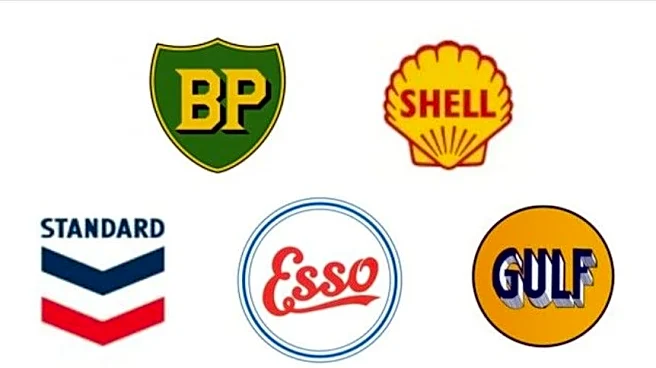
At the top of the heap, there were the biggest oil companies, known as the “Seven Sisters:” British Petroleum, Shell, Standard Oil, Esso, Gulf, Mobiloil and Texaco. There were also many small oil producers–sometimes called wildcatters—who drilled for oil, which they sold independently (think Jett Rink in the movie “Giant”).

A “landman” (now made famous by the TV series of the same name) was usually a petroleum engineer or an exploration geologist—like my father—who found potential oil and gas resources and convinced farmers and ranchers to grant the big and small oil companies the right to drill for oil and gas on their land.
Lawyers—like my fellow grunt roustabout Gene Thompson’s father—researched property titles and prepared contracts to drill for oil and gas.
Landowners who contracted with the oilmen were granted royalties, a percentage of profits from any oil and/or gas discovered beneath their land.
Even if a landowner sold the land, the “mineral rights” beneath the surface could be retained by the landowner, and many generations of his/her family might benefit from oil and gas production income.
Dad the geologist was also an outdoorsman who loved fishing, dove hunting and camping. He was also a scoutmaster.
He made friends with landowners he encountered in his job as a landman, cultivating relationships and getting permission to fish, hunt and camp on their properties.

So, my little brother and I—as well as Gene’s family—hunted and fished on prime ranch and farm property, and hundreds of boy scouts under Dad’s leadership spent many weekends camping and exploring Panhandle paradises like the Hendrix Ranch and the Alexander Ranch.
A “toolpusher” oversaw the operation of “drilling rigs,” big, tall derricks erected to penetrate the ground and bring black gold to the surface.
Toolpushers directed drillers, floor hands and “roughnecks,” all skilled laborers who formed a team to thrust lengths of sturdy steel drill pipe tipped with sharp drill bits deep into the earth.
The technology to drill deep wells was spurred by Howard Hughes Sr., who revolutionized the oil industry by inventing the first dual-cone rotary drill bit (the "rock eater") in about 1909, allowing drillers to penetrate hard rock formations 10 times faster than the previous "fishtail" bits.
When oil was discovered, the derrick was removed and a pump jack was installed. The pump jack sucked crude oil from the shaft, then piped the oil to “heater-treaters,” which removed impurities.
Oil from the heater-treaters was piped to holding tanks, trucked to refineries, transformed into gasoline, diesel and jet fuel, and sold on the open market.

I vividly remember one of the toolpushers was a Native American guy. He was said to be the best in the business, and he was rumored to drink a fifth of whiskey every day he worked.
I doubt the stories about the toolpusher drinking whiskey on the job, because safety was stressed at every level of the oil industry. Everyone was required to wear protective gear like hard hats and steel-toed boots. Companies proudly kept statistics on their safety records.
One year, my roustabout job was unavailable the first few weeks of the summer, so I took a job erecting center-pivot irrigation sprinkler systems in peanut fields. It was easier work than oilfield work, and pay was comparable, but it was like being in the middle of a Keystone Kops movie. Guys would carelessly swing aluminum irrigation pipes into the heads of other guys. Workers fell from trailers regularly, and there were many injuries. I extricated myself from the agricultural job as soon as I could.
Despite safety as a priority in oilfield work, there were accidents, and I was once the victim of a near-miss accident in what could have been a disaster.
We were using a big winch truck to lift and move a pump jack. My roustabout boss Ken was behind the wheel of the truck as I attached the winch chain to the pump jack.
I was situated between the rear of the truck and the frame of the pump jack when Ken engaged the clutch of the truck—on a slight incline—and it began to back slowly toward me.
My legs were trapped mid-thigh between the pump jack frame and the rear bumper of the truck. I screamed, "Ken put the truck in gear and quickly moved the big truck forward."
I was free, but my thighs were badly bruised. I could not walk for a week, but I could have lost both legs. Near miss, thank God.
Part Four of this series will be published at a later date.
This article originally appeared on Lubbock Avalanche-Journal: Caprock Chronicles 'Life of a Roustabout': Landmen, roughnecks and toolpushers