










Editor’s Note: Jack Becker is the editor of Caprock Chronicles and is a Librarian Emeritus from Texas Tech University. He can be reached at jack.becker@ttu.edu. Today’s article is the tenth of an extended monthly series about Route 66 by Lubbock attorney Chuck Lanehart and Lubbock photographer Mark Umstot.
Told in a road ode,
Bout the Mother Road.
An adventure road,
A romantic road,
A storied road. —Nick Baker, poet
After leaving Amarillo, the next stops for motorists traveling west on Route 66 were the tiny communities of Bushland and Wildorado, and then Vega, Oldham County.
Bushland, just west of Amarillo, lies on a portion of the former Frying Pan Ranch. It was named for William Henry Bush of Chicago, who donated the land for a townsite and Chicago, Rock
Island and Gulf Railway right-of-way. The population of the village rose from 20 to 175 after Route 66 arrived.
With an estimated 2020 population of 150, Bushland survives as a “bedroom community,” offering country living only a few minutes from Amarillo, where most residents work and shop.
Wildorado is a dry creek in Oldham County on an old cattle trail between Tascosa and Canyon City. When the Chicago, Rock Island and Gulf Railroad announced plans for a rail line nearby in 1900, a community of the same name (pronounced Wil-do-RAY-doh) was established by ranchers Eugene Binford and John R. Goodman.
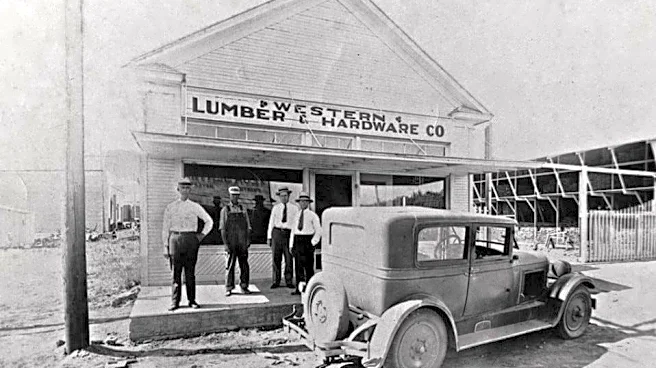
Soon, small ranchers, stock farmers, and wheat growers were attracted to the town, which supported a post office, a bank, a hotel, a newspaper, telephone connections, a grocer, a general store, a lumber company, a blacksmith, a hardware store, a school, two churches, and a population of 100 by 1915.
The village benefitted from its location on Route 66, and by the late 1950s, 200 residents lived in Wildorado. Interstate 40 bypassed the town in the 1970s, but Wildorado survived, with a 2000 population of about 180 and several businesses.
Oldham County is cattle country, and was home to Tascosa, the oldest cow town in the Panhandle. One of the wildest of wild west communities, Tascosa was first settled in the early 1870s. When Oldham County was organized in 1880, Tascosa became the county seat, but the town began to fade by 1900. Although Route 66 never passed through Tascosa, the ghost town remains a popular tourist destination, just 19 miles north of Route 66.
The stone courthouse, now a museum, and the 1889 schoolhouse are the only buildings from the old town to survive into the 21st century. Cal Farley’s Boys Ranch, established in 1939 to serve troubled youth, now occupies the location once known as Tascosa.

In 1899, a homesteader named N.J. Whitfield purchased land 20 miles south of Tascosa, then sold a portion of the property to the Choctaw, Oklahoma and Texas Railroad as a right-of-way. A townsite was laid out and in 1903, a store opened, followed by a post office, saloon and a school. The community became known as Vega, Spanish for “meadow,” descriptive of the vast prairie surrounding the area.
After the completion of the railroad in 1909, the town boomed, adding stores, churches, a blacksmith shop, a hotel and two newspapers. Vega mounted a five-year political battle with Tascosa, ending in 1915, when voters chose Vega as the new Oldham County seat, and Tascosa faded. Vega was incorporated as a city in 1927.
The old Ozark Trail highway connected Vega to Amarillo to the east and Tucumcari, New Mexico to the west, but when Route 66 was constructed through the middle of this small town after 1926, Vega’s agricultural economy was supplemented by service businesses for travelers on the Mother Road. Local entrepreneurs established service stations, motels and restaurants catering to motorists.
One of Vega’s first travel-related businesses was a 1920s-era Magnolia Gas Station, which has been restored with the help of the National Parks Service Route 66 Corridor Preservation Program. Another interesting stop is the Milburn-Price Culture Museum, a non-profit organization that seeks to educate the public about the history and culture of the Oldham County area.
A vestige of the prosperous years of Route 66 is the 1947 Vega Motel, a rare example of early motor courts. The U-shaped motel originally featured two wings, 12 units and a small house in the central courtyard. Later improvements included eight additional units with garages and kitchenettes. The motel was modernized in 1964 with a new exterior of Perma-Stone. In 2006, the Vega Motel was listed in the National Register of Historic Places.
Vega is often referred to as the “Crossroads of the Nation” and has also been dubbed, “The Solar Capital of Texas” due to being named the 7th sunniest area of the U.S.
Of the small Panhandle Route 66 towns bypassed by Interstate 40 in the early 1970s, Vega is the only community that has not lost residents, almost doubling its 1930 population of 500 to 900 in 2020.
Part eleven of this extended series, “Landergin, Adrian and Glenrio” will be published next month.
This article originally appeared on Lubbock Avalanche-Journal: Caprock Chronicles 'Kicks on Route 66' goes west in Texas Panhandle