




A new national ranking has given Texas Tech University a failing grade for freedom of speech on campus, placing it in the bottom half of universities nationwide and in the state.
On Sept. 9, the Foundation for Individual Rights and Expression (FIRE) released its seventh annual College Free Speech Rankings, grading 12 public and private Texas universities.
It ranked Texas Tech No. 8 in Texas, behind schools including the University of Texas at Austin, Texas A&M and the University of Houston. Nationally, Texas Tech placed No. 193 of 261 schools, with a score of 57 and an F speech climate grade — down 91 places from last year.
Despite the low ranking, Texas Tech placed in the top 50 for “Political Tolerance,” showing Red Raiders' willingness to host
controversial speakers. But it lands in the bottom 50 for “Openness,” which measures how open students feel when discussing contentious topics, suggesting they feel there are limits.

The university also tumbled 137 places from last year into the bottom 50 for “Comfort Expressing Ideas” this year, showing discomfort with sharing views.
Overall, Texas Tech retains a “yellow light” Spotlight rating from FIRE, giving its leaders a note on how it can improve next year.
"It should revise student codes to earn a 'green light' Spotlight rating, adopt the pro-free speech Chicago Statement, and adopt an official commitment to institutional neutrality. Texas Tech should clearly and forcefully defend free speech whenever censorship occurs or is demanded," read FIRE's analysis.
The university was also named in two of the 12 new speech controversies FIRE documents in Texas in 2026.
Texas Tech faculty at center of freedom of speech controversies
FIRE noted 12 new speech controversies in Texas in 2026, including two at Texas Tech involving two professors — Matthew Pehl and Will Crescioni.
Both professors, according to FIRE, were pulled into the "Texas Tech University System’s new review regime" for classroom content touching on race, sex, gender identity and sexual orientation.
"After Texas Tech System Chancellor Brandon Creighton issued a December memo directing faculty to disclose 'implicated' course content for review (and warning noncompliance could trigger 'disciplinary action'), Pehl submitted readings from his courses through the system’s online disclosure form, which faculty critics reportedly dubbed a 'censorship portal,'" read FIRE's analysis of the event.
Pehl, a history professor, disclosed two readings for review — one involving 19th-century wage labor in Baltimore and another focused on immigrant women working in California canneries.
Rather than quietly removing the material, Pehl marked the readings as “censored” in his syllabus and emailed students explaining why the books could not be taught, according to FIRE, saying he wanted documentation that he’d been censored and wanted students to understand what was happening.
Crescioni, a psychology lecturer, submitted an honors-level psychology course for full review because those topics were “woven throughout” the class.
Under the review process laid out by Creighton’s guidance, only content required for professional licensure or patient care could remain outside review, and Crescioni indicated the course did not qualify for that exemption.
According to FIRE, the department chair then requested specific “implicated content” for review and later asked whether Crescioni would postpone that content while awaiting approval.
"Crescioni replied that postponing it would not be 'feasible or ethical,' and the chair canceled the course two days before the semester began — without elevating the matter to the dean, provost or board of regents," read FIRE's analysis of the event.
Texas Tech at the center of academic censorship opposition
Recently, Texas Tech has been at the center of academic censorship discussions because the author of the bill aimed at limiting what topics can be discussed in public colleges' classrooms is the system's leader.
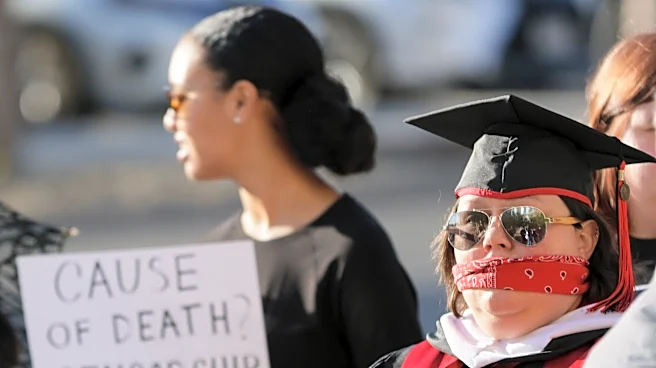
Earlier in the year, the university and system saw a protest by students, faculty and staff where they held a mock funeral for academic freedom while leaders met only feet away inside the system's administration building in Lubbock.
Similar protests followed throughout the year, including one at UT Austin, and stemmed from opposition to Texas Senate Bill 2972, which requires public colleges and universities to implement course-content review measures for specific DEI topics.
Creighton, then a state senator and now the system's chancellor, authored it, and it took effect Sept. 1, 2025.
Mateo Rosiles is the Texas Connect reporter for USA TODAY and its regional papers in Texas. Got a news tip for him? Email him at mrosiles@usatodayco.com.
This article originally appeared on Lubbock Avalanche-Journal: Texas Tech University given F for free speech on campus. Here's why