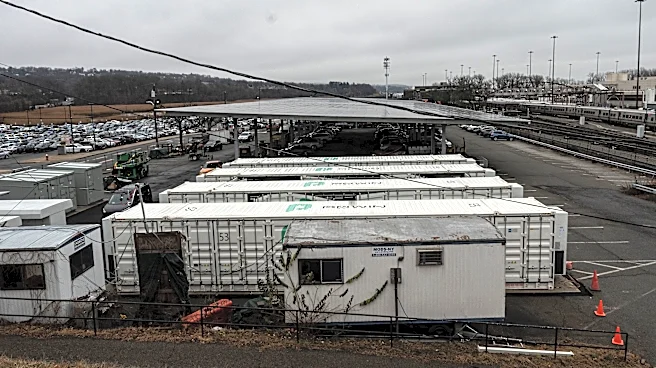








In December, my team and I responded to a battery storage fire in Warwick.
Seven months later, that incident is being cited at town board meetings across the Hudson Valley as new battery storage projects come up for review. I serve as Chief of Orange County Hazmat, and I have been on enough emergency calls over the years to know when something is being handled effectively to protect the public and when something isn’t working.The Warwick fire was handled successfully. The public deserves to hear from someone who was actually there, understands emergency response and how to properly evaluate risk.
What happened in the Warwick, NY battery storage fire?
Here is what happened: A battery unit went into what is called thermal runaway. One cell inside the container overheated, and the heat spread to neighboring
cells. It’s the worst case scenario and extremely rare for these units, which are heavily regulated and tested, and are engineered to contain a fire event.
That’s exactly what happened — the engineering and testing worked. The fire was contained to the impacted unit and did not spread to other units on the site or off the property. Most importantly, nobody was hurt. We set a precautionary perimeter, but no evacuations were necessary. Air monitoring was conducted throughout the response, and the readings showed there was no threat to public health or the surrounding area.
Our approach to the fire followed the standard protocols for this type of fire, which comes from the National Fire Protection Association, or NFPA, 855 codes, which govern BESS across the country. This includes securing the area and letting the involved container consume itself in a controlled and observed state. It sounds counterintuitive if you are used to structure fires, but using water on a battery fire can make it worse and extend the event.

I want to put this fire in context for people who do not respond to emergency calls for a living. In Orange County last year, we responded to structure fires that unfortunately led to the loss of life. We responded to vehicle fires, industrial fires and brush fires. We responded to hazmat incidents involving chemicals that pose a far greater threat to the public than a battery storage system. The Warwick incident is not in the same category. A contained event at a fenced, permitted, code-compliant facility with an emergency response plan that first responders have been trained on is one of the more manageable calls a department can take.
New York is leading on battery storage fire code
New York's battery storage fire code was updated in 2025 and went into effect this past January. It is now one of the most stringent codes in the country. The new code requires unit-level fire detection, spacing between containers, pre-operational training and coordination with the local fire departments, and independent third-party review to ensure any proposed projects meet these new strict codes.
The Warwick fire was the first significant test of these updated standards in our region, and it proved the standards are working to keep the public safe.
Several Hudson Valley municipalities are deciding right now whether to allow battery storage projects in their communities. I am not here to tell elected officials how to vote, but I am here to give them accurate information from the emergency response side and to ensure today’s debate is informed by today’s standards and facts, not misinformation or fear.
The electric grid is under increasing strain, with demand only projected to increase in the years ahead. Battery storage is one of the tools that will help keep the lights on when demand spikes, keep the electric system stable and keep power flowing to homes, hospitals and businesses.
The fire safety conversation has crowded out the reliability conversation, and both matter. The picture being painted of these facilities often does not match what I saw on the ground at Warwick or what the data shows across the state and country, where roughly 1,000 BESS facilities are operating today. I would not be putting my name on this piece if I didn’t believe in the safety of these systems and the codes in place to ensure they operate safely.
Concerned residents should keep asking questions to ensure they are answered and addressed and that any proposed project meets the standards New York's updated fire code requires. Today’s safety bar in New York is high, and I have confidence in it.
I will keep responding to calls in Orange County, that’s my job and why I entered this profession. I would rather respond to a contained battery incident at a well-regulated and engineered site than almost any other fire. That is my honest assessment, and Hudson Valley leaders should feel confident moving forward with these projects.
Wayne Melton is chief of the Orange County Hazardous Materials Response Team and helped lead the response to the battery energy storage system fire in Warwick in December 2025.
This article originally appeared on Rockland/Westchester Journal News: Battery storage in NY is safe. This is how we know that | Opinion